 11
11
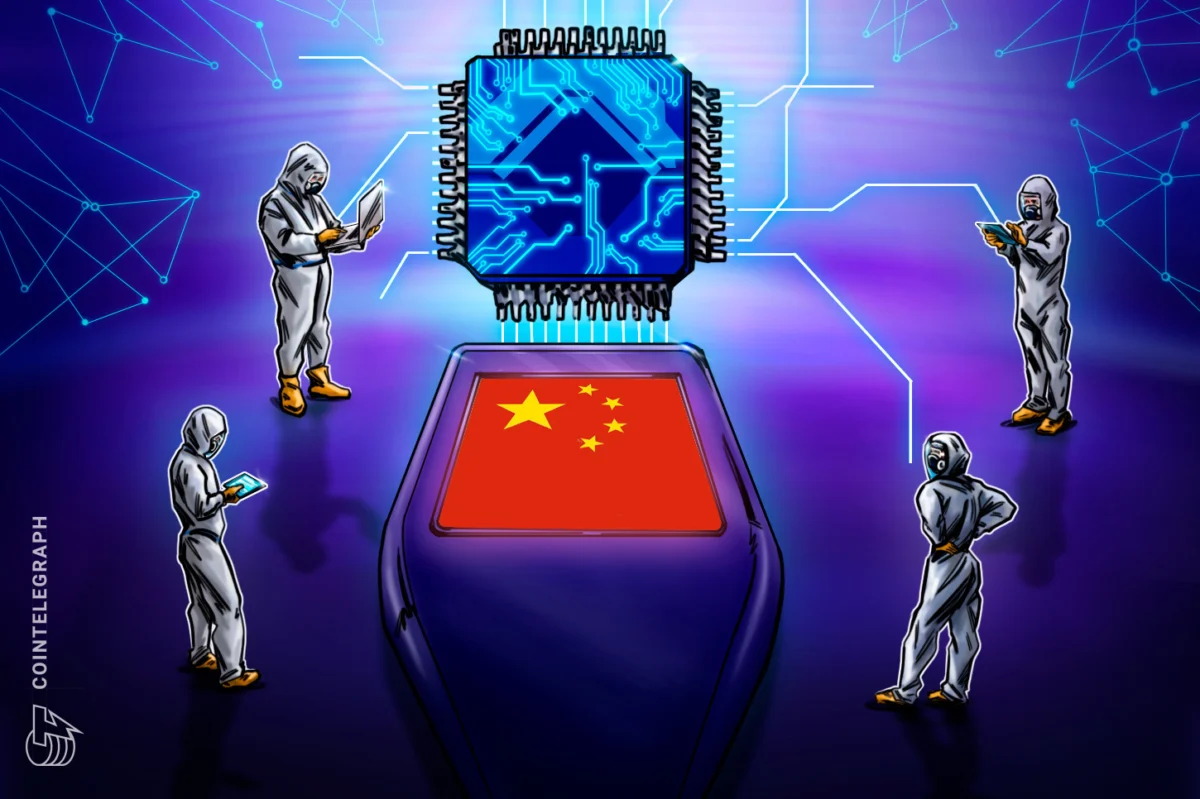
A senior White House official has leveled serious accusations against Chinese AI firm Moonshot AI, alleging that the company illicitly distilled Anthropic’s Fable AI model to develop its recently launched Kimi K3. The claims, made by Michael Kratsios, Director of the White House Office of Science and Technology Policy, have intensified existing concerns in Washington about the accelerating pace of China’s artificial intelligence development and the potential for intellectual property theft from American innovators.
In a post on the social media platform X on Wednesday, Kratsios detailed his allegations, stating that Moonshot AI had developed an internal platform specifically designed for the large-scale distillation of U.S. AI models. He further asserted that the methods employed were engineered to circumvent detection, suggesting a deliberate and clandestine effort to acquire proprietary technology.
"Legitimate AI distillation used to create smaller, more efficient models plays a vital role in this open innovation ecosystem," Kratsios stated in his post. "However, large-scale, covert industrial distillation aimed at stealing proprietary U.S. technology and undermining American research is unacceptable."
The emergence of Kimi K3 as one of China’s most advanced AI models has amplified Washington’s apprehensions. This development fuels the narrative that American AI models are being covertly leveraged to propel China’s progress in the highly competitive AI landscape. The White House’s stance underscores a growing geopolitical tension surrounding AI development, with concerns over national security and economic competitiveness at the forefront.
However, the White House’s assertion has not gone unchallenged within the AI research community. Several AI researchers have raised questions regarding the feasibility and timeline of claims that Anthropic’s Fable AI model was instrumental in training Kimi K3.
A critical point of contention revolves around the release dates of the respective models. Anthropic’s Fable 5 was re-released on July 1, following a period where it was quickly taken offline due to U.S. export controls. Kimi K3, on the other hand, was launched on July 16. This narrow 15-day window between Fable 5’s re-availability and Kimi K3’s debut has led some experts to question the practicality of extensive distillation efforts.
Elie Bakouch, a researcher at the AI startup Prime Intellect, articulated this skepticism in a post on X. "There are only 15 days between fable 5 ban removal and kimi K3 release," he noted, questioning the technical plausibility of the accusation. Bakouch further elaborated, stating, "I don’t think claiming that K3’s performance comes from fable distillation (even if they did it) makes sense technically."
Dean Ball, OpenAI’s head of strategic futures, echoed these reservations. In a post on Friday, he expressed his disbelief that Kimi K3’s performance could be attributed to distillation. Ball stated that he did not believe the model’s capabilities could be "explained away by distillation or anything like that." These perspectives suggest that while AI distillation is a recognized technique, its application in this specific scenario, given the timelines and the sophistication of Kimi K3, warrants further scrutiny.
The U.S. Treasury Department has also weighed in on the matter, with Secretary Scott Bessent issuing a stern warning. Bessent indicated that large-scale distillation attacks, if proven, could lead to significant repercussions, including sanctions and other restrictive measures. He emphasized the distinction between legitimate open-source collaboration and unauthorized appropriation of intellectual property.
"We support open-source AI and the innovation it unlocks," Bessent declared. "But open source is not open season on American IP. When PRC firms conduct covert, industrial-scale distillation attacks that cross the line into IP theft, sanctions and Entity List designations will be on the table." This statement highlights the U.S. government’s commitment to protecting its technological assets and its willingness to employ strong enforcement mechanisms against perceived violations.
The broader implications of these allegations extend beyond the immediate dispute between Moonshot AI and Anthropic. They underscore the escalating competition in the global AI race and the increasing focus on the ethical and legal frameworks governing AI development and deployment. The U.S. government’s firm stance suggests a proactive approach to safeguarding its technological leadership and intellectual property in the face of evolving international dynamics.
The situation also brings to the fore the complexities of AI development, where techniques like distillation can be used for both legitimate innovation and potentially illicit purposes. The challenge for policymakers and researchers alike lies in distinguishing between these applications and establishing clear guidelines to foster a responsible and equitable AI ecosystem. As the investigation into these claims unfolds, the international community will be closely watching to see how these tensions are resolved and what precedents are set for the future of AI development and global cooperation.