 11
11
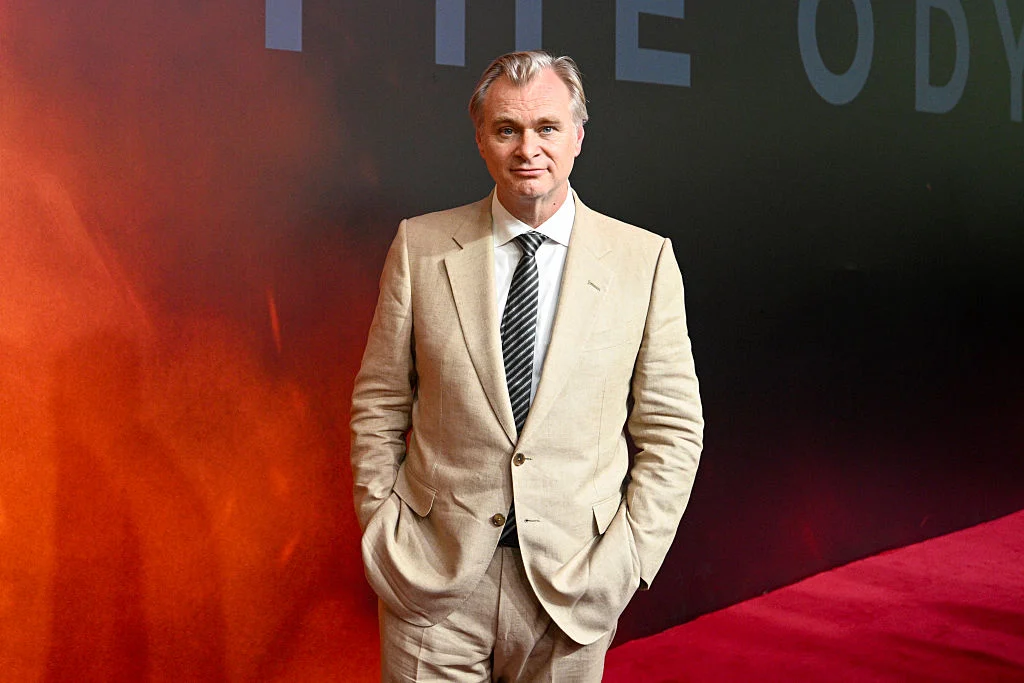
Christopher Nolan, the Oscar-winning director renowned for his intricate narratives and commitment to cinematic craftsmanship, has recently shared his "pretty encouraging" observations regarding the widespread skepticism directed at artificial intelligence, particularly among younger generations. His comments come as his latest directorial effort, a reimagined version of Homer’s epic "The Odyssey," continues its dominant run at the box office, capturing both critical attention and popular success. Nolan’s unique perspective on technology, balancing innovation with a deep-seated caution, frames his views on AI as a critical dialogue for the creative industries and society at large.
The director’s remarks emerged during an interview with Hugo Travers, the insightful journalist behind the popular YouTube channel HugoDécrypte. Travers initiated the discussion by drawing a compelling parallel between AI and the legendary Trojan horse, a pivotal element within the narrative of Nolan’s "The Odyssey." Travers posed a question that resonated deeply with the ancient myth: whether AI, much like the deceptive wooden horse concealing murderous Greek invaders, might initially appear as a welcome innovation in daily life, only to ultimately reveal "something else and something darker." This analogy effectively set the stage for Nolan’s nuanced response, connecting his latest cinematic endeavor with a pressing contemporary technological debate.
Nolan, with a characteristic laugh, readily embraced the metaphor, offering a witty and insightful refinement: "I think AI is a Trojan horse that everybody knows the Greeks are inside." He further elaborated on this perception, describing the technology as "a transparent horse, it’s made of glass." This vivid imagery underscores his belief that, unlike the ancient Greeks’ successful deception, the potential dangers and underlying intentions of AI are remarkably evident to the contemporary public. The transparency of this modern "Trojan horse" implies a collective awareness and a pre-emptive distrust that Nolan finds noteworthy and positive.
He articulated his astonishment at the public’s reaction, stating, "I’ve never seen a technology advancing so rapidly [that’s been] so completely rejected by the public." Nolan highlighted the extreme suspicion surrounding AI, noting its particular intensity among young people. He cited the phenomenon of "AI slop," a term coined by individuals his children’s age to describe and dismiss AI-generated videos and content online. This immediate and widespread labeling, effectively "putting it in a box," demonstrates a proactive rejection rather than a passive acceptance of nascent technology, a stance Nolan clearly appreciates.
From Nolan’s vantage point, this pervasive skepticism represents "a very healthy skepticism." He emphasized the inherent need for caution when approaching any new technological advancement. While acknowledging that "technology is always going to give us great gifts," he stressed that it "has to be viewed with skepticism." Beyond the technology itself, Nolan also pointed to the crucial need to scrutinize the motivations of those developing and disseminating these innovations. "The motives of the people giving it to us also have to be viewed with skepticism," he asserted. He firmly believes that it is through this critical lens – combining skepticism towards the technology with scrutiny of its creators’ intentions – that humanity can truly "get the best out of a new technology, rather than just blind faith that everything’s going to be great." This philosophy underscores a measured approach to progress, prioritizing informed engagement over uncritical adoption.
While Nolan did not delve into specific threats posed by AI during the interview, the technology has undeniably become a significant source of apprehension within the Hollywood community. This concern reached a fever pitch during the comprehensive writers’ and actors’ strikes of 2023. A central tenet of these industrial actions was the demand for robust protections against the unregulated use of AI, which posed existential threats related to job displacement, intellectual property rights, and the unauthorized replication of performers’ likenesses. The Directors Guild of America (DGA), where Christopher Nolan currently serves as president, actively engaged in these discussions and successfully secured generative AI protections in its most recent contract. These safeguards are designed to ensure that human creativity remains at the forefront of filmmaking, preventing AI from undermining the value of artists’ contributions and intellectual property. The DGA’s proactive stance reflects a broader industry-wide effort to navigate the transformative, yet potentially disruptive, implications of AI on creative work.
Nolan’s cautious stance on AI is consistent with his broader technological philosophy, which has frequently positioned him as a figure both resistant to certain modern conveniences and a pioneer in others. He is famously known for his eschewal of smartphones, embodying a deliberate choice to minimize digital distractions and maintain focus on his craft. This selective adoption of technology has led some to label him a "Luddite," a term historically associated with opposition to industrialization. However, simultaneously, his embrace of traditional film techniques, particularly the use of large-format IMAX film and cameras, positions him as a visionary pushing the boundaries of cinematic experience. His film "The Odyssey" stands as a testament to this duality, making history as the first feature film to be shot entirely on IMAX film and cameras, delivering an unparalleled visual fidelity that champions analog superiority in a digital age.
When questioned by The New York Times about whether he considers himself a technophobe, Nolan clarified his position, stating, "I think of myself as a techno-skeptic." He explained that his enduring affection for film stems from its inherent ability to represent "the way the eye sees the world" with greater accuracy and depth than "any digital imaging system I’ve seen." This preference is not merely nostalgic but rooted in a profound belief in film’s superior visual fidelity.
Nolan elaborated on his approach to new technologies, noting, "I embrace new technology all the time, but it tends to be sold to people at the expense of systems that might still be valid and viable." He lamented a tendency within industries to discard established, effective methods prematurely in favor of novel alternatives. He applied this observation directly to his own field: "That’s what I saw in my industry – throwing the baby out with the bath water. We almost lost film!" His fight to preserve film as a viable medium underscores his philosophy: new technologies should augment, not automatically replace, existing ones that still hold value, ensuring a rich and diverse toolkit for creators. This techno-skepticism is not about rejecting progress but about demanding thoughtful, deliberate evolution that respects the merits of both the old and the new.
Meanwhile, Nolan’s film itself has been the subject of controversy, albeit unrelated to AI. SpaceX CEO Elon Musk has publicly posted angry comments regarding "The Odyssey"’s casting choices, specifically targeting its nonwhite and transgender cast members. This illustrates a different dimension of the public discourse surrounding contemporary cultural productions, distinct from the technological debates Nolan himself addresses.
Christopher Nolan’s articulate concerns about AI serve as a vital contribution to the ongoing global conversation surrounding this rapidly evolving technology. His call for "healthy skepticism," coupled with an insistence on scrutinizing the motives behind technological development, offers a valuable framework for navigating the future of innovation, particularly within the sensitive and human-centric realm of creative arts.