 11
11
Atlassian has officially unveiled a suite of new agentic product development capabilities within Jira, alongside significant enhancements to its Teamwork Graph, designed to transform how engineering teams plan, assign, govern, and measure work across a hybrid workforce of humans and artificial intelligence agents. The announcement comes at a pivotal moment in the technology sector, as organizations grapple with what Atlassian identifies as an "AI productivity gap"—a phenomenon where the widespread adoption of AI coding tools has failed to translate into a proportional increase in overall software delivery velocity.
According to a longitudinal study conducted by Atlassian in partnership with DX, which analyzed professional engineering teams, the use of AI in software development has surged by 65%. However, overall developer velocity has only seen a modest increase, topping out at approximately 15%, with many organizations reporting gains of only 10%. This discrepancy highlights a fundamental reality of modern engineering: while AI models have become proficient at generating code, the act of delivering software involves far more than just writing syntax. It requires a deep understanding of business goals, organizational context, system constraints, and the rigorous definition of "done."
To address this bottleneck, Atlassian is repositioning Jira from its origins as a bug tracker into a comprehensive system of record for AI-native software development. The new capabilities are built on the premise that the Software Development Life Cycle (SDLC) must become legible to AI agents without sacrificing human accountability. This shift necessitates a new framework where agents are treated as first-class citizens, capable of receiving delegated tasks while human engineers, product managers, and security professionals provide the necessary judgment, context, and oversight.
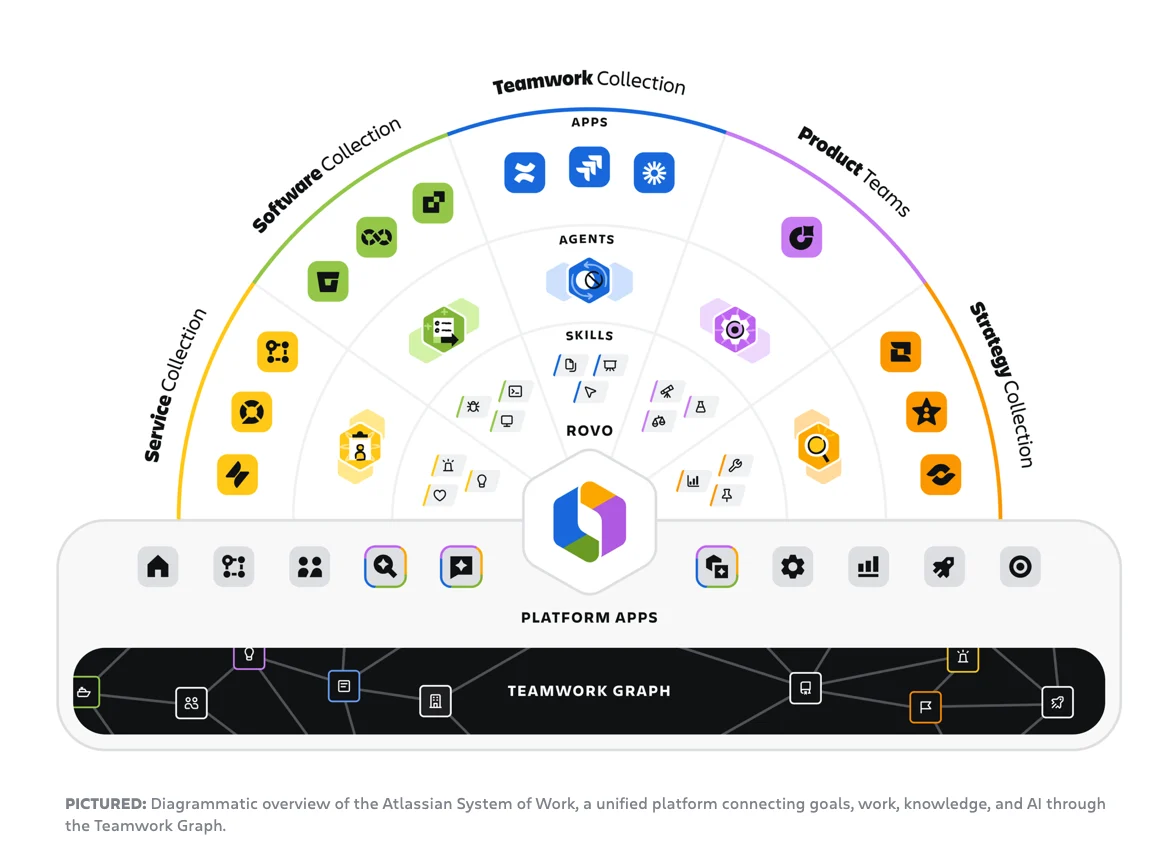
Central to this evolution is the Atlassian Teamwork Graph, a sophisticated context layer that serves as a living map of an organization’s work. The Teamwork Graph aggregates data across various dimensions, including code repositories, project plans, personnel, past decisions, and inter-team dependencies. By connecting atomic tasks in Jira with requirements in Confluence, conversations in Slack, code context from GitHub, and customer insights from Jira Product Discovery, the Teamwork Graph provides agents with the organizational memory they previously lacked.
Without this level of context, AI agents often produce code that solves a specific ticket too literally, missing broader architectural constraints or business nuances. This frequently results in "productivity bottlenecks" where senior engineers must spend excessive time reviewing and correcting plausible-looking but ultimately flawed pull requests. Atlassian’s internal benchmarking demonstrates the tangible value of providing this context: agents enriched by the Teamwork Graph achieved 44% more accurate results while utilizing 48% fewer tokens compared to agents operating in isolation. This not only improves the quality of the output but also significantly reduces the operational costs associated with large language model (LLM) usage.
The newly announced features in Jira focus on three critical stages of the development process: planning, delegation, and governance.
In the planning phase, Jira now enables teams to turn high-level intent into "agent-ready" specifications. One of the primary failure points in agentic work is the delivery of vague or ill-defined plans. Jira’s new AI capabilities help break down complex business ideas into atomic tasks that agents can process with high precision. By leveraging the Teamwork Graph, Jira can package the necessary context—such as existing documentation and related codebases—directly into the task, ensuring the agent has everything it needs to succeed from the outset.
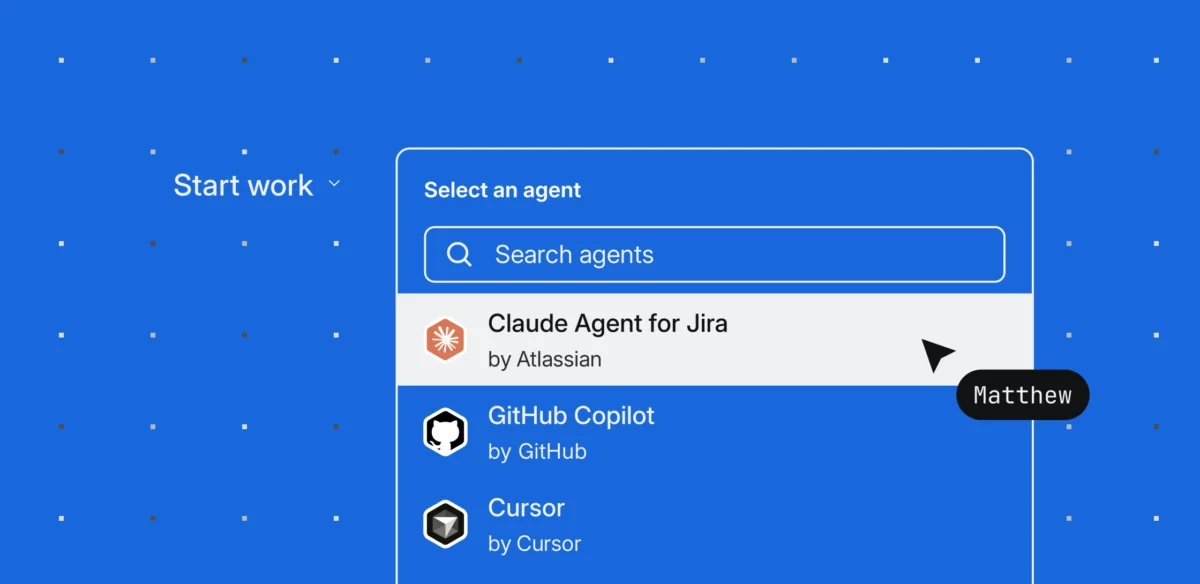
The delegation phase introduces a more structured way to assign work to coding agents. Teams can now delegate tasks to various agents, including GitHub Copilot, Replit, and others, directly from the Jira interface. This process is supported by "agent sessions," where the history of the agent’s work is recorded and monitored in real-time. This visibility allows human team members to steer the AI’s progress and review the output within the same environment where the work was originally planned. This eliminates "lossy handoffs" where context is often lost when moving between different development tools.
Governance and measurement represent the third pillar of this update. As organizations scale their use of AI, they require a centralized system to monitor the impact and cost of agentic work. Jira now provides tools to automate engineering loops and measure the cost of AI tokens against the actual output and business value generated. This level of oversight ensures that AI-native development remains safe, governed, and aligned with organizational standards. It allows engineering leaders to answer critical questions regarding the ROI of their AI investments and the safety of the code being shipped.
The shift toward AI-native development is already being embraced by major industry players. Sean Joerg, Deputy CISO and Head of Corporate Engineering at Reddit, noted that the primary bottleneck in AI development is not the capability of the agents themselves, but rather the coordination required to keep engineers in their "flow" state at scale. By partnering with Atlassian, Reddit aims to create a unified environment where every agent action is visible, governed, and directly tied to a specific business outcome.
Atlassian’s internal teams have also been utilizing these patterns to refine the SDLC. The company reports a noticeable reduction in pull request (PR) cycle times and a decrease in the amount of time developers spend on routine, repetitive tasks. By allowing AI to handle the "grunt work" of coding while humans focus on high-level strategy and architectural integrity, Atlassian believes it can finally close the productivity gap that has characterized the early stages of the AI revolution.
The evolution of Jira reflects a broader trend in the software industry where the focus is shifting from individual productivity tools to integrated systems of work. For over two decades, Jira has adapted to various methodologies, from Waterfall to Agile. Its latest transformation acknowledges that the future of software development is a collaborative effort between human intelligence and artificial agents. In this new paradigm, Jira serves as the bridge, ensuring that intent is clearly communicated, work is accurately executed, and every line of code—whether written by a human or a machine—is accountable to the team’s goals.
The announcement underscores Atlassian’s commitment to building a system where context is a first-class citizen. By making the SDLC legible to agents, the company is providing the infrastructure necessary for agents to move beyond the role of isolated "copilots" and become active participants in the development team. This integration ensures that the judgment of engineers, product managers, and security experts remains at the center of the process, providing the necessary steering to ensure that the final software product is safe, reliable, and effective.
As the bulk of coding work begins to shift toward automated agents, the requirement for well-defined tasks and rich, explicit context becomes paramount. The Teamwork Graph’s ability to draw from a diverse array of sources ensures that agents do not operate in a vacuum. By providing access to the "why" behind a task, Atlassian is enabling a more sophisticated form of automation that respects the architectural and strategic constraints of a real-world organization.
The new agentic product development capabilities are available starting today. Engineering teams looking to implement these AI-native workflows can explore the new features at jira.dev. As the industry moves forward, the success of AI in software development will likely depend not on the power of the models alone, but on the strength of the systems that manage them. With these updates, Atlassian is positioning Jira to be the definitive platform for this next chapter in software history, where humans and agents work in tandem to deliver the next generation of digital products.