11
11
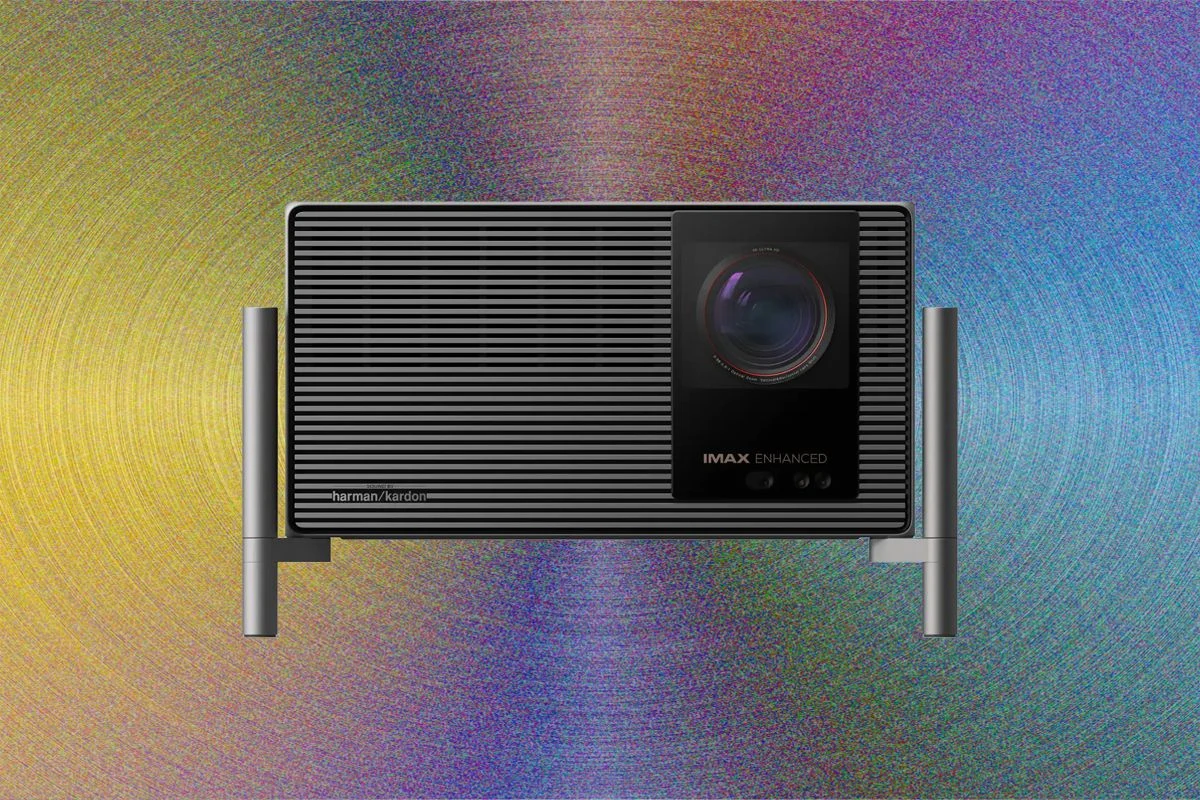
Premium home theater projectors traditionally command prices well over $10,000, often placing them out of reach for many enthusiasts. However, the Xgimi Titan Noir Max is poised to disrupt this high-end market, offering an impressive suite of features and outstanding picture quality at a significantly more accessible price point of $5,999. This positions the projector well under the typical five-figure threshold for top-tier models, yet it boasts capabilities usually reserved for far more expensive units, including support for IMAX Enhanced mode, a remarkable 10,000:1 native contrast ratio, a dazzling 7,000 lumens of brightness, and a sophisticated dual intelligent iris system that performs real-time picture adjustments.
Despite Xgimi’s decade-long history of producing affordable home cinema solutions, the company ventured into the high-end segment with the Titan Noir Max, launching a highly successful Kickstarter campaign that garnered an extraordinary $19 million in funding. This overwhelming response underscores the significant market demand for a projector that combines premium performance with a more competitive price. In rigorous testing, the Titan Noir Max consistently surpassed its benchmarks, even outperforming established competitors in its price range, such as the Epson Pro Cinema LS9000 and the Leica Cine Play 1. Its only notable limitation emerged when attempting to project extremely dark evening scenes from films like Awake and Tron: Ares in a brightly lit, sunny room, where some detail was inevitably diminished.

It is crucial to note that the Xgimi Titan Noir Max is currently available solely through its Kickstarter campaign. As an officially unreleased product, the final version may be subject to changes. Prospective backers should be aware of the standard Kickstarter disclaimers, acknowledging that the eventual product received could differ from the review unit, and there is an inherent risk that the product might not be delivered at all.
Unlike many ultra-premium projectors from brands like JVC or Sony, which often necessitate professional installation involving intricate wiring and ceiling mounts, the Xgimi Titan Noir Max is designed for consumer convenience. This long-throw projector simply rests on a table, making setup remarkably straightforward. While it is consumer-friendly, it also offers extensive configurability and advanced features that cater to the most discerning cinephiles. A standout characteristic that truly differentiates this model is its ability to produce incredibly "inky blacks," creating a profound cinematic atmosphere that mimics a true home theater experience.
Setting up the Titan Noir Max is surprisingly intuitive. A unique and highly practical design feature is its inclusion of four adjustable legs. This stands in contrast to most projectors, which typically only offer adjustable front legs. The four-leg system allows users to precisely adjust the image’s height, tilt, and angle with ease, accommodating various placement scenarios, such as positioning the projector on a table beside a couch. The projector itself is sleek, presented in an all-black finish with subtle silver accents, and comes protected in a durable hard-shell carrying case. While Xgimi offers a dedicated floor stand for $399, the reviewer opted for a simple table setup, demonstrating its flexible deployment options.

A minor surprise for some users might be that the Titan Noir Max operates on a basic version of Google Android, which means it lacks built-in streaming capabilities. The design philosophy assumes that users will connect their own external audio-visual components, such as an AV receiver, dedicated streaming devices, or a 4K Ultra Blu-ray player. This approach, however, offers a distinct advantage: the absence of an internal operating system dedicated to streaming content eliminates potential slowdowns or excess lag, which is particularly beneficial for gaming. The reviewer successfully integrated a Google TV streamer, an Xbox Series X, and an Onkyo TX-RZ50 AV receiver for DTS:X surround sound. However, Dolby Atmos passthrough audio was not functional with the Onkyo TX-RZ50, a point of consideration for those with specific audio setups.
Configuring the Titan Noir Max’s core settings proved to be a swift process, taking less than five minutes. The simple keystoning function efficiently sized the image to the projector screen. While models like the Leica Cine Play 1 offer automatic image sizing, the manual keystoning and focus options on the Titan Noir Max were so user-friendly and quick that the lack of full automation was negligible. This ease of adjustment significantly contrasted with the more demanding keystoning process observed on the Epson LifeStudio Grand Plus projector. The advanced settings on the Titan Noir Max, while comprehensive, do not require a certified projector installer to configure and are entirely optional. Nonetheless, the reviewer delved into features like DBLE (Dynamic Black Level Enhancement), which intelligently reduces brightness to enrich black levels, and the automatic iris control, which dynamically adjusts colors and contrast for each scene. The projector delivered impressive performance even without extensive tweaking, but the option to fine-tune settings allowed for even deeper blacks, aligning with Xgimi’s marketing emphasis on "absolute black." Users can also manually adjust the F-stop, with F2.0 being optimal for dark rooms and F5.6 providing better contrast in brighter environments.
From a technical standpoint, the Titan Noir Max excels, exceeding both the DCI-P3 and Rec.2020 color gamut specifications, indicating its capacity to reproduce a vast spectrum of colors with cinematic accuracy. As a triple laser RGB projector, it inherently offers vibrant and pure colors. Interestingly, an "Anti-RBE" (Anti-Rainbow Effect) setting effectively mitigated any noticeable rainbow artifacts, a common concern with some single-chip DLP projectors. The projector’s internal design is exceptionally quiet, with its four-legged stance providing ample room for efficient ventilation, preventing distracting fan noise during viewing sessions.

The remote control for the Titan Noir Max is slim and ergonomically designed, providing easy access to basic functions like volume and settings. However, the reviewer found the four "shortcut" buttons somewhat perplexing given the projector’s lack of a built-in streaming OS, preferring dedicated buttons for popular streaming services like Netflix or Prime. Connectivity options on the rear of the unit are robust, including a digital optical out, two USB ports (one for external media, one for trickle-charging), three HDMI ports (one with eARC passthrough for audio), a 3.5 mm audio out, and an Ethernet port. The projector supports Wi-Fi 6, ensuring reliable and high-speed wireless connectivity without any observed issues.
For actual viewing, the absence of built-in streaming necessitated connecting an external device. The reviewer used a Google TV streamer, highlighting that a high-quality 4K streaming device, such as the Fire TV Stick 4K Max, can be acquired for as little as $60, making this an easily solvable "issue." In benchmark tests, the Titan Noir Max consistently outperformed most recently reviewed projectors. A skin tone test revealed varied and warm complexions, accurately distinguishing different skin tones rather than rendering them as overly similar. A scene featuring a winter fence with green flecks of grass appeared as good as, if not superior to, the rendition on the Leica Cine Play 1, notably avoiding the washed-out, brownish appearance often seen on televisions with subpar contrast.
Testing with movies provided compelling evidence of its capabilities. Pixar’s Hoppers, streamed via Disney+, was described as "blowing away" the reviewer, presenting an "extremely colorful, crisp, and clear" image with "rich inky blacks and vivid contrast" that evoked a true theatrical experience. A specific scene depicting a child and her grandma with matching freckles by a river under a blue sky was called "mesmerizing," solidifying the projector’s outstanding picture quality. To evaluate deep black performance, the DBLE and other settings like noise reduction and sharpness were fine-tuned. The early-morning scene in The Creator, often rendered as washed out by projectors with poor contrast, was reproduced with "rich blacks and dark grays" by the Titan Noir Max, devoid of any hint of poor contrast, a feat attributed largely to its dynamic iris and DBLE.

In comparisons, Avatar: Fire and Ash exhibited a more lifelike and colorful presentation on the Epson ProCinema LS9000, primarily due to the LS9000’s high-end lens offering superior focus across the entire image. Nonetheless, the Titan Noir Max still delivered a phenomenal, bright, and colorful image in a sunny scene featuring whale-like creatures, and its performance was roughly comparable to the Leica Cine Play 1 in terms of vivid colors. The projector’s performance in brightly lit rooms yielded mixed results. It maintained impressive clarity during outdoor battle scenes in War Machine on Netflix and preserved vivid, unwashed-out colors in Unbroken. However, its limitations became apparent in the darkest scenes of Awake and Tron: Ares, where the picture quality suffered significantly in a sunny room, appearing washed out despite looking spectacular in a dark environment.
The Xgimi Titan Noir Max also proved glorious for gaming and other media. The dynamic iris was further tested with 007: First Light on Xbox. A late-game scene on a boat with colorful flowers appeared "eye-poppingly real" when projected at 120 inches. The projector supports a maximum image size of 300 inches, large enough for a double-stall garage door, though its 18-pound weight makes it less portable for such ambitious setups. During First Light, the colors adjusted with lightning speed as the scene transitioned from bright sun to misty clouds and darker shadows, a testament to the Titan Noir Max’s constant and instantaneous tonal adjustments. While the iris’s faint adjustments are audible if the feature is enabled, they are imperceptible amidst the gunfire of a game or the chaos of a movie like Hoppers.
For PC gaming, connecting a laptop for Crimson Desert demonstrated the projector’s capabilities, including support for 240Hz at 1080p, albeit requiring specific projector settings like enabling game mode and disabling MEMC (Motion Estimation, Motion Compensation). At this high refresh rate, controller input felt immediate, with virtually no lag. The gacha game NTE also felt highly responsive during fight scenes, and Forza Horizon 6 presented a Nissan sports car in full, vivid color on the large screen, again with almost nonexistent lag, an uncommon trait for a high-end cinema projector. Even viewing the NBA playoffs via the YouTube TV app showcased the dynamic iris’s effectiveness, making colors pop and rendering pre-show announcements against an inky black stadium screen. Jersey colors during the game appeared clear and vivid. News broadcasts via YouTube TV also benefited, exhibiting a "cinematic vividness" that transformed the viewing experience into something akin to watching CBS News at a movie theater.

In conclusion, the Xgimi Titan Noir Max stands out as an exceptional home theater projector, particularly for movies and TV shows. For those seeking to replicate the vibrant colors and deep blacks of a local cineplex for films like Hoppers, this projector is among the best options available, matching the vividness of higher-priced competitors like the Leica Cine Play 1 and even the Epson ProCinema LS9000. Its primary limitation lies in its image quality when projecting dark scenes in a brightly lit room, where some detail may be compromised. However, in a dedicated dark room environment, its performance is truly outstanding, offering a premium cinematic experience at a remarkably competitive price.