 11
11
Stepping into XPeng’s Munich showcase event, attendees were immediately confronted by a striking, colossal wooden Trojan horse. This dramatic installation was far from subtle, serving as a powerful, almost provocative, metaphor for a Chinese automotive brand announcing its inaugural global electric vehicle (EV) release directly in the historical heartland of Germany’s revered auto industry. The symbolism was clear: XPeng, a formidable challenger from the East, was making a bold and calculated entrance into the established Western market, ready to disrupt the status quo.
The rapid ascent of XPeng is remarkable, especially considering its relatively recent inception. Founded just shy of 12 years ago, the company has demonstrated an astonishing pace of innovation and market expansion. By 2020, XPeng had already begun its European journey by shipping its electric vehicles to Norway, a strategically chosen market known for its high EV adoption rates and supportive infrastructure. This initial foray served as a crucial testing ground, allowing the company to gather vital insights into European consumer preferences and regulatory requirements before a broader expansion. Today, XPeng’s commercial product portfolio extends far beyond conventional automobiles, encompassing advanced robotics and even ambitious projects in flying cars, underscoring its vision as a comprehensive future mobility provider.

Despite its innovative spirit and rapid growth, XPeng does not currently feature among the top 10 EV manufacturers in China by volume, a testament to the intensely competitive and rapidly evolving domestic market. However, the company has successfully cultivated a significant and growing reputation beyond its home country, particularly in markets receptive to cutting-edge EV technology. This strong international standing has emboldened XPeng to embark on its most ambitious venture yet: a truly global launch for its latest model, the L03. This new electric vehicle is set to roll out across an impressive 60 countries, spanning diverse regions including Europe, Latin America, the Middle East, and the Asia Pacific, signaling a profound commitment to becoming a major player on the world stage.
The L03 represents a pivotal strategic move for XPeng. Positioned as its "budget" model, it enters the market with an aggressive starting price of €35,600 (approximately $41,000). This pricing strategy places it strategically below the company’s G6 SUV, which is designed to compete directly with models like the Tesla Model Y. The L03 is explicitly engineered for high-volume sales, aiming to capture a significant share of the burgeoning mass market for affordable electric vehicles. In a global economic climate marked by inflationary pressures and a growing demand for cost-effective sustainable transportation, the L03’s competitive pricing could prove to be a significant advantage. It seeks to democratize access to advanced EV technology, challenging the perception that premium features are exclusive to high-end vehicles.
Despite its keen pricing, XPeng has not compromised on specifications, meticulously crafting the L03 to offer an array of attractive features that far exceed expectations for its segment. The vehicle boasts a claimed WLTP range of 320 miles, providing substantial travel capability on a single charge. Its fast-charging capability allows for a rapid replenishment from 10 to 80 percent in just 20 minutes, addressing a key concern for EV owners regarding charging convenience. The interior experience is elevated by a panoramic glass roof, heated and cooled massage seats, and 256-color ambient lighting, creating an atmosphere of luxury typically found in higher-priced vehicles. Brushed metal speaker covers add a touch of sophistication, while an impressive drag coefficient of 0.228 contributes to maximizing range efficiency. Advanced functionalities like smart parking, a crisp 15.6-inch 2.5K central screen, a generous 27-inch Head-Up Display (HUD), AI-powered voice control, and integrated Google Maps all come as standard across all variants – from the base model to the Long Range, AWD, and Ultra versions.

XPeng repeatedly emphasizes the phrase "beyond class" to describe this generous offering of features, clearly signaling its intent for the L03 to compete not just within its immediate price segment, but to go "toe to toe" with EVs in the segment above, such as the Volkswagen ID.4. Performance metrics further underscore this ambition: the five-seat, 4,650mm-long L03 can accelerate from 0 to 60 mph in a brisk 4.5 seconds in its top-tier models, while the Standard Range base version achieves it in a respectable 7.5 seconds. This blend of affordability, luxury features, and robust performance positions the L03 as a compelling option for a wide array of consumers.
When it comes to autonomous driving capabilities, the L03 Ultra variant stands out. While other L03 models offer Level 2 (L2) assisted driving, the Ultra steps up to L2++, promising next-generation point-to-point, hands-off navigation. This advanced system, powered by a trio of XPeng’s proprietary Turing 7-nanometer AI chips, is projected to become available in Europe by 2027. Crucially, its activation will only require an over-the-air (OTA) software update, highlighting the car’s future-proof architecture. This approach means owners can anticipate enhanced capabilities without needing physical hardware upgrades.
However, the L03’s advanced autonomy comes with specific distinctions. In its home market, the L03 is known as the Mona L03, part of XPeng’s dedicated "Mona" sub-brand designed for budget-conscious consumers. XPeng has deliberately chosen not to highlight this "Mona" branding for its global launch, and the company indicates that the specifications of the international "non-Mona" L03 have been "tweaked" to align with global market expectations and potentially justify the name change. This strategic rebranding underscores the complexities of managing brand perception and tailoring product offerings for diverse international markets, where a "budget" label might carry different connotations than in China.

Furthermore, while the L03 Ultra’s onboard intelligence (the Turing chips) possesses the processing power to theoretically operate at Level 4 (L4) autonomy, Xianming Liu, XPeng’s senior director of engineering, clarified that the car lacks the necessary hardware for the required six levels of redundancy critical for L4 operation. Consequently, this "budget" EV will be capped at L2++ functionality, unable to achieve the highest levels of hands-off, eyes-off driving. This distinction is vital, as L4 autonomy demands extremely robust, fail-safe systems to ensure safety in all conditions.
Another significant point of divergence in XPeng’s autonomous vehicle (AV) strategy, and one that sparks considerable debate in the industry, is its "no lidar" stance. Similar to Tesla’s Full Self-Driving (FSD) approach, XPeng relies exclusively on boosted compute power, increasingly refined AI models, and its integrated camera system. Liu maintains that this vision-centric approach is more than capable of matching any competitor utilizing lidar-powered alternatives. This contrasts sharply with most of XPeng’s major Chinese rivals, such as BYD, Zeekr, and Nio, which have opted to incorporate lidar sensors into their AV suites. The debate between lidar and camera-only systems centers on cost, complexity, and performance in varying environmental conditions, with each camp vigorously defending its chosen path. While lidar offers precise 3D mapping capabilities, camera-based systems, when combined with advanced AI, aim to replicate human visual perception.
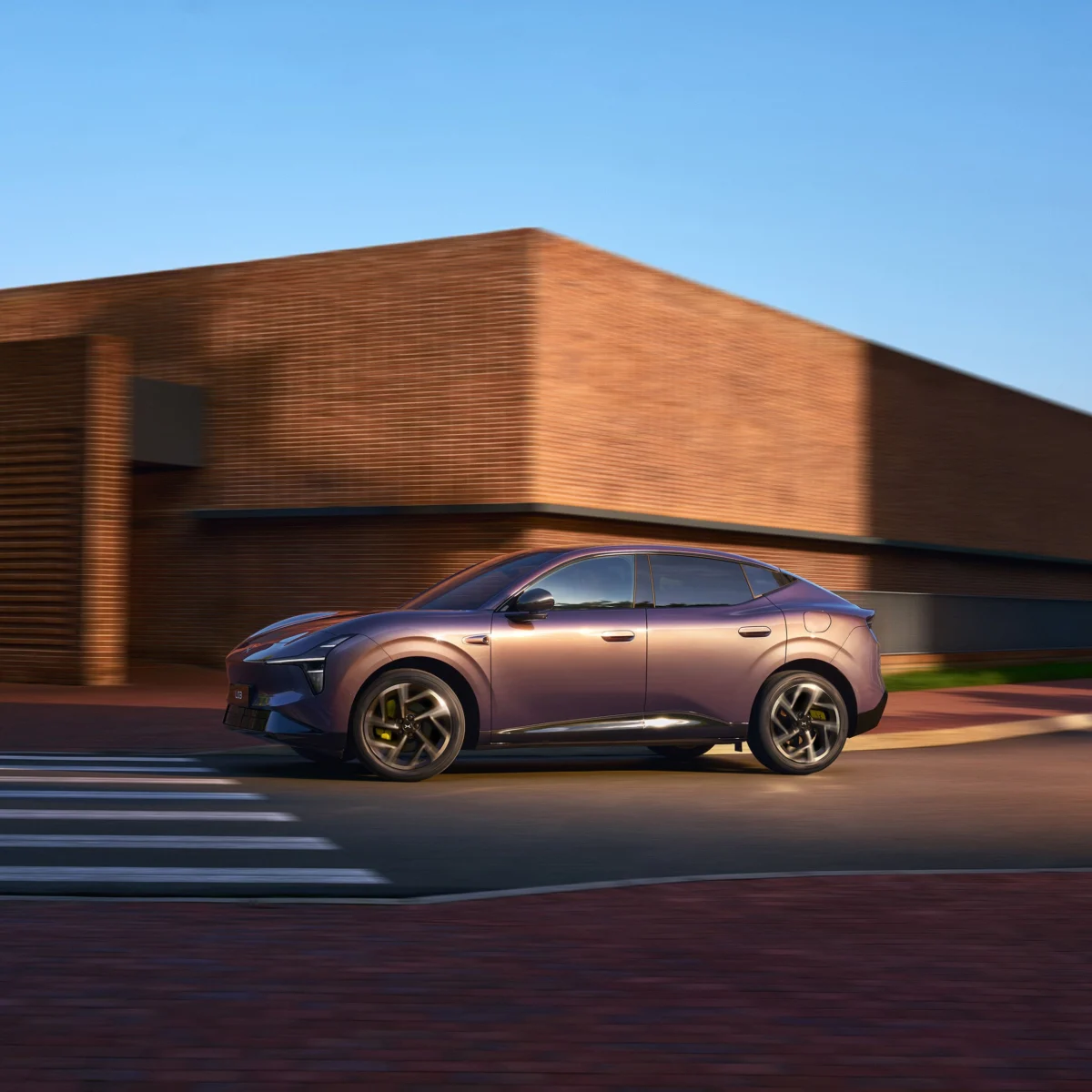
Visually, the L03 makes a striking impression. Beyond its surprisingly pleasant and well-appointed interior – which truly feels "beyond class" with thoughtful touches like anchor points for action cameras and magnetic clips for accessories – its exterior design draws immediate parallels to high-end electric vehicles such as the Ferrari Luce and even Denza’s Z9 GT. This stylistic convergence is particularly intriguing given the radical price differences among these vehicles: the L03 is a budget offering, the Denza Z9 GT is premium, and the Ferrari Luce represents the pinnacle of luxury.

This design similarity is not accidental. XPeng’s head of design is JuanMa López, who previously served as Ferrari’s head of exterior design from 2010 to 2018, during which time he shaped the aesthetics of approximately 25 models, including iconic cars like the LaFerrari, SF90 Stradale, and the Monza SP. (Notably, López was not involved in the design of the Luce itself, which was outsourced to LoveFrom, the agency founded by Jony Ive).
Rafik Ferrag, XPeng’s head of creative design, sheds light on this phenomenon of design convergence. When asked why exterior aesthetics no longer seem to clearly denote a car’s market segment, a stark contrast to two decades ago, Ferrag explained: "Yes, that’s right. In the past, it was impossible for an entry-level car to afford the technology or even the decorative elements that a luxury car has. Today, that’s no longer true." He continued, "Our goal as designers is to reach the top level. If we can look as good as a Ferrari or a Bentley in an entry-level car, we’ll do it. And that’s what we are trying to do here, to reach this preciseness, this material fit and finish, color precision, and technology." This philosophy underscores a broader trend in the EV industry: electrification has leveled the playing field, allowing for more design freedom and the integration of high-end materials and technologies into more affordable vehicles. This democratization of design means that luxury marques must now work harder to differentiate their offerings, especially as the demand for high-end electric cars faces increasing challenges.
In conclusion, XPeng’s L03 is more than just a new electric vehicle; it’s a strategic statement. By launching a feature-rich, affordably priced EV globally, XPeng is challenging traditional market segmentation and directly confronting established automakers on their home turf. The L03 embodies XPeng’s "beyond class" philosophy, blending premium features and sophisticated design with mass-market accessibility. While its autonomous driving capabilities face hardware limitations and its "no lidar" approach sparks debate, the company’s aggressive global expansion and commitment to high-value offerings signal a formidable new force in the rapidly evolving landscape of electric mobility. XPeng, with its Trojan horse, has made its intentions clear: it aims not just to enter the market, but to redefine it.