11
11
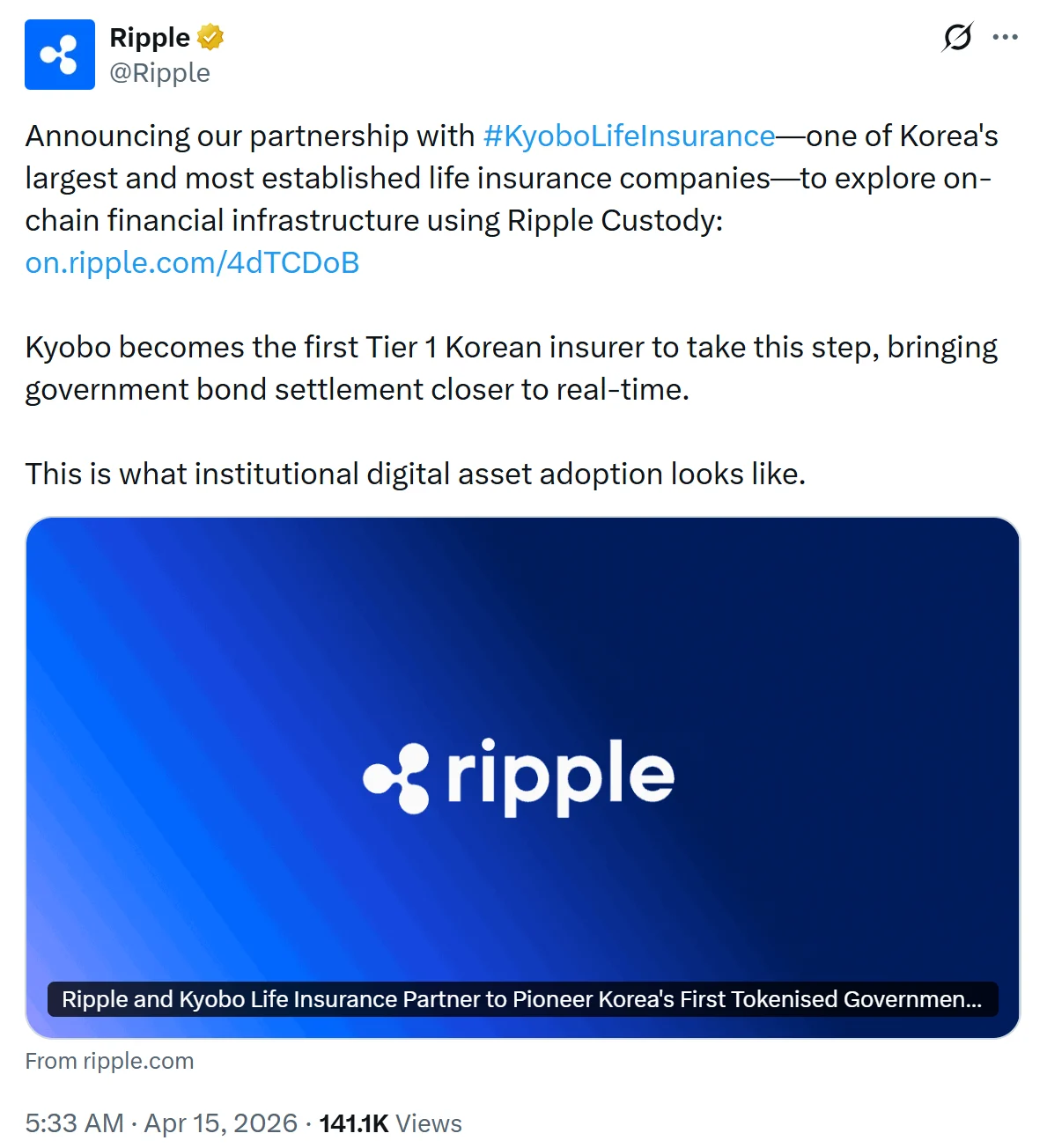
In a significant move towards modernizing financial infrastructure, Ripple has announced a strategic partnership with Kyobo Life Insurance, one of South Korea’s leading life insurance companies. The collaboration is set to pilot the blockchain-based settlement of government bonds, a development that coincides with Seoul’s proactive efforts to establish formal regulations for tokenized securities. This initiative leverages Ripple Custody, the company’s specialized digital asset custody solution, to facilitate the entire lifecycle of tokenized government bonds, from issuance and storage to final settlement. The partnership extends beyond this initial pilot, with both entities exploring the broader application of tokenized treasury settlements across South Korea’s intricate financial ecosystem.
The primary objective of this groundbreaking project is to transcend the limitations of traditional bond settlement processes. These conventional methods are often characterized by a reliance on multiple intermediaries and extended settlement cycles, typically taking two business days to complete. By contrast, the blockchain-based approach promises near real-time settlement through on-chain execution. This efficiency gain is expected to yield substantial benefits, including a significant reduction in counterparty risk and a marked improvement in capital efficiency for financial institutions. The ability to settle transactions almost instantaneously minimizes the exposure of parties involved to potential market fluctuations or defaults during the settlement period.
This pioneering project emerges at a pivotal moment for South Korea, as the nation diligently constructs its legal and regulatory framework for tokenized securities. A crucial milestone was achieved on January 15th when amendments recognizing blockchain-based distributed ledgers as valid securities registries were passed by the National Assembly. This legislative advancement is a cornerstone of the new framework, which is slated to officially take effect on February 4th, 2027. This implementation date allows for the necessary time to enact further detailed rulemaking and develop the supporting infrastructure required for a robust and compliant digital asset market. These reforms are designed not only to embrace new technologies but also to enhance the accessibility and liquidity of financial markets.
Furthermore, the upcoming reforms are poised to open new avenues for investment contract securities. These instruments will be permitted to circulate through regulated securities firms, a move that is anticipated to broaden investor access and significantly improve market liquidity for a range of non-traditional financial instruments. This is a critical step in fostering a more inclusive and dynamic financial landscape.

In addition to the government bond settlement pilot, Kyobo Life Insurance has indicated its intention to explore other innovative use cases within the partnership. These include the potential for stablecoin-based payment rails, offering a more efficient and potentially cost-effective alternative to traditional payment systems. The company also plans to investigate integration with liquidity and treasury management systems, aiming to streamline financial operations and enhance capital utilization. Jin Ho Park, Senior Executive Vice President at Kyobo Life, expressed his confidence in the potential of blockchain technology, stating that "traditional financial instruments can operate securely and efficiently on blockchain." This endorsement from a senior executive at a major financial institution underscores the growing acceptance and perceived benefits of distributed ledger technology in mainstream finance.
The broader regulatory landscape in South Korea is also evolving to accommodate digital assets. Reports indicate that South Korea’s ruling Democratic Party is in the process of preparing legislation that would classify stablecoins used in cross-border payments as foreign exchange instruments. This proposed legislation, part of a broader Digital Asset Basic Act, would subject these tokens to the Foreign Exchange Transactions Act. Consequently, businesses involved with such stablecoins would fall under regulatory oversight, even in the absence of specific licensing requirements for digital assets.
The draft legislation also introduces more stringent regulations for tokenized real-world assets (RWAs). Under these proposed rules, issuers of tokenized RWAs would be mandated to back the underlying assets through regulated trust structures, operating within the framework of capital markets law. This requirement aims to ensure the integrity and security of tokenized real-world assets, providing greater investor protection and fostering confidence in this emerging asset class. The emphasis on regulated trust structures suggests a commitment to integrating tokenized assets into existing, robust financial safeguards.
The partnership between Ripple and Kyobo Life Insurance, coupled with South Korea’s forward-thinking regulatory initiatives, signals a significant shift in the adoption of blockchain technology within the traditional financial sector. By piloting blockchain-based settlements for government bonds and exploring further applications, these entities are not only modernizing financial operations but also contributing to the development of a more efficient, secure, and accessible financial future for South Korea and potentially beyond. The convergence of technological innovation and regulatory foresight positions South Korea as a leader in the global evolution of digital finance.