 11
11
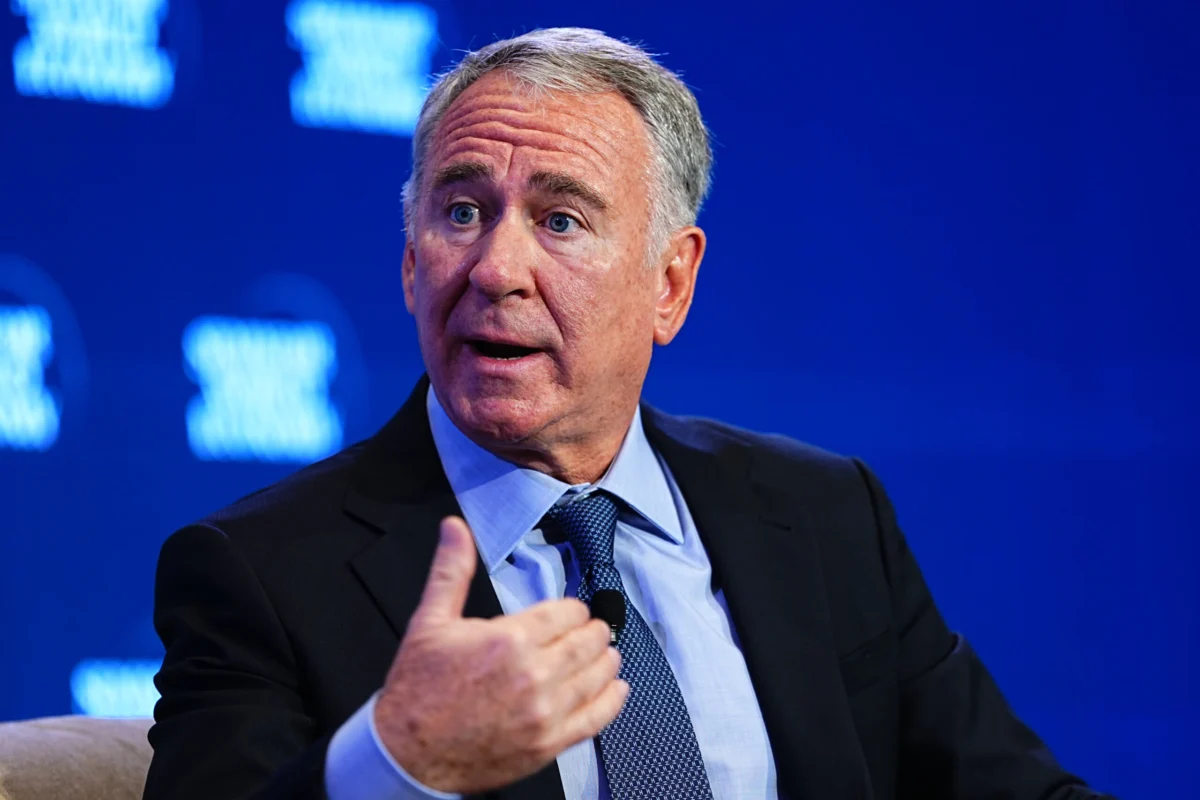
Citadel CEO Ken Griffin issued a stark warning on Tuesday, stating that the global economy is on a trajectory toward recession if the critical Strait of Hormuz remains closed for an extended period. Speaking at the Semafor World Economy conference in Washington, D.C., Griffin projected a grim outlook, asserting that a closure lasting "the next six to 12 months" would inevitably lead to a global recession from which there would be "no way to avoid."
The implications of such a prolonged closure, Griffin elaborated, would necessitate a significant and rapid global pivot towards alternative energy sources. He specifically highlighted wind, solar, and nuclear power as key alternatives that would see accelerated adoption in response to the energy crisis. Griffin also offered a perspective on the recent U.S. military actions, suggesting that the consequences of the conflict would have been more severe had the United States delayed its strikes until Iran’s military capabilities had further advanced.
The current stock market, despite having recovered to pre-conflict levels before the U.S. initial strike against Iran in February, is experiencing an optimism that Griffin characterized as fragile and contingent on the duration of the ongoing Middle East conflict. He noted a prevailing sentiment among market participants that the potential risks associated with escalating tensions between the United States and Iran are not adequately factored into current market valuations. This suggests a significant disconnect between market performance and underlying geopolitical realities, potentially setting the stage for future volatility.
Global economies, particularly those in Asia, are identified as being especially susceptible to the impact of oil price volatility. While oil prices have seen a slight retreat from their peak levels during the conflict, they remain significantly elevated. Current prices are hovering around $100 a barrel, a notable increase from the pre-war benchmark of just under $70 a barrel. This sustained high price point for a crucial global commodity poses a substantial economic challenge, particularly for import-dependent nations.
The Strait of Hormuz is a vital chokepoint for global oil transportation, with a significant percentage of the world’s seaborne oil trade passing through its narrow waters. Any disruption to this waterway, whether through military action, blockades, or accidents, has immediate and far-reaching consequences for global energy markets and, consequently, for the broader economy. The economic sensitivity of Asian nations to oil price fluctuations is well-documented, as many are major industrial hubs with substantial energy demands and limited domestic oil production. Sustained high oil prices can lead to increased inflation, reduced consumer spending, and slower economic growth in these regions.
Griffin’s comments underscore the intricate and interconnected nature of global geopolitics and economics. The potential for a protracted closure of the Strait of Hormuz not only threatens energy security but also risks triggering a broader economic downturn, characterized by inflation, reduced investment, and diminished global trade. The projected shift towards alternative energy sources, while potentially beneficial in the long term for sustainability, represents a disruptive and costly transition in the immediate future, requiring significant capital investment and technological development.
The hedge fund leader’s perspective on the timing of U.S. military intervention suggests a strategic calculation regarding the balance of power and the potential for escalation. By acting earlier, the argument implies, the U.S. may have preempted a more formidable Iranian military posture, thereby mitigating the long-term risks associated with a more powerful adversary. This viewpoint highlights the complex strategic considerations that underpin international military and economic policy.
The current market sentiment, described as "optimistic sentiment among investors," appears to be overlooking the latent risks associated with the Middle East conflict. This optimism may be fueled by short-term gains or a belief that diplomatic solutions will prevail. However, Griffin’s assessment suggests that this optimism is built on shaky foundations, and a prolonged period of instability in the Strait of Hormuz would likely lead to a swift reassessment of market expectations and a potential sell-off as the economic realities of an energy crisis set in.
The elevation of oil prices to approximately $100 a barrel, even after some decline from their peak, represents a substantial shock to the global economy. This price level impacts not only the cost of transportation and manufacturing but also influences a wide range of consumer goods and services, contributing to inflationary pressures. For countries heavily reliant on imported oil, these elevated prices can strain foreign exchange reserves and exacerbate balance of payments deficits.
The prospect of a global recession, as articulated by Griffin, implies a broad-based contraction in economic activity across multiple countries and sectors. Such a recession would likely be characterized by rising unemployment, falling asset prices, and a general decline in consumer and business confidence. The interconnectedness of the global economy means that a recession in one major region can quickly spread to others through trade, financial markets, and supply chains.
The call for a massive shift toward alternative fuel sources, while a necessary response to such a crisis, presents its own set of challenges. The transition to renewables and nuclear power requires massive infrastructure development, significant technological advancements, and substantial financial investment. Furthermore, the reliability and scalability of these sources in meeting global energy demand in the short to medium term are subjects of ongoing debate.
Griffin’s pronouncements from the Semafor World Economy conference serve as a crucial indicator of the prevailing sentiment among influential figures in the financial and economic world. His analysis, rooted in his extensive experience managing one of the world’s largest hedge funds, provides a sobering perspective on the potential ramifications of geopolitical instability on the global economic landscape. The warning about the Strait of Hormuz and its potential impact on global recession underscores the critical importance of maintaining stable energy supply routes and the delicate balance of international relations. The market’s current optimism, juxtaposed with Griffin’s dire predictions, highlights a potential disconnect that investors and policymakers will need to closely monitor. The coming months, therefore, are likely to be a period of heightened scrutiny for both geopolitical developments and their unfolding economic consequences.