 11
11
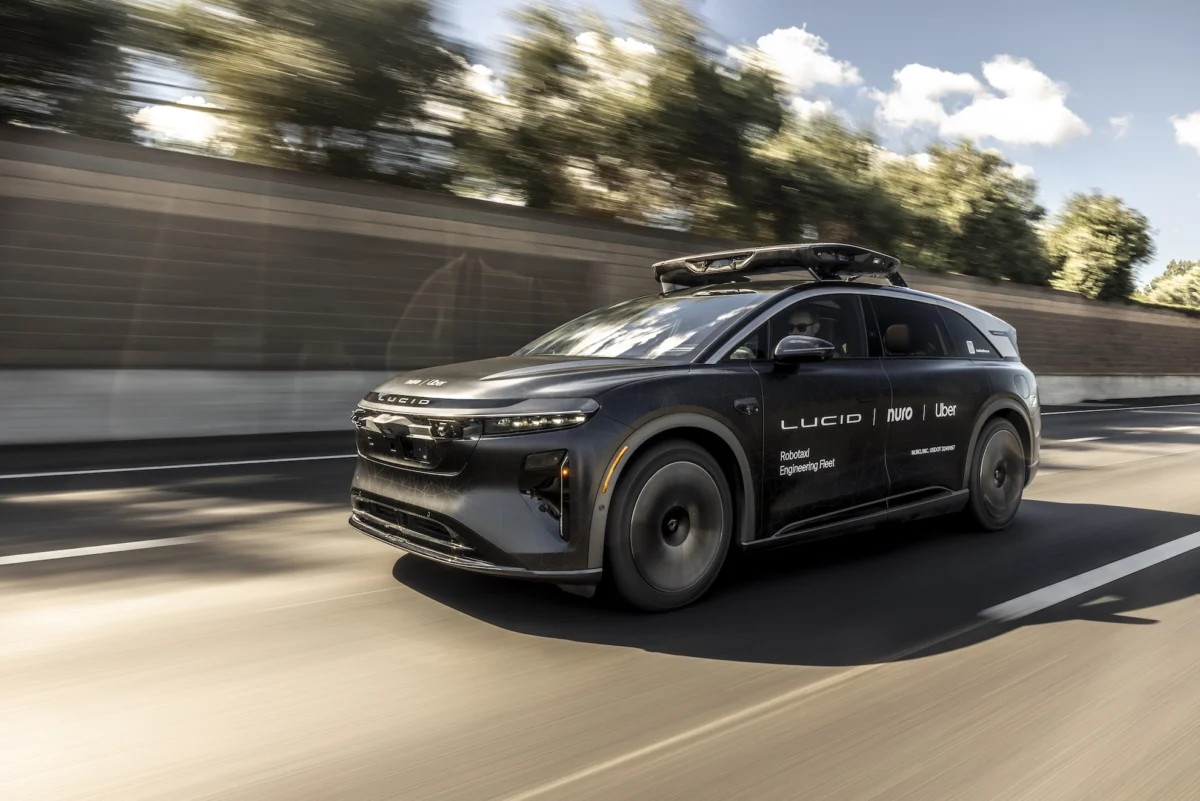
The bustling streets of San Francisco are currently serving as a crucial testbed for the future of premium autonomous ride-hailing. Select Uber employees are now actively experiencing rides in Lucid Gravity SUVs, distinctively outfitted with an array of sensors and powered by Nuro’s advanced self-driving system. These highly visible robotaxis, often described as "blinged-out" due to their sophisticated sensor suites, signify a major step forward towards the anticipated public launch of this cutting-edge service later this year. This latest phase of testing allows Uber personnel to request rides through the familiar Uber app, providing an invaluable opportunity to simulate the eventual public user experience.
Nuro, the autonomous vehicle technology developer at the heart of this initiative, formally announced this development in a blog post published on Monday. The company confirmed that these vehicles operate in a fully autonomous mode, yet for safety and regulatory compliance during this testing phase, a human safety operator remains behind the wheel. This operator is prepared to intervene if necessary, ensuring robust oversight as the system continues to gather real-world data and refine its capabilities in complex urban environments. The primary objective of these employee test rides is to meticulously evaluate how the integrated autonomy stack, the luxury vehicle, and the overall rider experience coalesce and perform within a live operational setting. A particular focus is placed on the vehicle’s proficiency in handling rider pickups and drop-offs, a notoriously intricate operation for autonomous ride-hailing systems in dynamic cityscapes.
This significant milestone underscores the substantial progress achieved since Uber, Nuro, and Lucid first announced their strategic partnership and a multi-million dollar investment initiative in July 2025. The collaboration cemented Uber’s ambitious commitment to the autonomous future, prominently featuring a substantial $300 million investment in Lucid Motors. Beyond this direct financial injection, Uber also entered into a pivotal agreement to procure a minimum of 20,000 of Lucid’s new Gravity SUV models over the subsequent six years. These premium electric vehicles are specifically earmarked to form the sophisticated backbone of this high-end robotaxi service.
Concurrently with its investment in Lucid, Uber also committed an undisclosed "multi-hundred-million dollar" sum to Nuro. This dual investment strategy highlights Uber’s strategic imperative to secure both advanced autonomous driving technology and the requisite luxury electric vehicle platforms to establish a distinctive and high-quality robotaxi offering. The long-term vision outlines Uber’s intent to own and operate this premium service, likely with operational support from a third-party partner responsible for the day-to-day management and maintenance of the specialized fleet. Production of these custom-modified Lucid Gravity vehicles, engineered from conception to seamlessly integrate Nuro’s autonomous system, is projected to commence in late 2026, as detailed in a regulatory filing posted last year.
The Lucid Gravity robotaxi, initially unveiled to the public in January, represents a powerful convergence of luxury electric vehicle engineering and state-of-the-art autonomous technology. At its technological core, Nuro’s autonomous vehicle system is driven by Nvidia’s Drive AGX Thor computer. This highly advanced platform is celebrated for its immense processing capabilities, which are crucial for handling the complex artificial intelligence computations required for real-time perception, planning, and decision-making in self-driving applications. This robust computational power enables the robotaxi to navigate intricate urban scenarios with precision and responsiveness.
The vehicle itself is comprehensively equipped with a sophisticated suite of sensors meticulously designed to provide a 360-degree understanding of its surrounding environment. This perception system incorporates high-resolution cameras that capture intricate visual data, providing a detailed view of the road and its occupants. Complementing these are solid-state lidar sensors, which generate precise three-dimensional maps of the environment using laser pulses, offering critical depth and distance information. Additionally, multiple radar units are integrated, capable of detecting objects and accurately assessing their velocities, even in challenging weather conditions such as fog or heavy rain. This synergistic combination of diverse sensor modalities empowers the self-driving system to accurately perceive the real-world environment, comprehend dynamic traffic patterns, identify pedestrians and other road users, and ultimately operate safely and efficiently within its operational domain. The meticulous integration of these sophisticated technologies transforms the Lucid Gravity from a high-performance luxury SUV into a highly capable and intelligent robotaxi, specifically engineered to meet the stringent demands of urban autonomous operation.
Nuro’s development pathway for the autonomous Lucid Gravity SUVs has adhered to a stringent, multi-stage testing protocol, ensuring thorough validation and refinement. The journey commenced with extensive closed-course testing, during which the vehicles underwent rigorous evaluation in controlled environments. These settings allowed engineers to simulate a vast array of driving scenarios and critical edge cases without the inherent risks associated with public roads. This foundational phase was crucial for validating core functionalities, fine-tuning software algorithms, and establishing the fundamental safety of the autonomous stack before wider deployment.
Following the successful completion of closed-course validation, Nuro progressed to its inaugural public road testing phase late last year. This marked a pivotal advancement, exposing the autonomous vehicles to the unpredictable complexities of real-world traffic, diverse road conditions, and dynamic interactions with human drivers and pedestrians. The invaluable insights garnered during public road testing are instrumental for further development, enabling the identification of areas for continuous improvement and the adaptation of the system to manage the myriad variables encountered outside of controlled settings.
Presently, Nuro operates a substantial engineering fleet consisting of 100 Lucid Gravity SUVs, each fully equipped with its advanced self-driving system. These vehicles are actively deployed across multiple U.S. cities and states, functioning as mobile data collection platforms. Their primary purpose is to gather vast quantities of real-world operational data, which is subsequently fed back into Nuro’s sophisticated development pipeline. This continuous feedback loop is vital for training and iteratively enhancing the autonomous driving algorithms, thereby fostering the robustness and reliability essential for widespread autonomous operation. The current employee test rides in San Francisco represent the culmination of this comprehensive testing continuum, extending beyond purely engineering-focused data collection to embrace the crucial human-centric aspect of the rider experience.
The introduction of employee test rides is not merely a technical validation exercise; it represents a strategic move to holistically evaluate the end-to-end service offering. Nuro emphasizes that these rides are absolutely pivotal in assessing how the entire system – encompassing the sophisticated autonomous stack, the vehicle’s inherent comfort and functionality, and the overall rider interface – harmonizes and performs within a live, real-world operating environment. This involves a meticulous scrutiny of every aspect, from the intuitive ease of requesting a ride via the Uber app to the vehicle’s precise navigation, smooth acceleration, gentle braking, and overall passenger comfort.
A particularly critical area of focus during this phase is the vehicle’s ability to expertly handle rider pickups and drop-offs. These seemingly straightforward operations for human drivers often present formidable challenges for autonomous systems. They necessitate precise maneuvering in frequently congested or structurally complex urban spaces, accurate identification of the designated passenger, selection of safe and compliant stopping locations, and seamless interactions with the surrounding environment and other road users. The comprehensive data and invaluable feedback collected from Uber employees during these rides will be instrumental in refining these intricate maneuvers, ultimately ensuring a seamless, reliable, and highly satisfactory experience for future public users.
The collaborative effort between Uber, Nuro, and Lucid signals a significant acceleration towards the widespread commercialization of high-end robotaxi services. For Uber, this partnership facilitates a strategic re-entry into the autonomous vehicle space with a robust and technologically advanced offering, especially after having divested its own self-driving unit. It strategically positions Uber to potentially capture a lucrative premium segment of the ride-hailing market with luxury, autonomous electric vehicles. For Nuro, the transition from its established expertise in autonomous goods delivery to passenger transport, particularly with a high-profile partner like Uber, marks a monumental step, validating its autonomous technology for broader and more complex applications. Lucid, renowned for its unwavering commitment to luxury electric vehicles, benefits immensely from securing a substantial commercial partner and a considerable order book for its Gravity SUV, further solidifying its market position and accelerating its growth trajectory.
The carefully phased rollout, commencing with intensive employee rides and progressing towards a public launch, reflects a prudent yet determined approach to autonomous vehicle deployment. The consistent emphasis on the presence of human safety operators and extensive real-world testing underscores the industry’s collective commitment to responsible innovation and ensuring public trust. As the planned public launch draws nearer, the critical insights gleaned from these ongoing employee test rides will be indispensable in fine-tuning every aspect of the service, guaranteeing it meets the stringent standards of safety, reliability, and unparalleled passenger satisfaction expected from a premium autonomous ride-hailing experience. The journey from initial partnership announcements to active employee testing in San Francisco emphatically highlights the accelerating pace of autonomous vehicle development and its imminent integration into daily urban transportation networks.
This comprehensive report on the Uber-Nuro-Lucid partnership and the ongoing robotaxi testing was originally brought to light by TechCrunch, a leading digital publication recognized for its in-depth coverage of technology news and startups. TechCrunch itself is a vibrant hub for technological discourse, exemplified by its upcoming event scheduled to take place in San Francisco, California, from October 13-15, 2026. This event serves as a prominent platform for industry leaders, innovators, and enthusiasts to converge and discuss the latest advancements and future trends shaping the tech landscape.
The detailed reporting on this significant development was authored by Kirsten Korosec, a highly respected transportation editor and reporter at TechCrunch. Korosec brings over a decade of extensive experience, meticulously covering the dynamic evolution of transportation, encompassing everything from electric vehicles and autonomous systems to urban air mobility and cutting-edge in-car technologies. Her distinguished journalistic career includes impactful contributions to esteemed publications such as Fortune, The Verge, Bloomberg, MIT Technology Review, and CBS Interactive, cementing her reputation as an authoritative and insightful voice in the sector. Further demonstrating her profound expertise, Korosec co-hosts TechCrunch’s popular Equity podcast and is also a co-founder and co-host of "The Autonocast," a dedicated podcast exploring the intricate nuances of autonomous technology. Her deep understanding and consistent, high-quality reporting have provided invaluable insights into the progress and persistent challenges within the future of mobility. For those wishing to engage with her or verify outreach, she can be contacted via email at [email protected] or through encrypted message at kkorosec.07 on Signal.