 11
11
In a significant week for the cryptocurrency market, Michael Saylor’s MicroStrategy has once again demonstrated its unwavering commitment to Bitcoin, acquiring an additional 13,927 BTC for approximately $1 billion. This latest acquisition pushes the company’s total Bitcoin holdings closer to the 800,000 mark. Meanwhile, the decentralized finance (DeFi) lending protocol Aave has seen its core development team, Aave Labs, receive a substantial funding boost of $25 million in stablecoins, along with a token allocation of 75,000 AAVE, as approved by its decentralized autonomous organization (DAO). However, the broader crypto market faces caution, with analyst Nic Puckrin of Coin Bureau characterizing the recent Bitcoin recovery as "fragile," citing potential geopolitical and macroeconomic headwinds.
MicroStrategy, recognized as the world’s largest public holder of Bitcoin (BTC), bolstered its already substantial reserves last week with a significant Bitcoin purchase. Between April 6th and April 12th, the company added 13,927 BTC to its treasury, at a total cost of $1 billion, according to an 8-K filing submitted to the U.S. Securities and Exchange Commission (SEC). The average acquisition price for these newly acquired coins was $71,902 per BTC, notably below MicroStrategy’s overall average purchase price of $75,577. This strategic buying pattern continues to lower the company’s cost basis.

With this latest addition, MicroStrategy now holds a staggering 780,897 BTC on its balance sheet, acquired at a cumulative cost of $59.02 billion. The company is now just 19,103 BTC shy of reaching its target of 800,000 BTC, having already purchased over 107,000 BTC year-to-date. Michael Saylor, the influential CEO and Chairman of MicroStrategy, had previously hinted at the impending purchase, sharing a chart on X (formerly Twitter) illustrating the company’s extensive Bitcoin acquisition history since 2020, a recurring pattern that often precedes new Bitcoin buys.
In parallel, the Aave ecosystem is set to benefit from a substantial infusion of capital and tokens. Aave Labs, the primary development force behind the Aave protocol, has been granted $25 million in stablecoins and an allocation of 75,000 AAVE tokens by the Aave DAO. This move is part of the "Aave Will Win" framework, designed to accelerate the protocol’s growth and development. The proposal received significant backing, passing with nearly 75% of the votes in favor on Saturday. The stablecoin funding will be disbursed over a 12-month period, while the 75,000 AAVE tokens will be subject to a linear vesting schedule over four years.
The "Aave Will Win" framework is a strategic initiative to bolster Aave’s market position. Aave Labs will utilize the stablecoin funds to directly finance its operational activities, including research, development, and scaling efforts. The AAVE token allocation is intended to incentivize developers and align their interests with the long-term success and expansion of the Aave protocol. Further elements of the framework, such as growth and development grants tied to specific product launches and milestones, will be subject to separate governance proposals. Aave currently stands as one of the largest DeFi protocols in the industry, boasting a total value locked (TVL) exceeding $25 billion, according to data from DeFiLlama. This funding framework represents a significant strategic shift in how the DAO allocates resources for protocol advancement.

Despite these positive developments within specific crypto projects, the broader market sentiment remains cautious. Nic Puckrin, a respected crypto market analyst and founder of the Coin Bureau media outlet, has expressed concerns about the sustainability of the recent Bitcoin recovery, which is now nearly a week old. Puckrin attributes this fragility to ongoing geopolitical and macroeconomic uncertainties, particularly the fallout from the conflict in the Middle East.
"Even if the war ends now, its repercussions will likely be the story of 2026, and certainly the dominant narrative for Q2," Puckrin stated in an interview with Cointelegraph. He further elaborated on the potential impact on monetary policy, suggesting, "I don’t expect to see a rate cut until late Q3 or Q4, if at all." A delay in interest rate cuts, or a reversal thereof, typically dampens investor appetite for risk assets like cryptocurrencies.
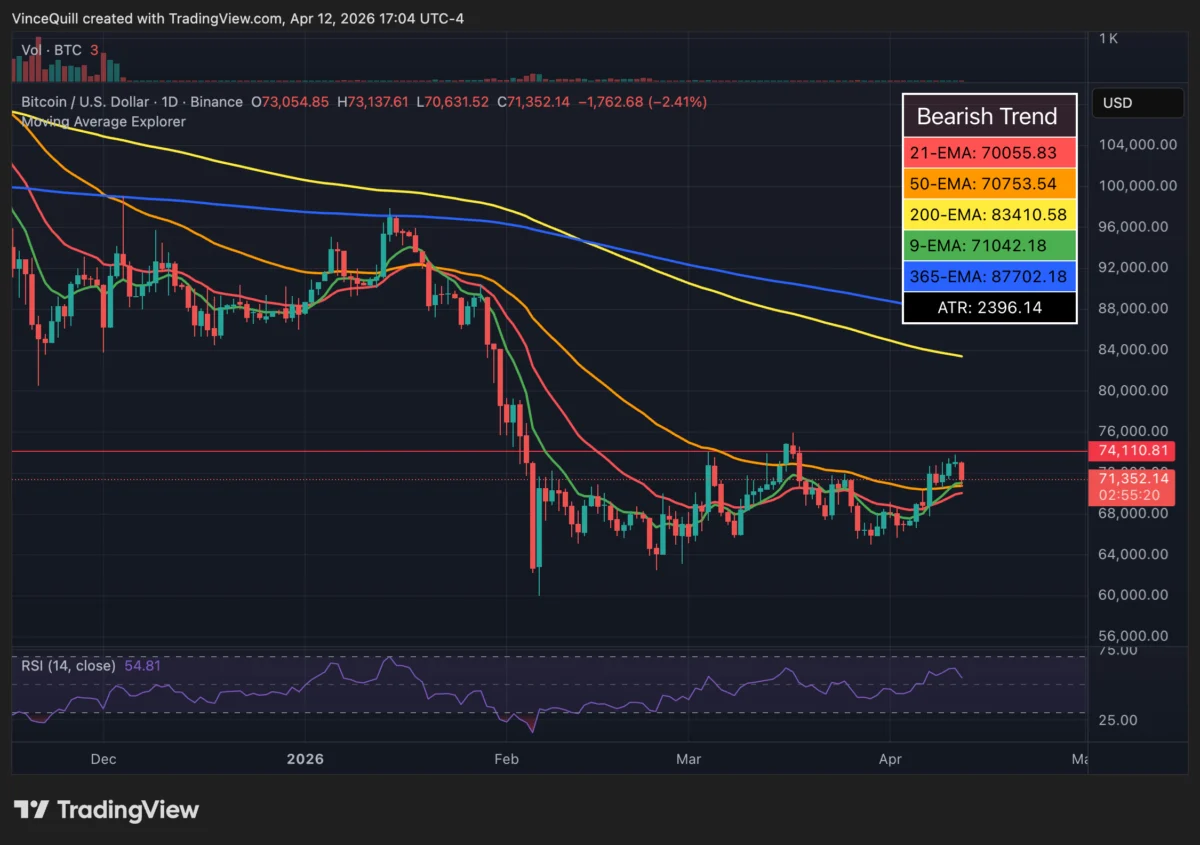
Puckrin outlined key technical levels for Bitcoin, noting that a weekly close above $71,000 could signal continued upside momentum. However, he identified resistance around the $74,000 level. The analyst’s concerns are echoed by recent economic data. The U.S. Bureau of Labor Statistics (BLS) Consumer Price Index (CPI) report, released on Friday, indicated an inflationary spike, potentially diminishing hopes for earlier interest rate cuts in 2026. Historically, interest rate cuts or credit easing measures tend to stimulate asset prices, and their absence or reversal can create headwinds for markets. Bitcoin continues to trade below its 200-day exponential moving average, a technical indicator often watched by traders.