 11
11
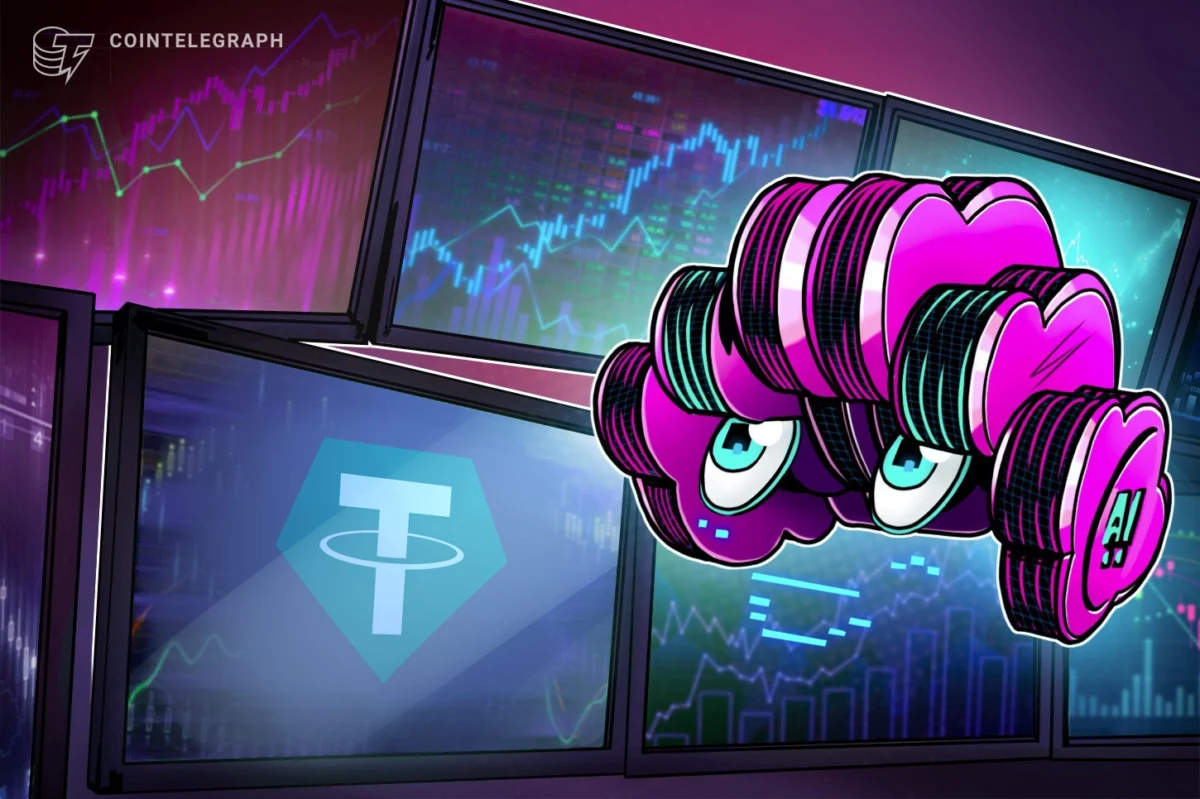
Tether, the prominent issuer of USDT, the world’s largest stablecoin by market capitalization, has introduced a groundbreaking AI training framework designed to significantly lower the barriers to entry for developing large language models (LLMs). This innovative system, named QVAC, enables the fine-tuning of LLMs on readily available consumer hardware, including smartphones and non-Nvidia Graphics Processing Units (GPUs).
The QVAC platform leverages Microsoft’s BitNet architecture in conjunction with LoRA (Low-Rank Adaptation) techniques. This powerful combination dramatically reduces the memory and computational power required for AI model development. By minimizing these resource demands, Tether aims to make AI model creation more accessible and cost-effective, moving beyond the confines of specialized, high-end hardware.
A key feature of the QVAC framework is its cross-platform compatibility. It supports training and inference across a diverse range of chipsets, demonstrating remarkable flexibility. This includes processors from AMD, Intel, and Apple Silicon, as well as mobile GPUs manufactured by Qualcomm and Apple. This broad support ensures that a wider array of devices can participate in AI development and deployment.
Tether’s engineers have already showcased the framework’s capabilities, successfully fine-tuning models with up to 1 billion parameters on smartphones in less than two hours. Smaller models can be fine-tuned in mere minutes. The framework’s ambition extends further, supporting models as large as 13 billion parameters on mobile devices, a significant feat for consumer-grade hardware.
At the core of this efficiency is BitNet, a 1-bit model architecture. According to Tether, this architecture can reduce Video RAM (VRAM) requirements by an impressive 77.8% when compared to traditional 16-bit models. This substantial reduction in VRAM allows for larger and more complex models to operate on hardware with limited memory. Furthermore, the framework facilitates LoRA fine-tuning on non-Nvidia hardware specifically for 1-bit models, broadening the ecosystem beyond the GPUs that have historically dominated AI training.
The performance enhancements offered by the QVAC framework are not limited to training; they extend significantly to inference as well. Tether reports that mobile GPUs running BitNet models exhibit speeds several times faster than CPUs. This opens up compelling use cases, including on-device training, where models can learn and adapt directly on a user’s device without the need for constant cloud connectivity. Additionally, the framework is well-suited for federated learning scenarios. In federated learning, models are updated across a network of distributed devices without the sensitive data ever leaving those devices and being sent to centralized servers. This approach enhances privacy and security while reducing dependence on expensive cloud infrastructure.
Tether’s strategic move into AI infrastructure aligns with a broader trend of cryptocurrency companies expanding their reach into compute and machine learning sectors. This expansion is accelerating across various domains, from the foundational infrastructure of Bitcoin mining to the development of sophisticated AI agents.
The crypto industry’s growing interest in AI is evident in several high-profile investments and initiatives. In September, Google acquired a 5.4% stake in Cipher Mining as part of a substantial $3 billion, 10-year agreement specifically focused on AI data center capacity. Following this, in December, Bitcoin miner IREN announced plans to raise approximately $3.6 billion to finance AI infrastructure development.
This trend has carried into 2026 with continued momentum. In February, HIVE Digital Technologies reported record revenue of $93.1 million, largely attributed to the significant growth in its AI and high-performance computing (HPC) operations. Complementing this, Core Scientific secured a $500 million loan facility from Morgan Stanley in March, with an option to increase it to $1 billion, also earmarked for data center development to support AI workloads.
The pivot of the mining sector towards AI and HPC is occurring concurrently with the rise of AI agents within the cryptocurrency space. AI agents are autonomous programs capable of transacting, interacting with various services, and executing tasks independently.
In October, Coinbase introduced wallet infrastructure designed to enable AI agents to conduct on-chain transactions, paving the way for decentralized AI applications. Last month, Alchemy launched a system that permits AI agents to access blockchain data services using USDC on the Base network, further integrating AI into the blockchain ecosystem. In February, Pantera and Franklin Templeton joined Arena, a platform developed by Sentient for the testing and deployment of enterprise-grade AI agents.
Further underscoring the rapid advancements in AI agent technology, World, the identity network co-founded by Sam Altman of OpenAI, launched AgentKit on Tuesday. This toolkit empowers AI agents to verify their association with a unique human identity through World ID capabilities. It also facilitates payments via the x402 micropayments protocol, enabling secure and verifiable transactions for AI agents.
The evolving landscape of AI development, with innovations like Tether’s QVAC framework, signifies a potential democratization of advanced AI capabilities. By enabling training and inference on widely accessible hardware, Tether is contributing to a future where AI development is less dependent on massive, centralized computing resources, potentially fostering greater innovation and broader participation in the AI revolution. The convergence of cryptocurrency and AI continues to unfold, presenting new opportunities and challenges for both industries.