 11
11
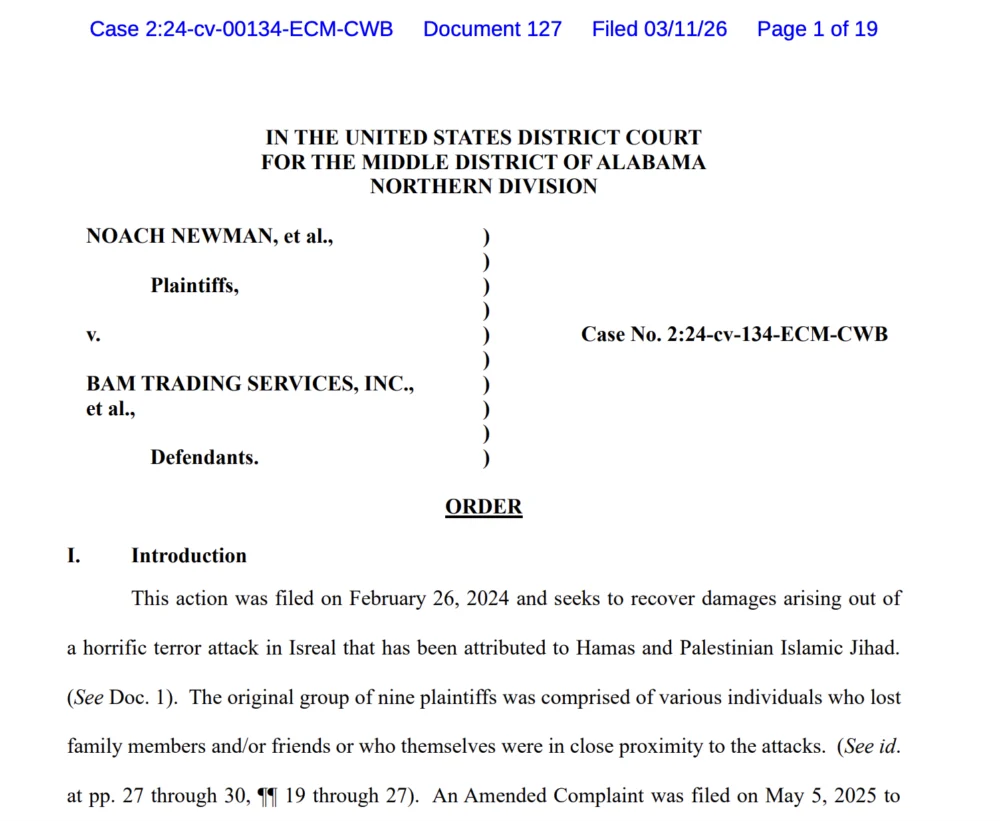
A federal court in Alabama has granted a significant motion to dismiss key portions of a 2024 complaint filed against Binance, its U.S. affiliate Binance.US, and former CEO Changpeng "CZ" Zhao. The lawsuit alleged that the cryptocurrency exchange facilitated the transfer of funds to terrorist organizations, specifically Hamas. While the court dismissed these initial claims, it has given the plaintiffs a deadline to submit a revised complaint, indicating the case is not entirely closed.
In a ruling issued on Wednesday, U.S. District Court for the Middle District of Alabama Magistrate Judge Chad Bryan granted a motion filed by Zhao, which sought to dismiss substantial parts of the initial complaint. The original filing, lodged in February 2024, accused the defendants of violating and potentially continuing to violate the Anti-Terrorism Act by enabling financial transfers to Hamas.
Judge Bryan’s order, however, stipulated that the group of plaintiffs must submit a second amended complaint no later than April 10, 2024. Failure to do so could result in "the prospect of a total or partial dismissal" of their case. The judge emphasized the gravity of the allegations, stating, "The underlying harm here is serious; the allegation that the defendants are implicated is serious; the potential liability the plaintiffs seek to impose is serious; and the weight upon the court is serious. The operative pleading thus must demonstrate a commensurate level of seriousness before the action will be permitted to proceed."
Following the ruling, Binance issued a statement on Thursday, declaring it represented a "full and complete legal victory." This statement comes shortly after another significant legal development for the cryptocurrency exchange. Last week, a judge in the U.S. District Court for the Southern District of New York dismissed a similar case against Binance, citing "lack of personal jurisdiction."
However, the legal landscape for Binance remains complex. U.S. District Judge Jeannette Vargas, while dismissing the New York case on jurisdictional grounds, acknowledged that another court within the same district had previously ruled that allegations of "widespread, intentional circumvention of anti-terror financing regulations" by Binance were sufficient to survive a motion to dismiss. This suggests that while specific procedural or jurisdictional issues may lead to dismissals in some instances, the underlying allegations of misconduct continue to be scrutinized.
Eleanor Hughes, Binance’s general counsel, commented on the recent rulings, stating, "Sanctions compliance and terrorism financing are serious matters of law – they require evidence, legal rigor, and due process. Courts have now examined these claims on two separate occasions and found them to be without merit."

Despite the dismissal of key aspects of the Alabama complaint, the case is not definitively over. In a separate Wednesday order concerning the New York case, Judge Vargas noted, "While the Court has stayed discovery, this case is not closed. Moreover, this Court retains the inherent authority to determine if counsel and the parties are abiding by their preservation obligations." This indicates that the court retains oversight and can address potential future issues related to evidence and conduct.
Binance Faces Broader Scrutiny Over Iran Transactions and Sanctions Evasion
The legal challenges against Binance are occurring amidst heightened media and congressional scrutiny, particularly concerning the exchange’s alleged role in facilitating transactions related to Iran. Reports have emerged, especially in the context of the U.S.-Israel conflict with Iran, suggesting that Binance fired employees who raised concerns about the company enabling over $1 billion in crypto transactions to entities connected to Iran. These reports have prompted an investigation by the U.S. Senate.
Binance has largely denied these claims and has taken legal action against the Wall Street Journal, filing a defamation lawsuit over its reporting of a Justice Department probe into Iran’s alleged use of the exchange to evade sanctions. This legal battle highlights the ongoing tension between Binance’s defense of its practices and the serious allegations of sanctions evasion and potential facilitation of illicit financial flows.
The cryptocurrency industry, and Binance in particular, has been under increasing pressure to demonstrate robust compliance with international sanctions and anti-money laundering regulations. The allegations of facilitating transactions to sanctioned entities, including those linked to terrorism, pose a significant reputational and legal risk to the exchange.
The dismissal of the initial complaint in Alabama, while a positive development for Binance, does not fully absolve it of potential future legal challenges. The requirement for the plaintiffs to file an amended complaint suggests that the core allegations, though perhaps insufficiently pleaded initially, may be re-presented to the court. The broader context of investigations and media reports regarding Iran and potential terrorism financing underscore the persistent regulatory and legal headwinds facing major cryptocurrency exchanges.
Cointelegraph remains committed to independent and transparent journalism. This news article has been produced in accordance with Cointelegraph’s Editorial Policy, aiming to provide accurate and timely information. Readers are encouraged to verify information independently.