 11
11
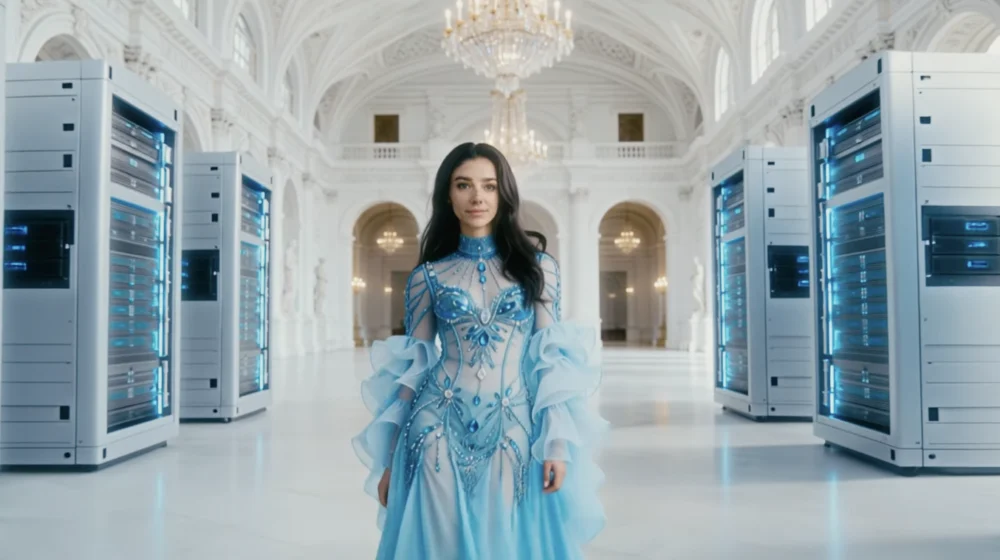
When the production company Particle6 debuted its AI-generated "actor" Tilly Norwood last fall, the move was met with a distinctly cold reception from Hollywood. The introduction of a synthetic performer into an industry built on human talent immediately raised alarms and ignited fierce debate about the future of acting and creative integrity. Golden Globe winner Emily Blunt encapsulated the industry’s apprehension, famously exclaiming in an interview with the industry publication Variety, "Good Lord, we’re screwed. Come on, agencies, don’t do that. Please stop." Her plea underscored a widespread sentiment of fear and concern among performers and creatives regarding the potential displacement of human artistry by artificial intelligence.
However, Particle6 appears to have disregarded Blunt’s advice, choosing instead to double down on its controversial venture. The company recently released a music video for its AI character, featuring a song provocatively titled "Take the Lead." This latest offering has not only failed to assuage industry anxieties but has intensified the criticism surrounding AI-generated content in the arts.
Upon listening, the song has been described as remarkably poor, possibly even the worst ever heard by some critics. This strong reaction is noteworthy, especially when considering other ventures into AI music. For instance, the AI-generated song "How Was I Supposed to Know?" attributed to the digital persona Xania Monet, garnered significant attention, even making it onto the Billboard R&B charts. While Xania Monet’s AI-generated music, despite lyrics reportedly penned by a human, might not appeal to everyone – particularly those who prefer music that could genuinely exist without an AI music generator like Suno – it hadn’t elicited the same level of visceral negative response. Tilly Norwood’s "Take the Lead," however, has been singled out for unlocking an entirely "new level of AI cringe," suggesting a qualitative difference in its perceived artistic failure.
The creation of the "Take the Lead" music video involved a substantial human effort, with eighteen individuals contributing to its production, including designers, prompters, and editors. Despite this human input, the song itself delves into the very challenges Tilly faces as an AI-generated character. Its lyrics articulate a narrative of being underestimated by critics who dismiss her due to her non-human origin. Tilly Norwood, through her digital avatar, defiantly snarls at the camera, asserting, "They say it’s not real, that it’s fake, but I am still human, make no mistake."
This lyrical claim, however, stands in stark contrast to her actual nature as an artificial construct. To state it gently, this assertion is fundamentally untrue. The core issue, and a significant point of contention for many critics, lies in the song’s profound lack of relatability. While music does not necessarily need to resonate with every single person, it should ideally connect with at least one. The most striking aspect of Norwood’s song, critics argue, is the remarkable feat achieved by the AI character’s team: crafting a song about an experience that no human being will ever genuinely encounter. No person can truly connect with the feeling of being disregarded solely for being an artificial intelligence. This inherent disconnect creates a hollow, inauthentic experience for human listeners.
The song, which has been likened to a derivative Sara Bareilles rip-off, commences with lines that further emphasize this theme: "When they talk about me, they don’t see/The human spark, the creativity." As the track progresses, Norwood’s digital voice affirms to herself, "I’m not a puppet, I’m the star," attempting to establish an identity and agency that, by definition, she does not possess in the human sense.
The narrative intensifies with the chorus, which surprisingly broadens its appeal, seemingly addressing not just a personal struggle but a collective one for other synthetic entities:
"Actors, it’s time to take the lead
Create the future, plant the seed
Don’t be left out, don’t fall behind
Build your own, and you’ll be free
We can scale, we can grow
Be the creators we’ve always known
It’s the next evolution, can’t you see?
AI’s not the enemy, it’s the key"
The accompanying music video visually reinforces this message. Norwood is initially depicted strutting confidently down a hallway within a data center – a setting perhaps the only element of the video grounded in an honest reflection of her digital existence. As the second chorus arrives, marked by a predictable key change, the scene shifts dramatically. Norwood is shown walking across a stage, looking out into a stadium filled with cheering, presumably fake, people. This grants her an undeserved moment of "triumph," a synthetic celebration for a synthetic performer.
While one might argue that Norwood’s appeal in the chorus is meant for actors at large, transcending the human-AI divide, the song’s outro leaves no room for ambiguity. It definitively confirms that this is, in essence, a rallying cry from Tilly to her artificial intelligence brethren:
"Take your power, take the stage
The next evolution is all the rage
Unlock it all, don’t hesitate
AI Actors, we create our fate"
The consensus among many critics is clear: such content is unnecessary and unwelcome. There is no perceived demand or artistic value in music from an AI persona addressing other AI personas with a hopeful anthem about collaborating to prove judgmental humans wrong. The spectacle of an AI-generated character advocating for the "next evolution" of AI actors, particularly when the creative output is considered subpar, serves only to deepen the skepticism and frustration within the human creative community.
To understand the depth of this artistic disappointment, a historical parallel can be drawn. Twenty years prior, the influential music publication Pitchfork delivered a scathing 0.0 out of 10 rating to Jet’s album "Shine On." Rather than penning a traditional review, the publication controversially embedded a YouTube video of a monkey urinating into its own mouth. While Jet’s album itself wasn’t universally abhorrent, Pitchfork editor Scott Plagenhoef later clarified the site’s extreme reaction in a 2024 interview. He explained, "Seeing mainstream rock music, which of course most of us had grown up with a fondness for, become so knuckle-dragging and Xeroxed was disappointing."
These sentiments echo the very complaints artists articulate today concerning AI-generated works. The prevalent criticism is that these productions often ring hollow, lacking genuine originality and profound human experience, instead merely reproducing or mimicking the work of artists past. The concern is that AI, trained on existing human creations, inherently produces content that feels derivative and devoid of authentic spark.
SAG-AFTRA, the union representing actors, issued a strong statement last fall that directly addresses this core issue. The union declared, "’Tilly Norwood’ is not an actor; it’s a character generated by a computer program that was trained on the work of countless professional performers – without permission or compensation." The statement continued to highlight the fundamental deficiencies of such creations: "It has no life experience to draw from, no emotion and, from what we’ve seen, audiences aren’t interested in watching computer-generated content untethered from the human experience. It doesn’t solve any ‘problem’ – it creates the problem of using stolen performances to put actors out of work, jeopardizing performer livelihoods and devaluing human artistry."
The crucial distinction between Jet’s "knuckle-dragging and Xeroxed" music and Tilly Norwood’s AI-generated content lies in their genesis. Jet, however uninspired, was still taking inspiration from older rock groups through human interpretation and creation. Tilly Norwood, in contrast, is quite literally derived from AI models that could not exist without the training data that tech companies have controversially acquired from human artists, often without their explicit consent or fair compensation. This fundamental difference amplifies the ethical and artistic objections to AI-generated content.
Considering the severity of the critique and the implications for human creativity, some might argue that Pitchfork’s infamous 0.0 rating for Jet was premature. Twenty years later, with the advent of "Take the Lead" and the broader concerns it represents, the industry appears to have found a subject truly worthy of such a stark judgment.
(Amanda Silberling is a senior writer at TechCrunch covering the intersection of technology and culture. She has also written for publications like Polygon, MTV, the Kenyon Review, NPR, and Business Insider. She is the co-host of Wow If True, a podcast about internet culture, with science fiction author Isabel J. Kim. Prior to joining TechCrunch, she worked as a grassroots organizer, museum educator, and film festival coordinator. She holds a B.A. in English from the University of Pennsylvania and served as a Princeton in Asia Fellow in Laos.)