 11
11
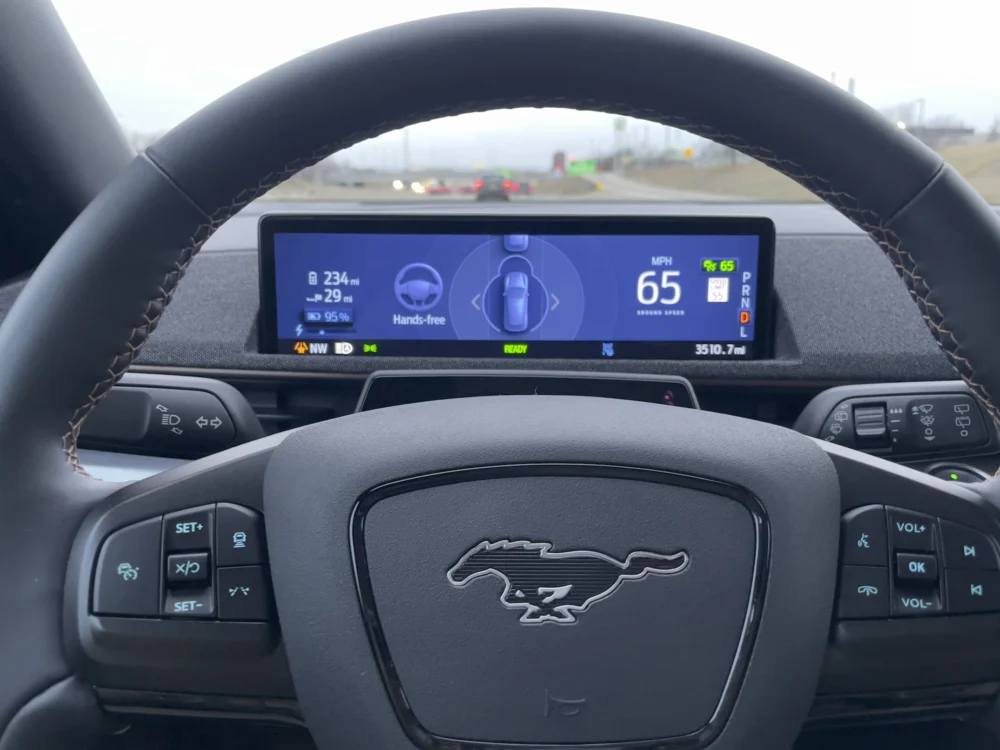
The National Transportation Safety Board (NTSB) has released new information indicating that two drivers involved in fatal crashes in 2024, while utilizing Ford’s BlueCruise hands-free driving system, were likely distracted in the crucial moments preceding impact. These findings, made public on Wednesday, cast a critical light on the intersection of advanced driver-assistance technologies and human behavior on the road.
As an independent federal agency tasked with investigating transportation accidents to determine probable causes and issue safety recommendations, the NTSB has published detailed documents for each crash. The agency has announced it will convene a public hearing on March 31 in Washington D.C., where it plans to discuss these findings thoroughly and is anticipated to issue specific recommendations to Ford. It is important to note that while the NTSB plays a vital role in enhancing safety, it does not hold regulatory authority over the automotive industry. A comprehensive final report detailing the NTSB’s conclusions and safety recommendations is expected to follow in the weeks after the March 31 hearing.
Beyond the NTSB’s investigative efforts, these tragic incidents have also triggered a separate, yet equally significant, probe by the National Highway Traffic Safety Administration (NHTSA). As the primary federal safety regulator for vehicles, NHTSA possesses the authority to enforce safety standards and mandate recalls. In early 2025, NHTSA escalated its investigation, upgrading the probe into BlueCruise after determining that the system exhibited limitations in "the detection of stationary vehicles in certain conditions." This critical observation led the regulator to dispatch an exhaustive list of questions to Ford in June 2025, seeking detailed information about the system’s design, operation, and safety performance. Ford submitted its comprehensive responses in August, and NHTSA’s investigation remains active and ongoing, signaling continued federal scrutiny of the technology.
Ford, for its part, has consistently maintained that BlueCruise is designed as a "convenience feature," emphatically stating that drivers must always remain vigilant and ready to assume control of the vehicle. The automaker also explicitly warns users that BlueCruise "is not a crash warning or avoidance system." These disclaimers highlight Ford’s stance on the shared responsibility between its technology and the human driver. Consumers interested in equipping their new Ford vehicles with BlueCruise have the option to purchase the feature for a one-time fee of $2,495 or subscribe annually for $495, according to the company.
The NTSB’s investigation, culminating in the upcoming public hearing, is expected to intensify the focus on how companies like Ford effectively communicate the precise purpose, operational parameters, and inherent limitations of their driver assistance systems. A key challenge across the industry is ensuring that these advanced technologies are not only understood correctly by drivers but also utilized in a manner consistent with their design intent, thereby preventing misuse or over-reliance.
The issue of distracted driving has regrettably emerged as a recurring theme in various investigations into other prominent driver-assistance systems. Notable examples include Tesla’s now-retired Autopilot and its "Full Self-Driving (Supervised)" software. The NTSB’s prior investigation into a 2018 fatality linked to Autopilot, which involved driver Walter Huang, specifically highlighted the dangers associated with driver inattention. In the aftermath of that crash, NTSB Chairman Robert Sumwalt remarked on the confluence of factors, stating, "In this crash we saw an over-reliance on technology, we saw distraction, we saw a lack of policy prohibiting cell phone use while driving, and we saw infrastructure failures, which, when combined, led to this tragic loss." This historical context underscores the systemic nature of challenges in integrating advanced automation safely into the driving experience.
The First Crash: San Antonio, Texas
The first of the two fatal BlueCruise-involved incidents occurred in February 2024 in San Antonio, Texas. The crash involved the driver of a 2022 Ford Mustang Mach-E, who was traveling in the center lane of Interstate 10. At approximately 9:48 p.m. local time, the Mach-E, with its BlueCruise system actively engaged, collided with a stationary 1999 Honda CR-V at an estimated speed of 74 miles per hour. The Ford driver sustained minor injuries, while the driver of the Honda CR-V tragically succumbed to injuries from the impact.
New information unveiled by the NTSB on Wednesday provides critical insights into the moments immediately preceding the collision. Data from the Ford’s camera-based driver monitoring system (DMS) indicated that the Mach-E driver was observed looking at the vehicle’s main infotainment screen for the majority of the five seconds before the crash. The DMS registered only brief instances of the driver looking at the road—specifically, for a few fractions of a second at approximately 3.6 seconds before impact, and again at about 1.6 seconds before the collision. Despite receiving two distinct visual and auditory alerts to "watch the road" within the 30 seconds preceding the crash, the driver did not initiate any braking action prior to the devastating impact.
Following the incident, the driver informed the San Antonio Police Department that he had been using the vehicle’s navigation system to find a charging station. One of the NTSB reports noted that "he may have looked at the center screen console because directions to the charging station were displayed there." While the possibility of the driver nodding off before the crash was considered, the information released by the NTSB does not definitively confirm this. A still image captured by Ford’s system two seconds before the crash showed the driver "sitting upright and facing forward, with his head resting (or nearly resting) on the headrest and slightly rotated to the right." After speaking with police, the driver retained legal counsel, and his attorney subsequently declined the NTSB’s request for a further interview, limiting the agency’s ability to gather more direct information from him.
The Second Crash: Philadelphia, Pennsylvania
The second fatal BlueCruise crash took place the following month, in March 2024, in Philadelphia. This incident occurred on Interstate 95 at approximately 3:16 a.m. local time, involving a 2022 Mach-E driven by a 23-year-old woman identified as Dimple Patel. Her vehicle collided with a 2012 Hyundai Elantra that had stopped on the left side of the road. The force of this impact propelled the Elantra into a 2006 Toyota Prius that was also stopped directly ahead of it.
The drivers of the Elantra and Prius, who were friends, had reportedly stopped for an unknown reason. The Prius driver had exited his vehicle and was standing to the left of the Elantra when the Mach-E approached. Tragically, both the Elantra and Prius drivers died in the collision, while the Mach-E driver, Dimple Patel, sustained only minor injuries. Local police investigations determined that Patel was intoxicated at the time of the crash. In late 2024, she was formally charged with DUI homicide. Her attorney, Zak Goldstein, informed TechCrunch on Wednesday that the case is still pending, and a trial date has not yet been established. Furthermore, Patel was traveling at approximately 72 miles per hour, significantly exceeding the posted 45 miles per hour speed limit within the construction zone where the crash occurred.
The NTSB documents unveiled a critical anomaly concerning the driver monitoring system (DMS) in Patel’s vehicle. Despite the system registering her eyes as being "on-road" for the entire five seconds leading up to the crash, a photograph captured by the vehicle just two seconds before impact presented a contradictory image. This photograph appears to show Patel holding a mobile phone above the steering wheel, positioned in such a way that it was "almost totally out of view of the driver monitoring system." This observation suggests a potential blind spot or limitation in Ford’s DMS, raising serious questions about its ability to reliably detect certain forms of driver distraction. Ford did not immediately respond to requests for clarification regarding its awareness of this potential shortfall in its driver monitoring system or any steps taken to address it.
The Role of Automatic Emergency Braking (AEB)
Separate from the BlueCruise system, modern Ford vehicles are equipped with a forward-collision warning (FCW) system and automatic emergency braking (AEB). These systems are designed to provide alerts to drivers about potential frontal collisions and, if necessary, autonomously apply braking to mitigate or prevent an impact.
However, Ford’s official communications and warnings include specific caveats regarding these technologies. The company cautions that FCW and AEB are "driver-assist" features that are "supplemental," explicitly stating they "do not replace the driver’s attention, judgment, and need to control the vehicle." This fine print underscores Ford’s recognition of inherent limitations in these advanced safety systems.
These limitations were further elucidated during meetings between NTSB staff and Ford representatives, particularly concerning the AEB system’s capacity to respond to stationary targets under conditions similar to those in the Texas crash. Ford employees informed the NTSB that, "Based on the functional limitations of the industry’s sensing technologies, coupled with the scenario of vehicle travel speed, nearby vehicle maneuvers & environmental factors, Ford would not expect the current generation of radar-camera fusion AEB systems to detect and classify a collision target with enough confidence for the AEB system to respond." This statement is profoundly significant given that both fatal crashes involved collisions with stationary vehicles. The NTSB’s documents conclusively noted that no vehicle subsystem—neither BlueCruise nor the independent AEB system—applied any braking in either of the fatal crashes, highlighting a critical gap in automated intervention in these specific accident scenarios.
As the NTSB prepares for its public hearing, the ongoing investigations by both federal agencies signify a crucial moment for the automotive industry and the evolution of ADAS. The findings from these fatal Ford BlueCruise crashes serve as a stark reminder of the complex interplay between advanced technology, human behavior, and robust regulatory oversight. The forthcoming recommendations from the NTSB will be instrumental in shaping public expectations, enhancing system safety, and potentially influencing new standards for driver monitoring and automated emergency interventions across the entire automotive landscape, with the ultimate goal of preventing future tragedies and fostering safer roads.