 11
11
Alongside the introduction of its price-friendly iPhone 17e and M4 iPad Air yesterday, Apple made several significant announcements, revealing substantial updates to its MacBook Pro and MacBook Air lines, as well as its long-awaited refresh of the desktop display portfolio. These updates underscore Apple’s continued commitment to advancing its custom silicon architecture and enhancing its professional and consumer computing offerings.
MacBook Air Receives M5 Chip Upgrade and Enhanced Connectivity
The popular MacBook Air has been updated to incorporate the latest M5 chip, marking a notable performance bump for Apple’s most portable laptop. This upgrade brings the MacBook Air in line with Apple’s cutting-edge processor technology, which first debuted in the MacBook Pro last fall. While described as a "fairly modest upgrade" in terms of overall product redesign, the integration of the M5 chip ensures that the MacBook Air benefits from the latest advancements in power efficiency and processing capabilities inherent to Apple Silicon. Users can expect improved speed and responsiveness across a range of tasks, from everyday browsing and productivity applications to more demanding creative workflows.
Beyond the processor, the new MacBook Air maintains its familiar form factor, available in both 13-inch and 15-inch screen sizes. There are no other major external hardware changes, preserving the sleek, lightweight design that has made the Air a favorite among students and professionals alike. However, Apple has significantly upgraded the base storage configuration, with all models now starting with 512 GB of storage, coupled with "faster SSD technology." This enhancement promises quicker boot times, faster application loading, and more rapid file transfers, contributing to a snappier overall user experience. The standard 16 GB of unified RAM remains, ensuring smooth multitasking for typical Air users.
Connectivity has also seen a substantial leap forward with the inclusion of Apple’s new N1 wireless chip. This advanced chip brings support for Wi-Fi 7 and Bluetooth 6, incorporating the latest standards in wireless communication. Wi-Fi 7 offers significantly higher speeds, lower latency, and improved capacity, making it ideal for high-bandwidth applications like 4K video streaming, online gaming, and large file transfers in compatible network environments. Bluetooth 6 similarly promises more reliable connections, enhanced audio quality, and better power efficiency for connected accessories such as headphones, keyboards, and mice. These wireless upgrades future-proof the MacBook Air, ensuring it can take full advantage of evolving network infrastructures and peripheral technologies.
Prospective buyers should note a slight adjustment in pricing. To account for the enhanced storage and new technologies, the MacBook Air now carries a $100 price bump. The 13-inch model starts at $1,099, while the 15-inch variant begins at $1,299. Apple has announced that preorders for the new MacBook Air models will commence tomorrow, with general sales and availability in retail stores kicking off on March 11.

MacBook Pro Receives Performance Boost with M5 Pro and M5 Max Chips
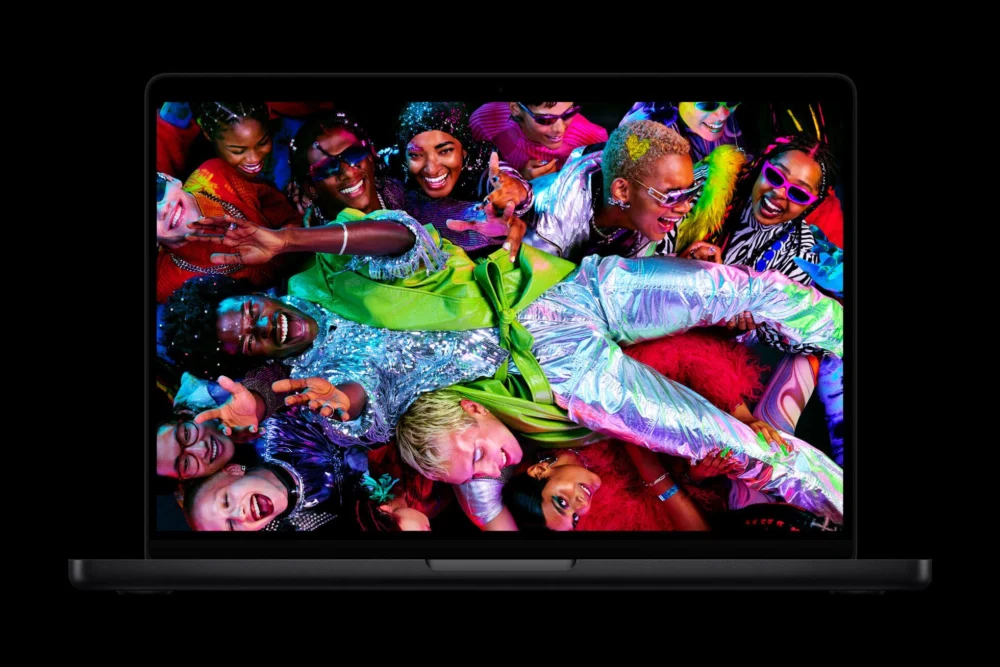
More significantly for power users, Apple is expanding its M5 chip series with the introduction of the M5 Pro and M5 Max, which are now available across the 14-inch and 16-inch MacBook Pro models. These professional-grade chips are designed to deliver unparalleled performance for the most demanding creative and computational tasks. Building on Apple’s established strategy for its custom silicon, the "Pro" and "Max" configurations introduce substantially improved multi-core CPU and graphics performance compared to the standard M5 chip and previous generations.
The M5 Pro and M5 Max chips offer impressive core counts, pushing the boundaries of mobile workstation capabilities. Users can configure these chips with up to 18 CPU cores, a notable increase from the 16 cores found in the M4 Max. This configuration includes 12 high-performance cores for intensive tasks and 6 "super" cores, likely referring to highly efficient cores optimized for sustained performance with minimal power consumption. For graphics-intensive workflows, the M5 Pro can scale up to 20 GPU cores, while the M5 Max extends even further to an astonishing 40 GPU cores. This substantial increase in GPU power is critical for professionals working with 3D rendering, complex video editing, and advanced computational simulations.
Apple highlights significant performance gains with these new chips. Thanks to higher memory bandwidth, a more efficient Neural Engine, and an improved GPU architecture, the M5 Pro and M5 Max are touted to offer "over 4X the peak CPU compute for AI" compared to the last generation. This massive boost in AI processing capability will greatly benefit applications leveraging machine learning, such as advanced photo and video editing features, intelligent automation, and on-device AI models. Furthermore, the new chips deliver 20 percent better overall GPU performance, translating directly into faster renders, smoother animations, and more responsive experiences in professional creative software.
Despite these internal overhauls, the new MacBook Pro models do not introduce any other major hardware changes. The design language, port selection (including Thunderbolt 4, HDMI, and an SDXC card slot), Mini-LED Liquid Retina XDR display technology, advanced speaker system, and high-resolution webcam remain consistent with the models introduced in 2021. Even the impressive 24-hour battery life claim from the M4 models, released in late 2024, remains unchanged, a testament to the power efficiency of Apple Silicon. This update, therefore, focuses purely on raw performance enhancements rather than a redesign. This comes amidst recent industry reports, including one from Bloomberg last week, suggesting that Apple plans a more significant update to the MacBook Pro later this fall, potentially featuring an M6 chip, an OLED touchscreen, and a thinner chassis.
Like the MacBook Air, all versions of the M5 Pro or M5 Max MacBook Pros now come with double the starting storage, moving to a capacious 1 TB SSD. This increased storage, combined with the new chip architecture, contributes to a slightly higher starting price. The 14-inch M5 Pro now starts at $2,199, and the 16-inch model at $2,699, representing a $200 increase over last year’s machines. For those requiring the ultimate power, M5 Max configurations begin at $3,599.
It’s worth noting the broader context of the M5 chip rollout. Apple initiated the M5 chip integration in October 2025, initially limiting it to the 14-inch MacBook Pro, iPad Pro, and the groundbreaking Vision Pro headset. This phased deployment strategy means that other Mac desktop machines, including the iMac, Mac Studio, and Mac Mini, are still awaiting their respective M5 updates, indicating a continued evolution of Apple’s entire product ecosystem.

The Return and Evolution of the Studio Display Line
Finally, Apple has addressed its desktop display line, a category that sees infrequent updates, by introducing two new versions of its Studio Display computer monitor. These new displays signal Apple’s renewed focus on providing high-quality external monitor solutions for its Mac users, addressing a four-year gap since the original Studio Display was last updated. Both new monitors retain the versatile 27-inch screen size, a popular choice for professionals and general users alike.
The standard 27-inch Studio Display continues to feature a sharp 5K resolution and standard LED backlighting, offering excellent image clarity and color accuracy for a wide range of tasks. The main enhancements to this model are functional: an improved 12-megapixel camera, likely featuring advanced computational photography capabilities for clearer video calls, and the addition of two Thunderbolt 5 ports. Thunderbolt 5 represents a significant leap in connectivity, offering double the bandwidth of Thunderbolt 4, enabling faster data transfer speeds, enhanced external storage performance, and the ability to drive multiple high-resolution displays or power demanding peripherals with greater efficiency. The 27-inch Studio Display maintains its starting price of $1,599.
Stepping up the professional ladder, Apple also introduced the higher-end Studio Display XDR. This new monitor effectively replaces the venerable Pro Display XDR, despite coming in a smaller 27-inch size and a 5K resolution, compared to its predecessor’s 32-inch 6K panel. The Studio Display XDR is engineered for discerning professionals who require the absolute best in visual fidelity. It boasts a 120 Hz refresh rate, often referred to as ProMotion technology, which provides incredibly smooth scrolling, fluid animations, and a highly responsive experience, particularly beneficial for video editors and animators.
The most significant upgrade in the Studio Display XDR is its mini-LED backlighting. This advanced technology allows for much finer control over brightness and contrast, enabling up to 2,000 nits of peak HDR brightness. This capability is crucial for accurately displaying High Dynamic Range content, offering stunningly vibrant colors, deep, inky blacks, and brilliant highlights. The mini-LED technology also dramatically improves overall contrast and color performance compared to the standard LED model, making it an ideal choice for color-critical work in film production, photography, and graphic design. The Studio Display XDR is priced at $3,299.
Both the new MacBook Air and MacBook Pro models, along with the refreshed Studio Displays, will be available for preorder starting tomorrow, March 4th, with official sales and in-store availability commencing on March 11th. These product launches reaffirm Apple’s strategy of continually enhancing its hardware with its proprietary silicon, catering to a diverse range of users from everyday consumers to high-end creative professionals.
This is a developing story.