 11

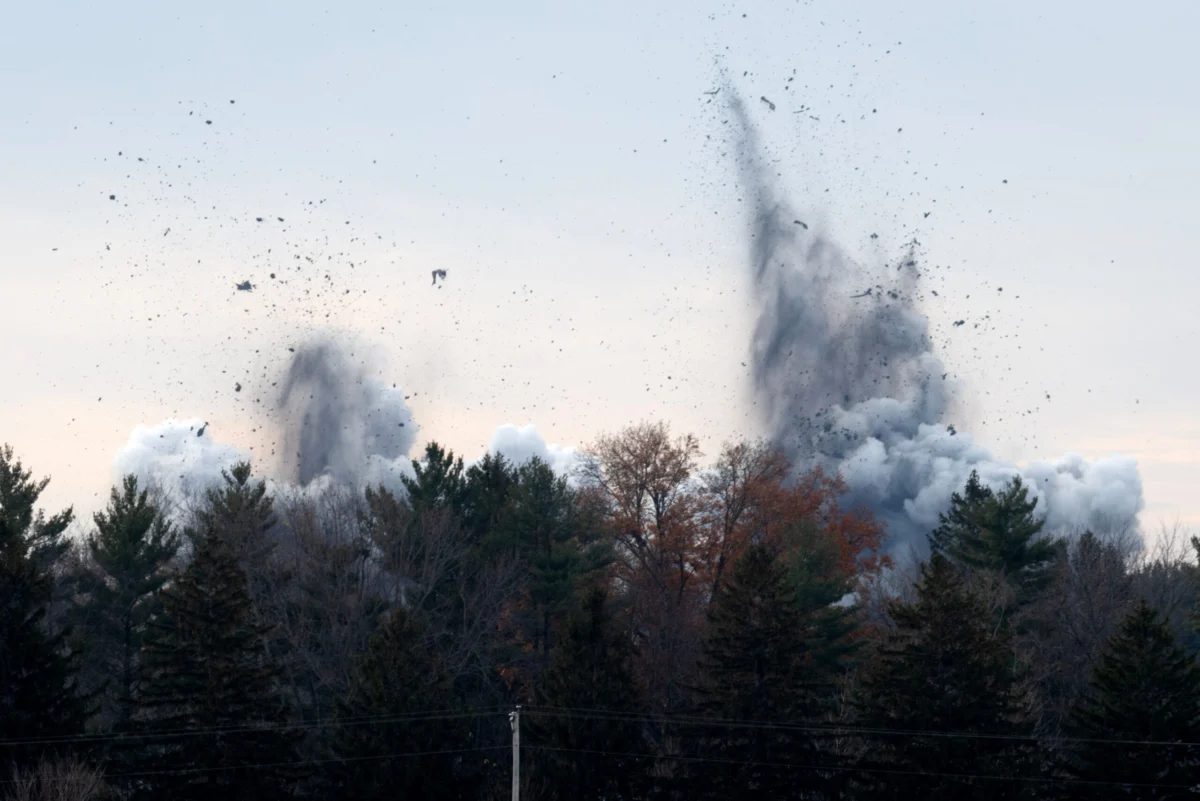
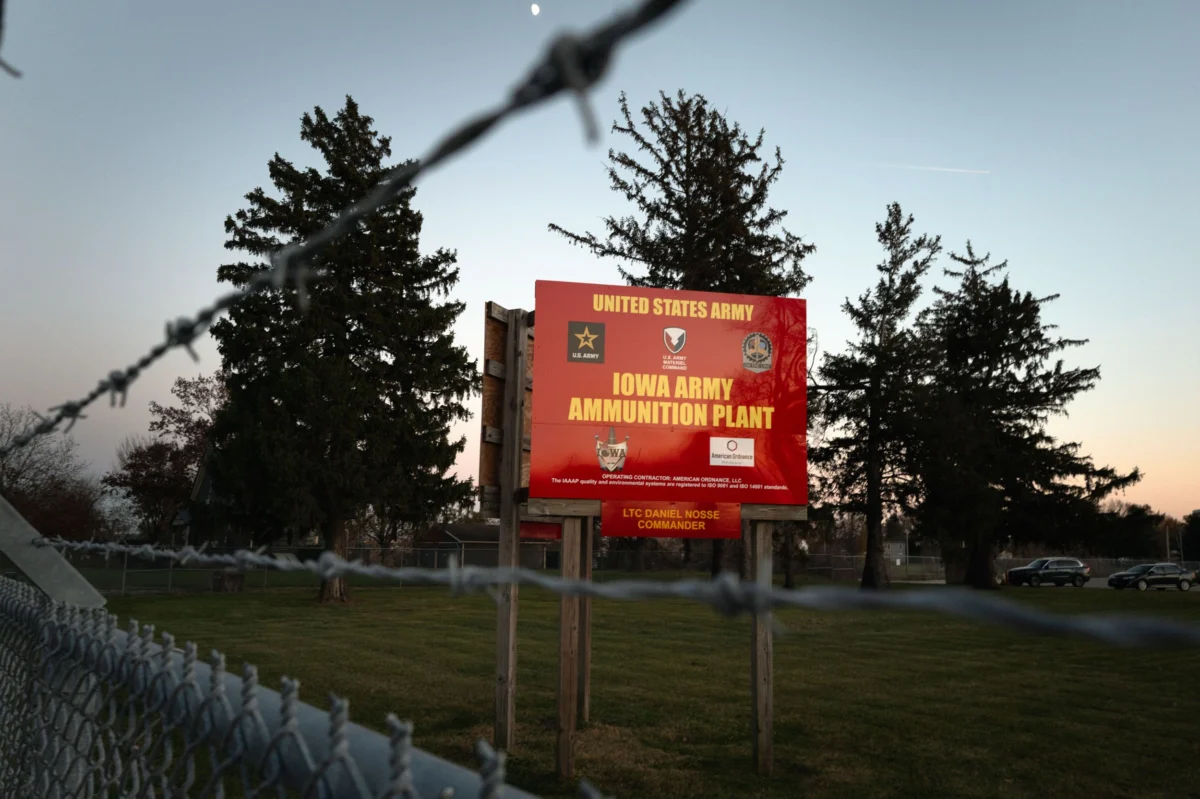
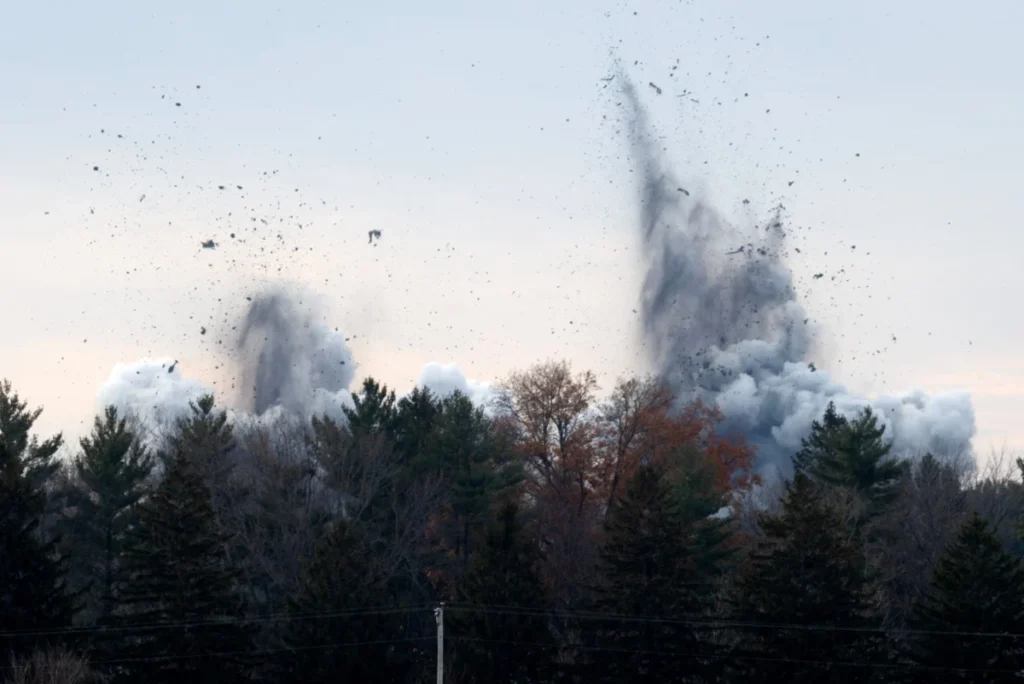
On Wednesday morning, the US Army conducted a controlled detonation of nearly five tons of degraded lead azide at the Iowa Army Ammunition Plant, located just outside Middletown, Iowa. This significant event, involving a volatile compound that had been stored on the base for decades, has triggered an extensive, multi-faceted monitoring effort by federal agencies, academic institutions, and citizen groups to assess its environmental impact.
Immediately following the detonation, Lee Zeldin, the chief of the Environmental Protection Administration (EPA), conveyed preliminary findings to CNN, stating that initial air quality monitoring around the site detected no lead. However, Zeldin cautioned that the full scope of potential fallout would not be definitively known for several days. A comprehensive barrage of monitoring and testing projects has been launched, involving various government bodies, universities, and local citizens. These efforts are focused on collecting and analyzing air, soil, and water samples to ascertain the extent of lead exposure, if any, in Middletown and the surrounding regions.
Lead azide, a highly sensitive primary explosive, is commonly used in detonators and primers. Its presence at the Iowa Army Ammunition Plant for decades without issue underscores the recent shift in its stability. The Army had recently designated the substantial quantity of the compound as unstable and too hazardous to transport for conventional remediation, necessitating the on-site detonation as the safest course of action. This critical decision, however, was marred by significant communication failures between the Army and the communities situated in the potential path of the fallout, leading to a palpable public outcry and considerable distrust.
In response to the escalating concerns and the chaotic initial rollout of information, federal agencies amplified their mitigation strategies. The Army undertook the measure of constructing an earthen dam around the precise detonation site, designed to contain the immediate blast and any resulting debris or particulate matter. Simultaneously, the National Aeronautics and Space Administration (NASA) contributed its advanced capabilities, deploying research jets and satellites to conduct sophisticated aerial monitoring of the plume and surrounding atmospheric conditions.
Despite these federal interventions, the initial lack of clear and timely communication prompted universities to proactively mobilize their own scientific resources. Several departments at the University of Iowa, for instance, swiftly initiated efforts to establish independent air and soil monitoring stations late the previous week. Peter Thorne, a professor of environmental health at the university, highlighted the urgency of their response, noting, “Initially we did not know that [the] EPA or Army or anybody else was going to be doing anything.” This independent action underscored the perceived vacuum of information that characterized the initial phase of the incident.
The ripple effect of concern extended far beyond Iowa’s borders. Scientists at Purdue University, located nearly 300 miles away in Indiana, also put out an urgent call for soil samples from the Middletown area. Ellen Wells, a professor of public health at Purdue and a lead figure in the university’s testing initiatives, explained their motivation: “We learned about the detonation late last week; once we learned of the initial delay in detonation date we decided to put forth the call.” This widespread academic engagement highlighted the scientific community’s commitment to independent verification and public safety in the face of uncertainty.
The notification process leading up to the detonation was a central point of contention. Local towns reported receiving their primary notification in late October, informing them of the Army’s intention to conduct pre- and post-detonation soil sampling for an "intentional, controlled detonation" of a "quantity of lead azide." For many communities in the initial modeled fallout zone, this was the sole communication received until a more comprehensive press release was issued by the Army just days before the planned explosion. This perceived lack of transparency and proactive engagement from federal authorities significantly contributed to the public’s apprehension and distrust.
Professor Thorne acknowledged that this breakdown in communication had, understandably, fostered widespread public skepticism regarding federal monitoring programs. He emphasized that the efforts undertaken by institutions like the University of Iowa were not intended to supplant federal monitoring, but rather to complement and reinforce it, with the ultimate goal of reassuring the public. “We and the EPA are doing similar exposure assessment efforts. If they agree, they can give us some confidence,” Thorne stated. He further elaborated on the psychological impact: “For people who might be concerned about the veracity of what the government tells them, if their findings are in alignment with ours, then I think that helps quell some of those concerns.” This collaborative yet independent approach is crucial for building public trust, particularly in environmentally sensitive events.
Before the detonation, University of Iowa scientists had conducted baseline soil measurements, which indicated low levels of lead in the area. Thorne articulated a threshold for concern, stating, “If I saw something like a 10-fold increase in the amount of lead in the soil 20 miles downwind, I’d be concerned with that.” This pre-detonation data provides a critical benchmark against which post-detonation samples will be compared to accurately assess any increase in lead contamination.
The methodology for soil testing varies in immediacy and precision. Some preliminary soil testing can be performed instantaneously using portable X-ray fluorescence (XRF) devices. These "gun" devices fire X-ray beams into a sample and measure the specific electromagnetic signature of lead atoms that reflect back, providing rapid, on-site readings. While Professor Wells and her team at Purdue may not have these instruments deployed in the field, they intend to utilize them for analyzing the samples they receive in their laboratory. For more granular and definitive data, highly sensitive laboratory equipment is employed, though Thorne estimates that results from such analyses could take approximately a week to process.
In addition to the extensive monitoring being conducted by the Army and the EPA—the latter of which is maintaining a live website displaying real-time air quality results—University of Iowa scientists are actively tracking the atmospheric plume. Their objective is to map its trajectory and dispersion patterns to identify areas where the highest concentrations of lead particulate matter may ultimately settle. They are also meticulously collecting data on particulate matter in the air around the detonation site, sending collected air filters to laboratories for detailed chemical analysis.
Thorne anticipates that a more comprehensive understanding of the environmental impact will emerge soon. “As these data are compiled over the holiday week to the early next week, I think we’ll start to have a bigger picture of roughly how much loading we have of the soil at various places downwind and what we can expect from that,” he predicted. This consolidated data will be crucial for informing public health decisions and any necessary remediation efforts.
A significant portion of public concern, particularly expressed online, has revolved around the potential impact of additional lead in the soil on Iowa’s vital agricultural sector. Iowa is a central hub for the production of staple crops such as soybeans and corn, and any threat to these could have widespread economic repercussions. However, experts offer a reassuring perspective. Jeffrey Catalano, a professor of earth and environmental sciences at Washington University in Saint Louis, highlighted extensive research demonstrating that plants like corn are remarkably inefficient at absorbing lead from the soil. “The hazard is more like, if soil with lead in it gets stuck to leaves, and you eat leaves that have lead-rich soil on them,” he explained. Catalano concluded with confidence, “If you take some corn crops next year versus this year and measure their lead content, I don’t think you would see anything other than random variations. I’m not worried about food produced in Iowa.”
Concerns about municipal drinking water supplies are also largely mitigated, according to Patrick McNamara, a professor of environmental engineering at Marquette University. Most modern municipal water treatment plants are specifically designed with processes to effectively remove lead and other heavy metals from water sources before distribution. However, McNamara cautioned that the situation is potentially more worrisome for private wells or streams located on individual properties, particularly where livestock may drink. For those relying on such private sources, McNamara strongly advised using at-home lead water tests as a precautionary measure to ensure safety.
While the detonation of lead azide and the haphazard communication leading up to it justifiably raised alarm bells across Iowa and beyond, both Professor Thorne and Professor Catalano urged a broader perspective. They emphasized that countless communities across the United States contend with legacy pollution, enduring dangerous levels of lead exposure on a daily basis, and these long-standing environmental injustices warrant significant attention and remediation.
Thorne drew a stark comparison to his own work: “I’ve done work in places like East Chicago, Indiana, where they built a housing project and a school on the grounds of a former lead smelting plant—we were seeing soil lead levels that are roughly 10,000-fold higher than what we’ve measured in Iowa this week.” He concluded by stressing the importance of context: “There are a lot of places around the country where there’s a much greater lead hazard than I’m going to anticipate what we’ll end up with here. I don’t want to over-sell this one when we recognize that there are places where people are really suffering, and need to be remediated for the health of their children.” This perspective underscores the need to address both immediate environmental incidents and persistent, systemic pollution issues that disproportionately affect vulnerable populations.