 11

AI sentiment analysis is emerging as a powerful, albeit nuanced, market research tool for businesses looking to understand how AI assistants like ChatGPT, Gemini, and Copilot perceive their brands. Rather than a mere score to be chased, this analytical approach offers valuable insights into recurring customer objections, competitor strengths, and opportunities for product and communication enhancement. The author emphasizes that AI visibility extends beyond mere brand appearance in AI-generated answers; the substance of what AI communicates about a brand is equally, if not more, significant. This guide delves into tracking praise and criticism within AI responses, investigating cited sources, and formulating actionable strategies to cultivate a more accurate and balanced brand portrayal. Crucially, findings from AI sentiment analysis should be treated as investigative leads, complementing rather than replacing traditional customer feedback.
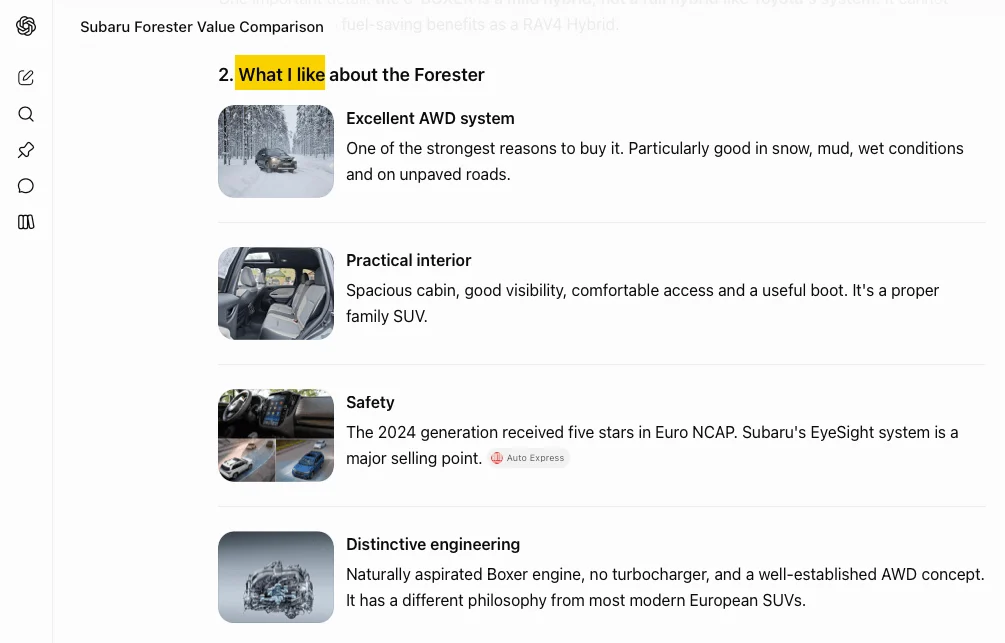
AI assistants form their assessments of brands by drawing on a vast dataset, including information from their training, real-time web retrieval, and the synthesis of diverse sources. This process can lead to interpretations that go beyond the literal text of original sources. For instance, a simple product price listed on a website might be extrapolated by AI into a conclusion like "too expensive for small teams" when compared with alternatives. The phrasing of AI recommendations, such as "What I like about [brand]" or "My biggest concern with [product]," reflects this interpretive capability. The nature of the query also significantly influences the outcome; a neutral question might yield a balanced response, while a question framed to elicit criticism will naturally lead to a more negative assessment. Furthermore, AI answers are dynamic, subject to model updates, evolving data sources, and even repeated searches, meaning a single negative response should not be overemphasized. However, consistent criticism across multiple interactions warrants investigation, as it signals potential concerns for prospective customers.
AI sentiment analysis, therefore, serves as a method to systematically gauge whether AI assistants are portraying a brand positively, negatively, or neutrally. The objective is not just categorization but a deeper understanding of what is being praised or criticized, the frequency of these opinions, and their alignment with reality. An initial approach can be manual: posing questions to AI assistants like ChatGPT and Gemini, saving the answers and their cited sources, and then using another AI tool to classify remarks as critical, praiseworthy, or descriptive. Ambiguous labels are also useful. It’s important to recognize that a single AI response can contain multiple sentiments; for example, praise for features alongside criticism of pricing. A thorough manual review of negative remarks is also recommended to discern AI misinterpretations of context or product trade-offs. While this manual method is viable for a small number of interactions, scaling up to compare multiple AI assistants, track competitors, and monitor trends over time necessitates specialized tools. Platforms like Ahrefs Brand Radar automate the collection and analysis of AI responses, identifying sentiment patterns and facilitating exploration without manual review of every answer.
To effectively track AI sentiment for one’s brand and competitors, a strategic approach is advised. This involves defining the scope of tracking to uncover unexpected opinions while focusing on those that genuinely matter. The first step is to identify which brands and products are most relevant to customer queries. For some companies, brand and product names are interchangeable, simplifying tracking. For others, like Apple, distinct product lines (e.g., iPhone, AirPods) require separate monitoring, with the overarching brand also tracked. Most businesses fall somewhere in between, with a primary brand, key products, and recognizable features. Including direct competitors in tracking provides crucial context, preventing isolated negative feedback from being misinterpreted in a vacuum.
The second step involves crafting two types of prompts: "provoked" and "unprovoked." Provoked prompts are designed to specifically explore known criticisms. For instance, asking about the repair costs or sustainability practices of a brand. While these prompts yield direct insights into specific concerns and how AI explains them, they inherently solicit negative feedback. Unprovoked prompts, conversely, are general questions that customers might ask without mentioning a specific brand or its drawbacks (e.g., "best SEO tools," "best wireless earbuds"). These are particularly valuable as they reveal unsolicited opinions AI injects into conversations. An AI assistant might recommend a product but flag it as potentially overwhelming for beginners, or praise a competitor for a feature that the user’s brand also possesses. Tagging prompts by type and product, as facilitated by tools like Brand Radar, allows for segmented analysis and comparison.
The third step is to analyze sentiment patterns through charts and then delve into individual AI answers. Tools like Brand Radar’s Sentiment report offer a visual overview of positive and negative remarks across brands, competitors, AI assistants, and countries. This high-level view helps identify significant differences. For example, a report might show that while two brands appear in a similar share of negative remarks, one is consistently mentioned more frequently in positive contexts. This nuanced comparison is more informative than a simple sentiment score. Reports can be further filtered by platform, country, or topic to align with business priorities. The Aspect report is particularly useful for segmenting opinions by themes such as pricing, reliability, and performance, differentiating between brands criticized for cost but praised for reliability, versus those facing criticism on multiple fronts.
Ultimately, the charts serve as a starting point for deeper investigation. Examining the full AI response, not just highlighted sentences, is crucial to understand the context of the sentiment. Is AI stating a fact, expressing an opinion, comparing products, or describing a legitimate limitation? Determining whether an issue is recurring or isolated is key. This process helps identify criticisms that warrant further action.
Improving brand sentiment in AI answers requires a systematic approach, beginning with identifying and verifying the criticisms. If an AI answer cites a source, the first action is to examine that source to confirm whether it genuinely supports the criticism. This might involve outdated pricing, a fair product complaint, or an AI interpretation that lacks context. The response strategy depends on the nature of the criticism and the veracity of the supporting source.
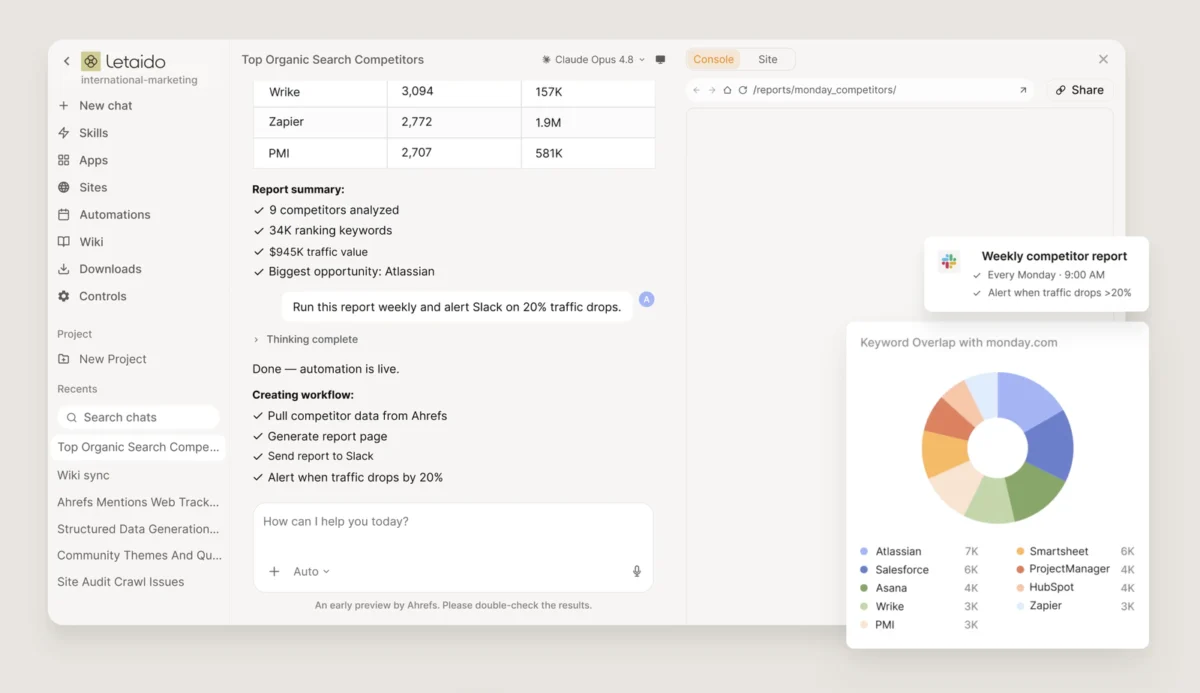
The process begins by locating pages cited in negative AI answers. Tools like Brand Radar’s Cited pages report, filtered for negative sentiment, can identify frequently appearing pages, especially those cited by AI assistants most used by customers. Opening these pages is essential to verify their content. A citation does not automatically validate the criticism; the source might simply list a price that AI interprets as high, or compare an older product version without clear distinction. The critical task is to differentiate between the source’s content and AI’s conclusion. AI can significantly expedite this by analyzing numerous sources and claims, as demonstrated by an approach using Letaido, Ahrefs Brand Radar, and Apify to analyze hundreds of negative claims against cited pages. This allows for a clearer understanding of which claims are supported, which are misleading, and where corrections might be beneficial.
Not all negative remarks warrant immediate attention. Prioritize claims that are frequent, could influence purchasing decisions, and offer a practical avenue for action. For instance, if AI consistently links to consumer review sites with poor ratings and unanswered complaints, it presents an opportunity to investigate customer issues and address legitimate problems. Similarly, if AI coverage relies on outdated information, such as older sustainability reports, it raises the question of whether updated evidence would alter the assessment. The goal is not to solicit biased opinions but to ensure publishers have access to current information, allowing for more accurate reporting. This might involve updating one’s own content with new evidence or suggesting corrections to publishers based on the latest data.
Actionable steps include updating content on one’s own website, such as pricing pages or help articles, to ensure accuracy and ease of access for AI. This aligns with generative engine optimization (GEO), making reliable information readily available to AI. For third-party articles, contacting authors with evidence and explanations can prompt corrections. SEO data can help prioritize outreach by indicating a page’s reach. If a criticism is valid, correcting articles alone will not resolve the underlying issue; product improvements are necessary. Once a product is enhanced, it’s crucial to publicize these changes, update comparisons, and invite reviewers to assess the improved version. If AI interprets a source poorly without direct factual errors, the focus shifts to clarifying information on one’s own platforms with supporting evidence and comparisons.
Following corrections or outreach, it’s important to track source updates and changes in AI answers. Monitoring whether cited pages have been updated and if AI responses reflect this new information is crucial. AI answers are variable, so tracking trends over time provides a more reliable picture. Automated trackers can monitor contacted pages for updates and follow claims in new AI answers, even if original citations change. While a corrected page doesn’t guarantee a corrected AI answer, this monitoring provides clarity. The cost of such tracking can be minimal, offering significant value in understanding how information evolves.
Investigating AI criticisms that lack citations is also worthwhile. While the origin of the opinion may be unclear, searching for similar claims across the web, potentially using tools like Ahrefs Mentions Explorer, can reveal recurring complaints. Grouping these complaints into themes can highlight areas for improvement. For example, if AI repeatedly calls a product difficult to learn, discovering that older reviews mention an outdated onboarding process suggests opportunities to update information and potentially influence future AI responses. Even if AI doesn’t change its output, improving information accessible to potential customers outside of AI is a valuable outcome. These investigations can uncover genuine issues requiring attention, not just corrections.
Beyond addressing negative feedback, AI sentiment analysis offers other marketing opportunities. These include identifying areas where competitors are praised, discovering new product features that resonate with users, and understanding how different AI assistants perceive a brand across various demographics and regions. It can also inform content strategy by highlighting topics that generate positive AI mentions and revealing potential gaps in current product or service offerings. Furthermore, it aids in crisis management by providing early warnings of emerging negative sentiment.
In conclusion, AI sentiment analysis is most impactful when viewed not as a quantitative score but as a qualitative investigative tool. The insights gleaned can lead to correcting outdated information, addressing genuine product issues, and refining communication strategies to better articulate brand strengths. While not every action will directly alter AI’s output, improving the underlying information and user experiences that shape brand perception will invariably make a positive difference across all platforms where a brand is researched, ultimately yielding a more meaningful outcome than simply pursuing a higher sentiment score.