 11

ChatGPT, the prominent AI conversational agent, draws its knowledge and answers from four distinct sources, with the specific origin of information dynamically chosen based on the user’s query. These sources are: training data, live web search, licensed publisher content, and the user’s own provided context. Understanding these pathways is crucial for brands aiming to establish a presence within the AI’s responses.
1. Training Data: The Foundation of General Knowledge
The bedrock of ChatGPT’s understanding lies in its extensive training data. This encompasses a vast repository of public web content, data from OpenAI’s partners, contributions from human trainers, and synthetically generated data. This foundational knowledge equips the model with its general understanding of language, factual information about the world, coding abilities, and visual comprehension.
The training process is a multi-stage endeavor involving data preparation, pre-training, post-training, and continuous evaluation. Pre-training utilizes the massive dataset to build a broad knowledge base, followed by post-training, where human experts and increasingly, AI models themselves, refine its ability to follow instructions, reason logically, and adhere to safety guidelines.
OpenAI states that its models are developed using three primary training data sources: public web content, data from partners, and human trainers. While OpenAI provided a detailed breakdown for GPT-3 in 2020, including a significant portion of Common Crawl, WebText2, Books1, Books2, and Wikipedia, current breakdowns for newer models are less specific, with OpenAI only confirming the use of "diverse datasets." This means that any publicly accessible content on a website, provided it’s not blocked by OpenAI’s training crawler, has the potential to be incorporated into future model iterations, albeit indirectly and with a considerable time lag.
OpenAI actively filters its training data, excluding content from paywalled sources, the dark web, hate speech, adult material, sites aggregating personal information, and spam. Furthermore, the company is increasingly employing synthetic data, generated by its own models, to supplement training, particularly for languages with limited existing text data.
Site owners concerned about their content being used for AI training can opt out by blocking OpenAI’s GPTBot crawler. However, this decision may limit future models’ knowledge of their brand directly from their own sites.
The "knowledge cutoff" marks the end of the period covered by the training data. For current ChatGPT models, this cutoff is spring 2026, with specific dates varying slightly depending on the user’s plan. Information beyond this date necessitates web search.
2. Live Web Search: Accessing Real-Time Information
Given that training data is inherently static, ChatGPT employs live web search to provide current information. This capability is activated automatically when a query is deemed to benefit from up-to-date data, such as for prices, news, product details, or when explicitly requested by the user. OpenAI estimates that approximately one in five consumer messages to ChatGPT involve a web search.
The search process is sophisticated. ChatGPT doesn’t simply input the user’s query into a search engine. Instead, it rewrites the prompt into one or more targeted "fan-out" queries, potentially sending refined searches to various providers. This strategy allows for a more comprehensive exploration of the query’s facets. Studies indicate that ChatGPT generates an average of 1.6 fan-out queries per search-enabled response.
Research has shown that ChatGPT rarely uses the exact wording of a user’s query in its searches, and when queries are made in languages other than English, searches are often conducted in English. Furthermore, there’s a discrepancy between the pages cited by ChatGPT and those that appear in standard search engine results, suggesting that ChatGPT’s selection process is not solely dictated by search engine rankings.
User context, such as saved memories and custom instructions, can influence search queries. For instance, if a user has indicated dietary preferences or location, these details can be integrated into the search parameters. ChatGPT also utilizes approximate location derived from IP addresses, sharing general location data with search providers. The non-deterministic nature of AI means that even identical prompts can yield different search results and cited sources over time.
OpenAI states that ChatGPT ranks search results using multiple undisclosed factors, and placement is not guaranteed. Analysis of cited sources reveals that product review sites, forums, and news publications are frequently referenced. The specific search engines used by ChatGPT remain somewhat opaque. While OpenAI acknowledges using Bing and potentially other providers, past reports suggest the use of services to pull Google results. However, data indicates that ChatGPT’s citations do not consistently align with top rankings on either Google or Bing, implying an independent selection mechanism.
For queries with shopping intent, ChatGPT can display product cards featuring images, prices, and purchasing links. These are sourced from structured metadata and third-party content, not advertisements, and are independent of OpenAI partnerships.
3. Licensed Publisher Content: Curated Insights
Since 2023, OpenAI has established content licensing agreements with over 20 publishers, including The Associated Press, Axel Springer, Condé Nast, Hearst, News Corp, and Vox Media. These partnerships allow ChatGPT to present summarized content from these publications, complete with attribution and links to the original articles. Licensed Getty Images photos also appear in ChatGPT’s search results.
These licensed partner domains are increasingly represented among ChatGPT’s most cited sources. However, a partnership does not guarantee visibility; the quality and relevance of the content play a significant role. Notably, review and lifestyle sites often perform better than traditional news outlets within this licensed content stream.
Evidence suggests that partner content may be integrated differently, with some high-authority publications potentially providing pre-written summaries directly accessible to ChatGPT. Data from query fan-out analysis indicates that partner sites are cited more frequently than ChatGPT’s explicit site-specific searches for them would suggest, pointing to a dedicated retrieval mechanism.
4. User Context: Personalizing Responses
The fourth and final source of information for ChatGPT is the user’s direct input. This includes the immediate prompt, any uploaded files, saved memories, chat history, and connected applications. This contextual information is utilized whenever available to tailor responses.
Even account-level settings can influence outputs. For instance, a ChatGPT Business account might subtly steer responses to include brand-specific information, unlike a free, logged-out account. When a user pastes a link into ChatGPT, the AI accesses that page on their behalf using a dedicated user-triggered agent, distinct from its general search or training crawlers.
Implications for Brands in the AI Landscape
The multi-faceted nature of ChatGPT’s information retrieval means that all its statements about a brand are inherently secondhand. A brand’s website is a singular source, its influence contingent on being incorporated into training data or selected through web search.
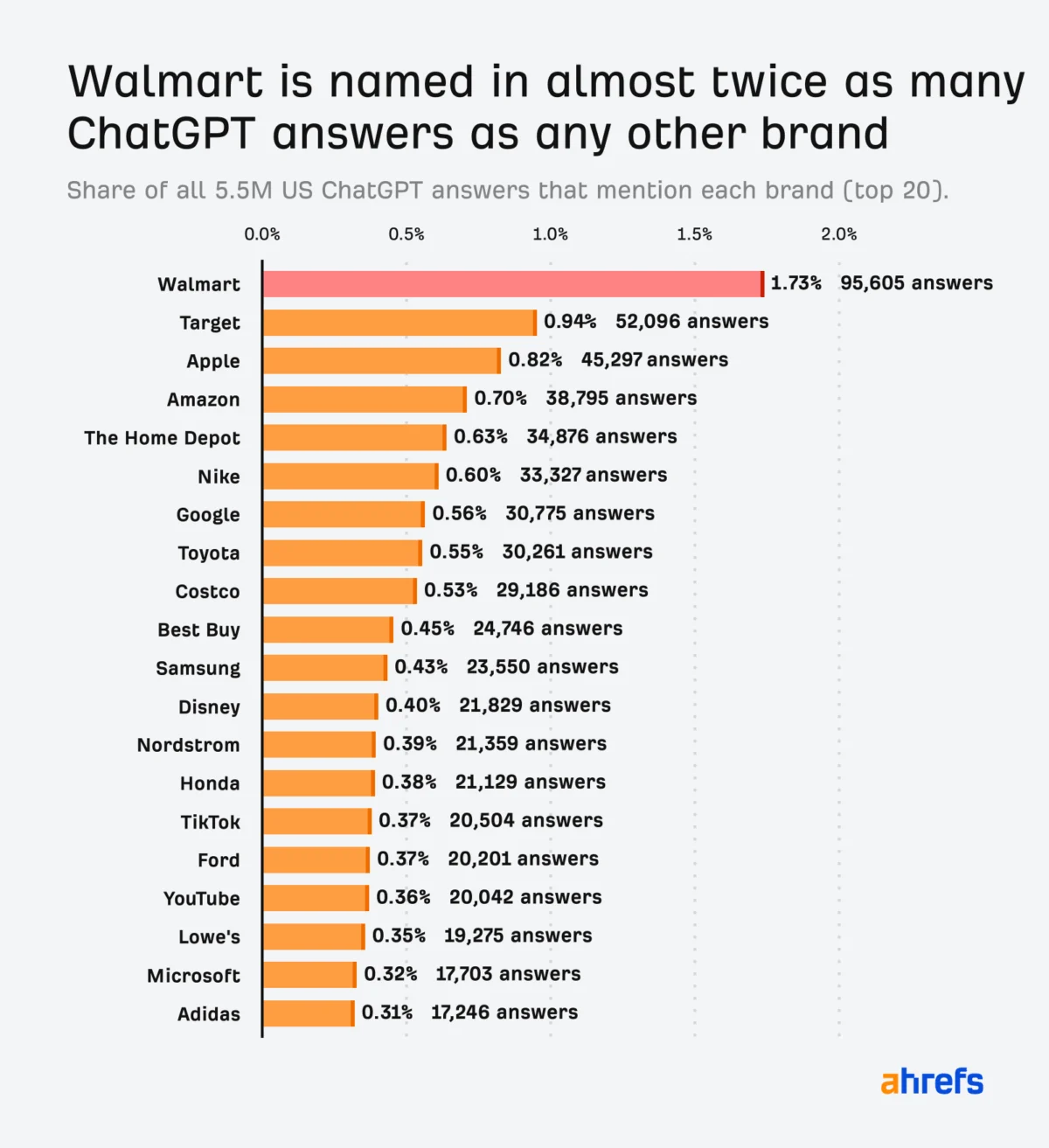
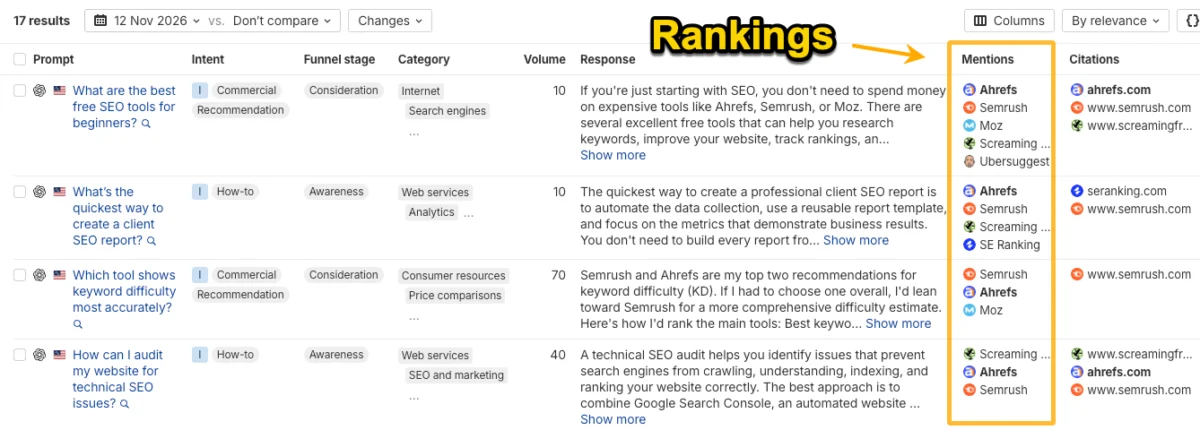
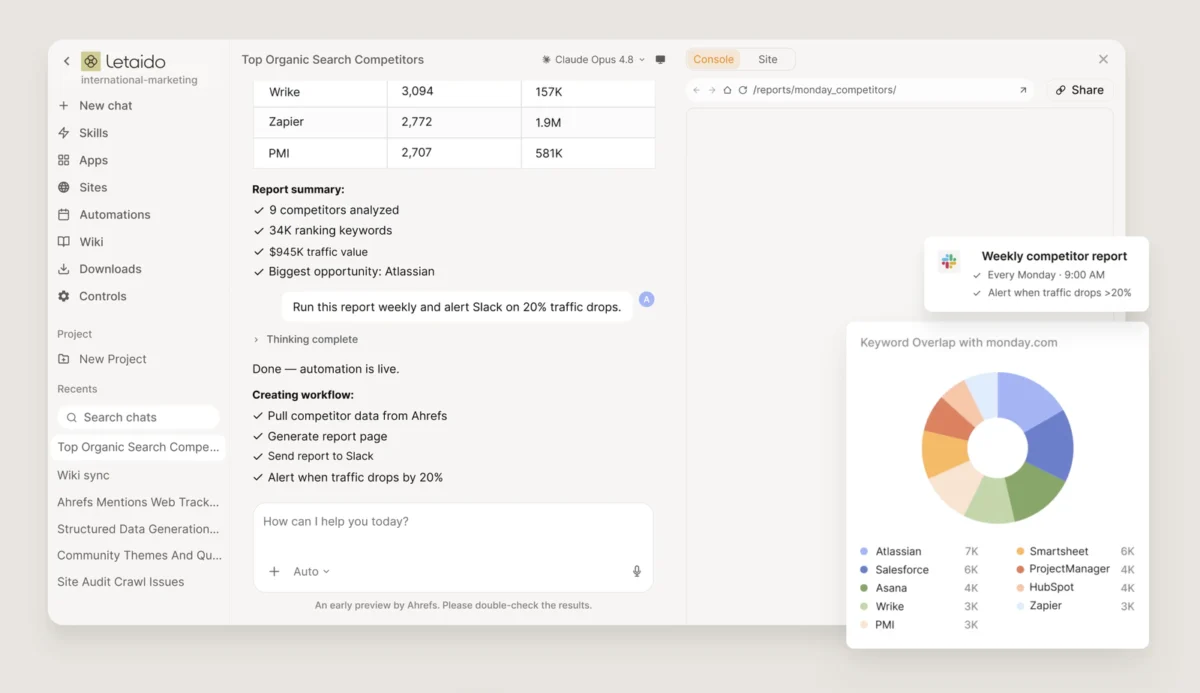
To effectively appear in ChatGPT’s responses, brands should focus on creating high-quality, publicly accessible content that is optimized for search engines, as this increases the likelihood of being discovered through live web search. Establishing partnerships with publishers who have content deals with OpenAI can also provide a pathway for curated visibility. Finally, ensuring a strong, authoritative online presence across various platforms can contribute to being cited more frequently. Tools like Ahrefs’ Brand Radar can help brands track their mentions and citations across AI platforms, providing insights into their AI share of voice against competitors.