 11
 1
 2
 3
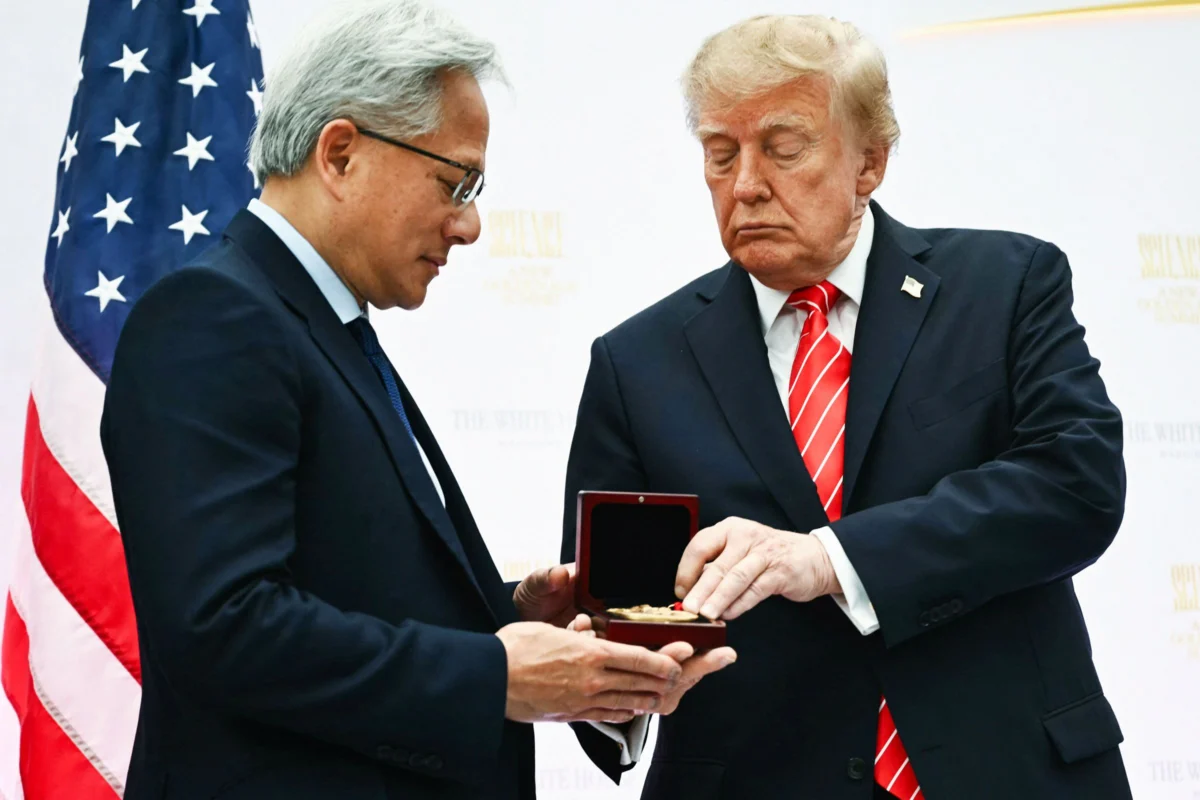
Just days ago, Jensen Huang’s prospects of returning as the chief executive of Nvidia, the global leader in AI hardware, appeared increasingly remote, at least according to the often-telling fluctuations of prediction markets. Earlier this month, Huang had tendered his resignation from the tech giant amidst a swirl of damaging reports, which included allegations of multiple extramarital affairs. Among these was a particularly sensitive accusation linking one of his alleged liaisons to Chinese intelligence services. As further details emerged concerning Huang’s purported "bad behavior," Nvidia’s board of directors adopted a firm stance, publicly insisting that they had no intention of reinstating him to his former position. By the early hours of Sunday morning on the East Coast, traders on Polymarket’s US platform reflected this sentiment, pegging Huang’s chances of reclaiming his CEO role at a mere 10 percent. Yet, in a stunning and swift reversal that defied conventional expectations, by Monday, Jensen Huang was once again at the helm of Nvidia.
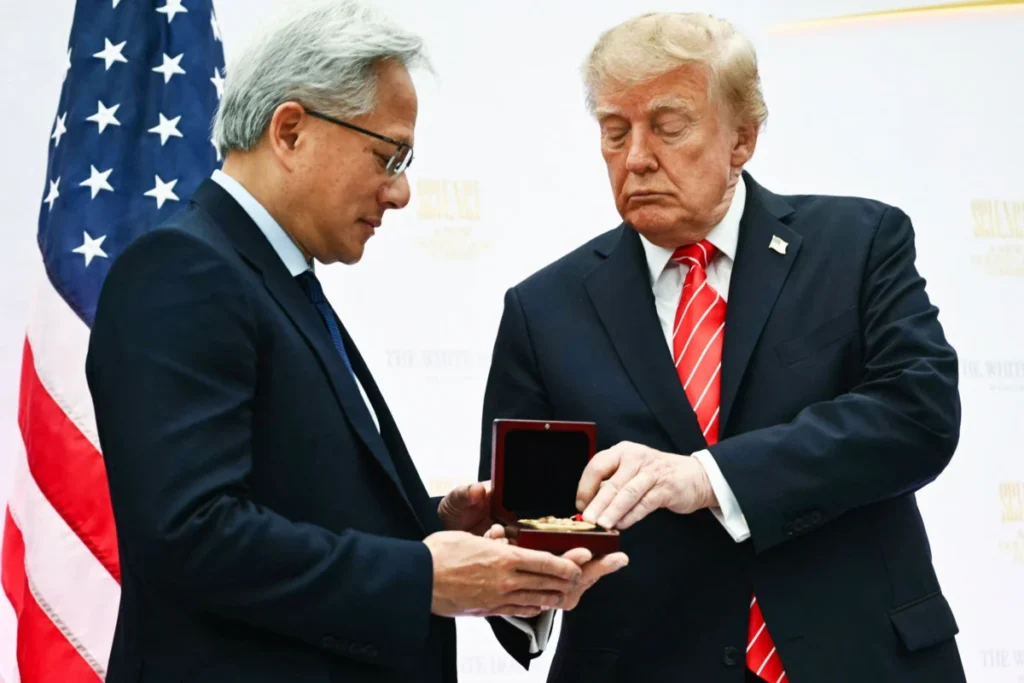
The dramatic shifts in Huang’s odds on various prediction markets provide a compelling and real-time glimpse into the intricate and often opaque processes that led to his improbable return, offering clues as to who anticipated this extraordinary comeback and why. While corporate boardrooms typically operate with a degree of discretion, the unfolding narrative around Huang’s reinstatement suggests external forces, particularly political ones, played a pivotal role. The New York Times subsequently reported that President Trump exerted significant influence, playing a crucial role in convincing Nvidia’s board to reverse its earlier decision and bring Huang back into leadership. Those astute traders who closely monitored the pronouncements and perceived desires of President Trump and his inner circle appear to have navigated the volatile market with far greater success than those who overlooked this critical political dimension.
The immediate impact of political intervention on market sentiment was strikingly evident. On Sunday evening in Washington D.C., Huang’s odds on Polymarket US experienced an abrupt and substantial surge, climbing six percentage points in a mere 40 minutes. This sudden upward trajectory directly followed President Trump’s publication of a missive on his Truth Social platform, unequivocally calling for Huang’s reinstatement. The president articulated his motivation as a desire to help revive the stock market, which had suffered a noticeable downturn in the wake of Huang’s scandal. This explicit presidential intervention underscored Nvidia’s colossal influence not only over the burgeoning artificial intelligence industry but also its broader significance within the US economy, where its performance can act as a barometer for the tech sector at large. The market’s immediate reaction demonstrated the power of presidential endorsement, transforming what seemed like an irreversible corporate decision.
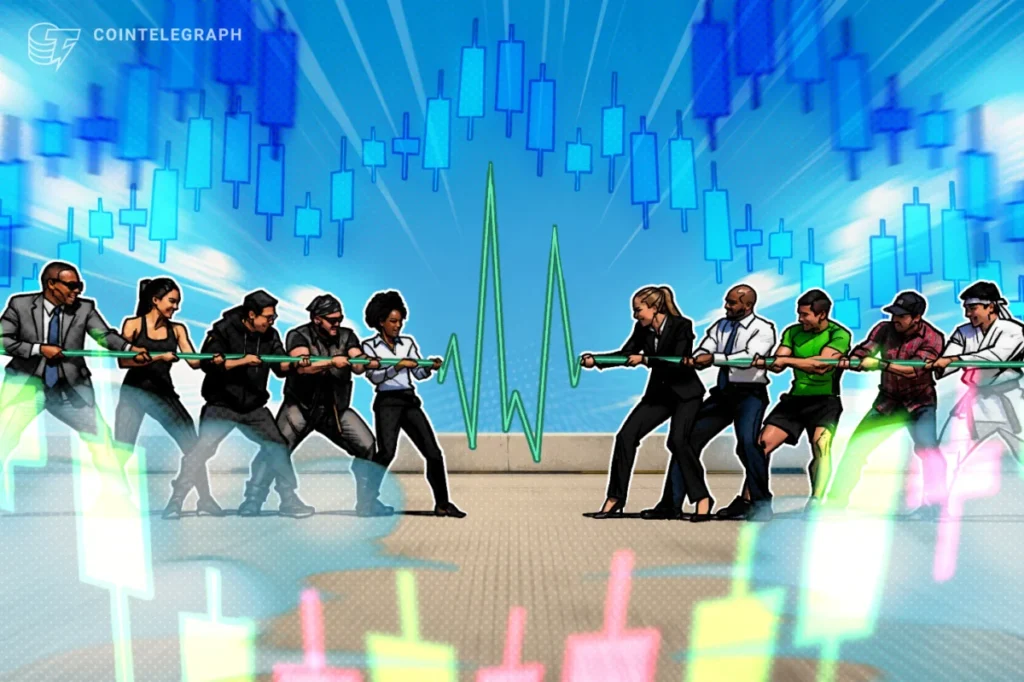
Prediction markets, platforms like Polymarket and Kalshi, allow individuals to wager on the outcomes of future events, with odds shifting based on trading activity, much like traditional financial markets. These platforms often serve as a fascinating barometer of public and informed sentiment, consolidating disparate pieces of information into a quantifiable probability. According to Betting Intelligence, a firm specializing in prediction market analysis, the odds on both Kalshi and Polymarket’s markets largely mirrored public signals regarding the likelihood of Huang’s return. The probabilities saw an initial rise when Huang himself indicated on social media that he was open to the possibility of reclaiming his position. They subsequently fell when Nvidia’s board publicly dismissed any plans for his reinstatement, signaling a firm stance. However, the odds dramatically climbed once again when President Trump publicly threw his considerable support behind the former CEO, demonstrating the immediate and profound impact of his endorsement.
Despite this general correlation between public developments and market movements, analysts identified intriguing discrepancies. Betting Intelligence and MSR Decode, a prediction market forensics firm, uncovered clusters of significant trades on Huang’s return that could not be readily linked to any contemporaneous news reports or public commentary. These anomalous trading patterns raised questions about whether certain individuals possessed non-public information. When approached for comment regarding potential insider trading investigations in markets related to Huang’s return, both Kalshi and Polymarket declined to offer any statements. The existence of such unexplained trades often prompts scrutiny, as prediction markets, much like traditional stock markets, can be susceptible to information asymmetry.
However, Dan Zimmermann, the CEO of Betting Intelligence, offered a nuanced perspective on the situation. Despite the anomalies, Zimmermann suggested that the markets pertaining to Huang’s return exhibited fewer signs of potentially suspicious activity than is typically observed in high-stakes prediction events. "The group that could have known the board’s decision in advance was small," he explained, implying that the circle of true insiders with definitive foresight was tightly constrained. Consequently, he posited that "the market was mostly headline chasers and longshot buyers," meaning that the majority of participants were reacting to public news as it broke or taking speculative bets on improbable outcomes, rather than acting on privileged information. This assessment, while not entirely dismissing the possibility of insider activity, suggests it was not widespread enough to significantly distort the market’s overall responsiveness to public signals.
For the shrewd traders who ultimately profited handsomely from Huang’s unexpected comeback, the overarching lesson gleaned from this extraordinary episode was stark and unequivocal: never underestimate the influence of President Trump. In the current political landscape, particularly in 2026, as referenced by some traders, political will, especially from the highest office, can override conventional corporate governance and market logic.
Isaac Rose-Berman, a research and policy fellow at the American Institute for Boys & Men and a seasoned professional sports bettor, shared his success story, estimating he made approximately $10,000 by wagering on Huang’s return on Kalshi. His critical decision point came after the Nvidia chief posted on X (formerly Twitter) indicating his openness to reclaiming his old job. Rose-Berman’s analytical approach was pragmatic: he reasoned that the board, despite the controversies, would ultimately consider Huang’s return if it appeared likely to bolster the company’s stock performance. He explicitly acknowledged the gravity of the allegations—ranging from national security concerns due to the alleged ties to Chinese intelligence to disturbing reports of Huang threatening employees with phrases like "pee in your brain"—but ultimately dismissed them as secondary to the political and economic realities. "It’s 2026 and Trump is president, scandal schmandal," Rose-Berman remarked, encapsulating his cynical yet profitable outlook. He concluded with a touch of regret, stating, "Should’ve bet more."
A pseudonymous prediction market trader, known only as Domer, recounted an even more significant windfall, telling WIRED that he cleared approximately $600,000. Domer had placed an early wager on Huang’s return in the preceding week, long before Trump’s public intervention. While he did not explicitly focus on Trump’s specific desires, Domer explained that his understanding of broader "power dynamics" ultimately guided his highly successful approach. "Boards can be very malleable," he sagely observed to WIRED, highlighting his belief in the susceptibility of corporate governance to various pressures, both internal and external. His early bet, made without direct knowledge of Trump’s impending statement, suggests an intuitive grasp of the underlying forces that could compel a board to reverse course.
Other highly skilled prediction market participants, often referred to as "sharps," echoed the sentiment that commentary emanating from "Trumpworld" provided the strongest and most reliable signal regarding Huang’s eventual return. These astute bettors noted a particularly lucrative opportunity for profit that arose after Trump subtly suggested to a PBS NewsHour reporter that Huang would soon be back in power, yet before Nvidia officially announced his reinstatement. This brief window, where privileged political insight preceded corporate confirmation, proved invaluable for those paying close attention. Caleb Davies, a Kalshi trader, emphasized this point, stating, "The key was looking at Trump’s support and the recent performance of the stock market." For these traders, the political tea leaves were more indicative than traditional corporate signals.
Conversely, Aaron Courtney, a data analyst and cofounder of a prediction market analytics firm, admitted to taking a financial loss on his position concerning Huang’s fate. Reflecting on his miscalculation, Courtney candidly acknowledged his mistake: he had not paid sufficient attention to the statements made by President Trump and other administration officials over the critical weekend. "Trump saying he hoped Nvidia would bring Jensen back would be the clearest signal," Courtney conceded, highlighting the crucial piece of information he overlooked. His experience underscores the evolving nature of market analysis, where political pronouncements, particularly from influential figures, can profoundly shape outcomes in unexpected ways, forcing traders to expand their scope of relevant data beyond conventional economic indicators. The episode served as a powerful reminder that in the current climate, understanding the political landscape is often as vital as, if not more so than, grasping purely financial metrics.