 11
11
Most top-ranking web pages do not achieve their #1 position by targeting a single keyword. Instead, they consistently rank for hundreds, and sometimes even thousands, of related search terms. This phenomenon highlights the critical role of secondary keywords in capturing additional, often significant, website traffic. Secondary keywords are the supporting terms that enhance a page’s ranking for a broader range of searches without necessitating the creation of separate content for each variation. This guide delves into the definition of secondary keywords, methods for their discovery, and strategies for their effective implementation to maximize content reach.
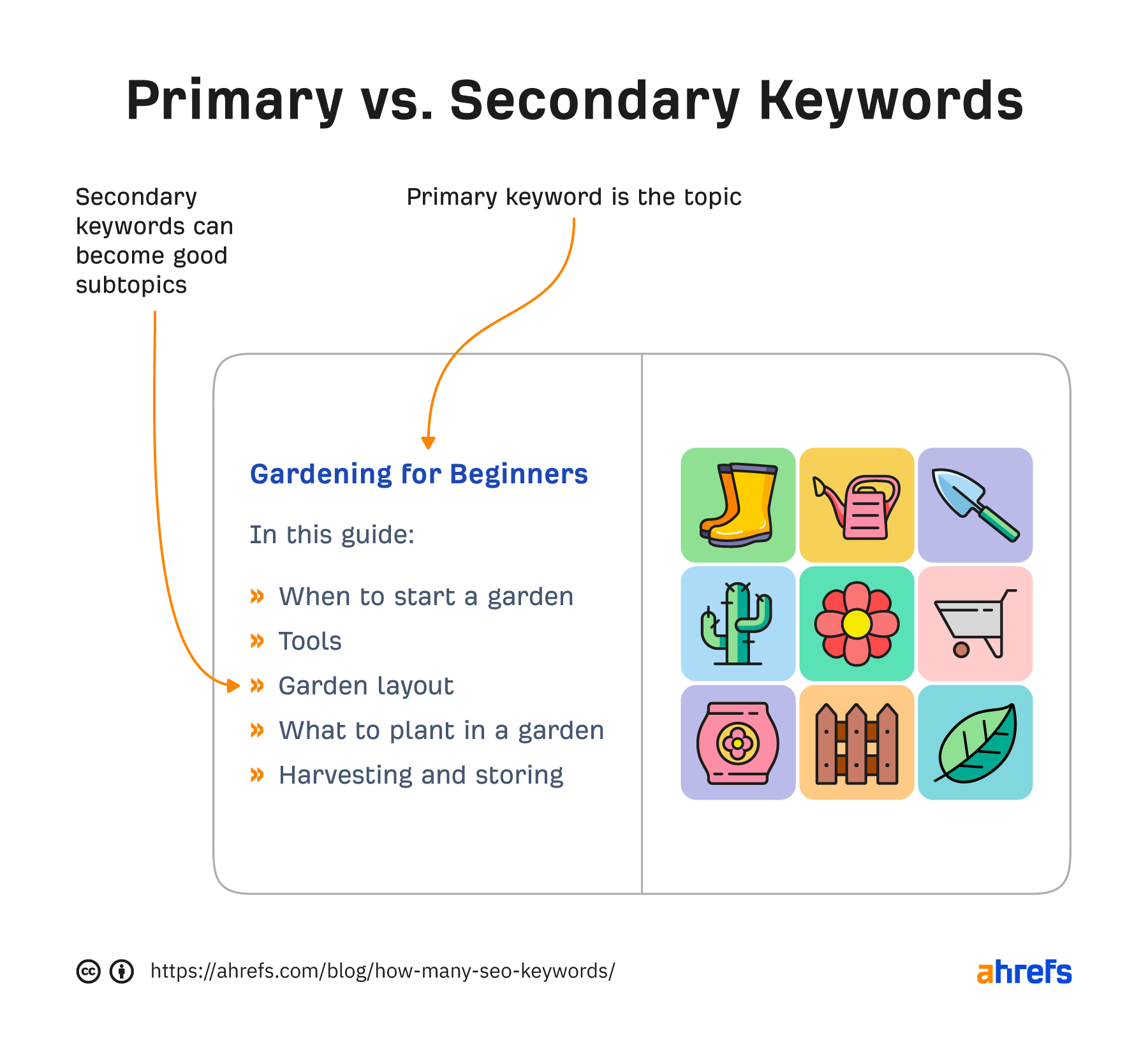
At its core, a secondary keyword is a related search term that complements a primary keyword. These terms share the same underlying search intent as the primary keyword but are expressed using different phrasing. The primary keyword is the main term a content creator targets, typically appearing in the page’s title and URL. Secondary keywords, conversely, are the variations and related terms woven organically throughout the content.

For instance, if the primary keyword is "coffee maker," potential secondary keywords could include "best coffee machine," "drip coffee brewer," "automatic coffee pot," "espresso machine," "pour-over coffee maker," or "French press coffee maker." Each of these terms relates to the broader topic of coffee preparation devices. A user searching for any of these terms likely seeks similar information or product recommendations. By naturally incorporating these variations within a single article, a content creator can effectively rank for multiple related searches with one piece of content. It is important to distinguish secondary keywords from long-tail keywords or the often-misunderstood LSI keywords, though overlap exists. For practical purposes, secondary keywords represent the alternative ways users might search for a given topic.
The Significance of Secondary Keywords
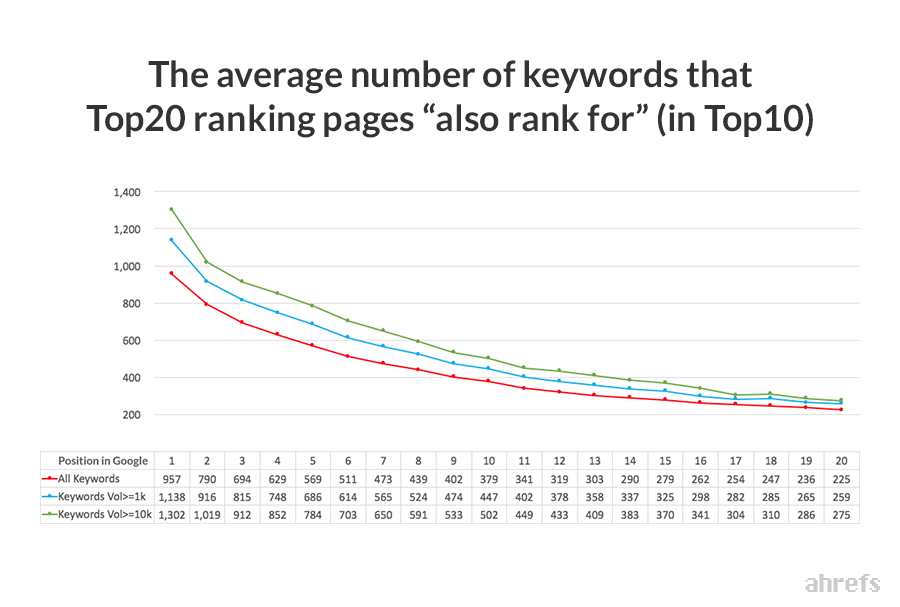
A compelling statistic reveals that the average page ranking #1 for a keyword also ranks for nearly 1,000 other related keywords. This means a page optimized for "how to make cold brew coffee" might also rank for terms like "cold brew ratio," "cold brew coffee recipe," and "how long to steep cold brew," alongside hundreds of other variations.
This insight is crucial because the total traffic potential for a piece of content far exceeds what the search volume of a single primary keyword might suggest. Consider a keyword with 1,000 monthly searches. A #1 ranking might yield approximately 300 clicks (roughly 30% click-through rate, though this can be affected by factors like AI overviews). However, if that same page ranks for 50 secondary keywords, each with its own search volume, the actual traffic could be two to three times higher. This cumulative traffic is often referred to as "Traffic Potential," representing the total estimated traffic a #1 ranking page receives from all keywords it ranks for, making it a more insightful metric than individual keyword search volume.
Furthermore, secondary keywords contribute to search engines’ understanding of a content’s depth and comprehensiveness. When a page naturally incorporates multiple related terms, it signals to search engines that the content provides thorough coverage of the topic, which can enhance its authority and ranking potential.
Discovering Secondary Keywords
Several effective methods exist for identifying secondary keywords, each offering a unique perspective:
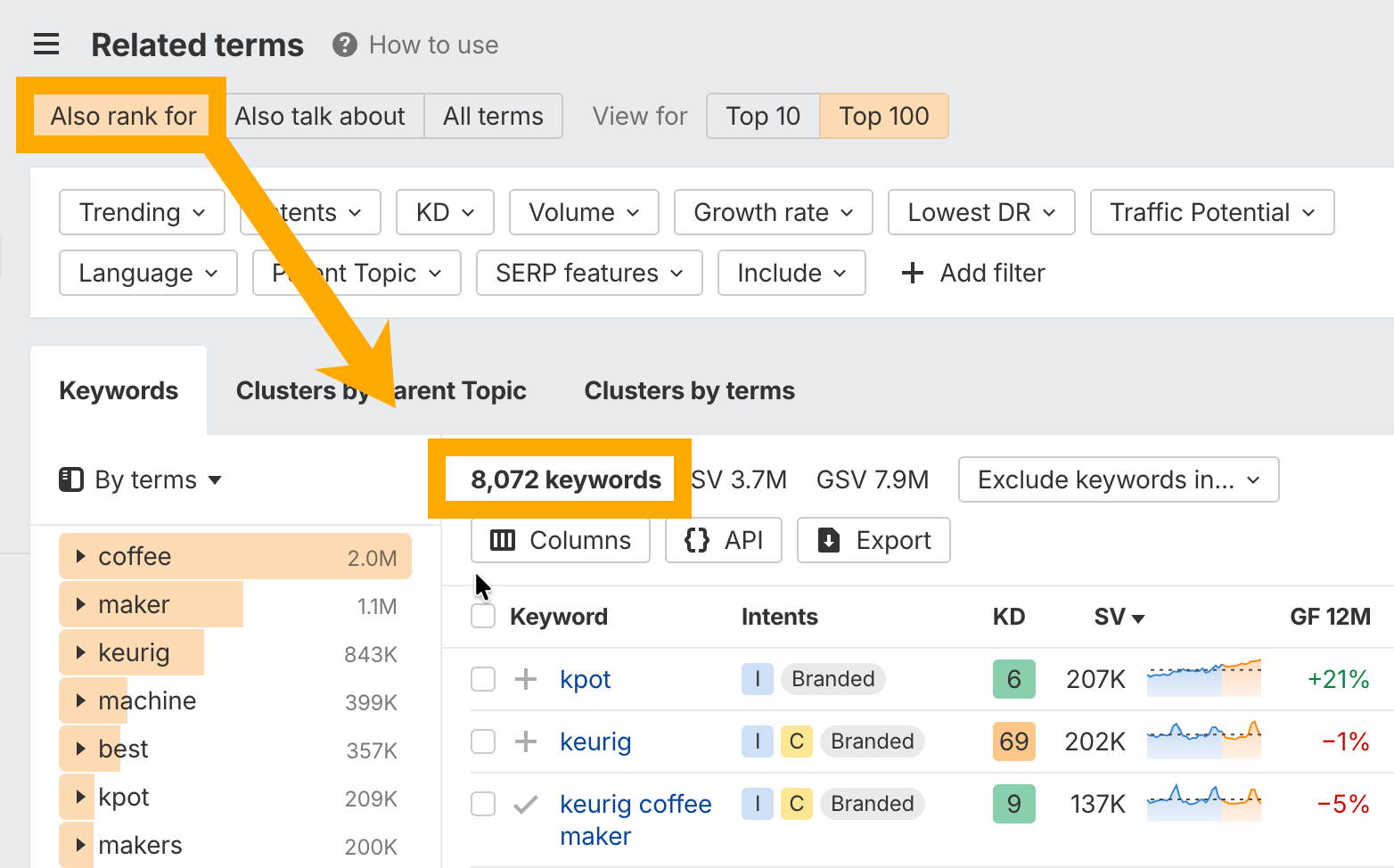
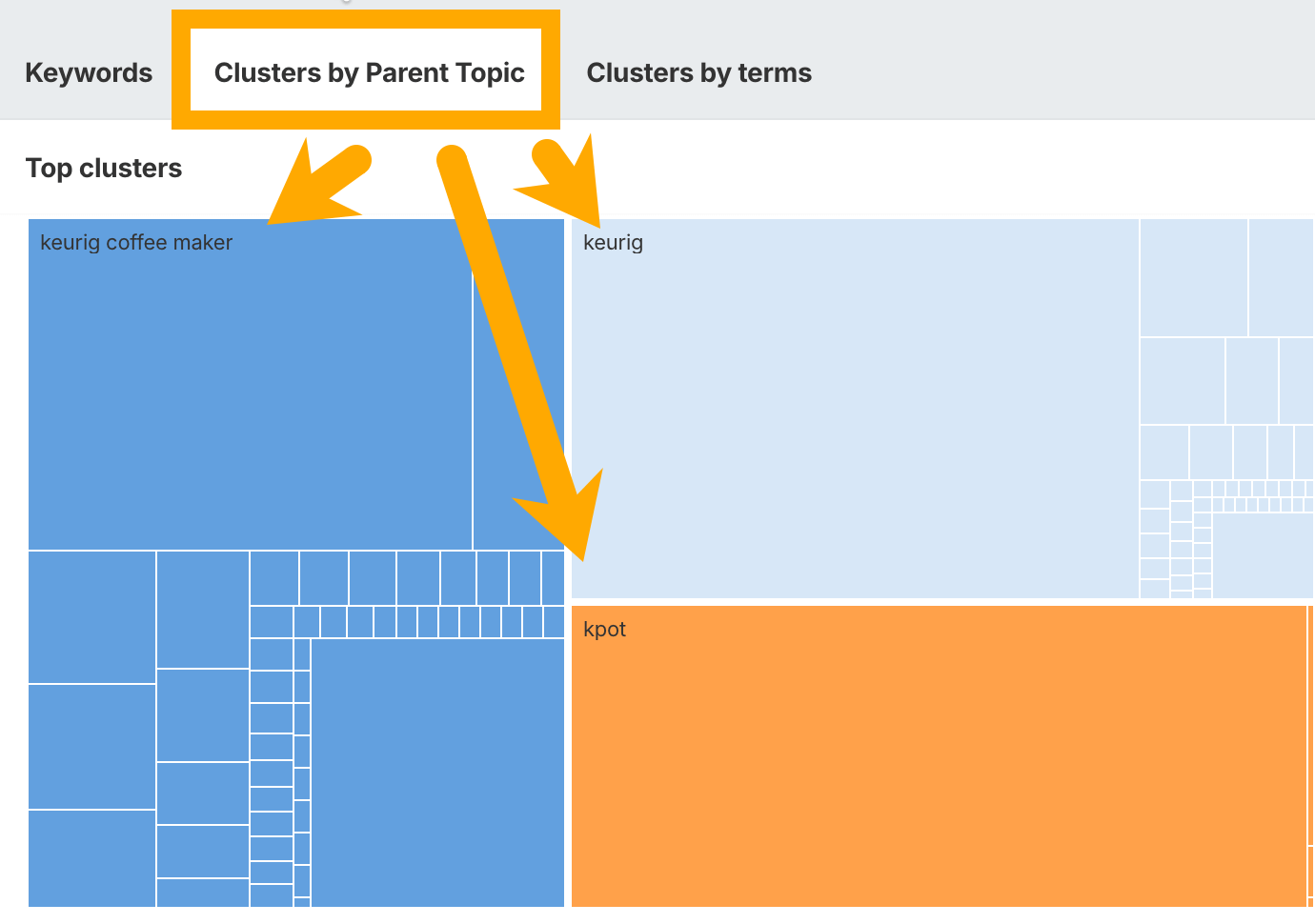
Utilize Keywords Explorer’s Related Terms: A straightforward approach involves examining what top-ranking pages for your primary keyword already rank for. In Ahrefs’ Keywords Explorer, after entering your primary keyword, navigate to "Related terms" and then select "Also rank for." This report displays keywords that the top 10 ranking pages for your primary keyword also rank for, presenting them as strong secondary keyword candidates that have already demonstrated their ability to work together. Typically, this report yields hundreds or thousands of keywords. To refine this list, users can apply filters such as search volume, keyword difficulty, and crucially, the "Parent Topic" filter. Keywords sharing the same Parent Topic are considered by Google to be semantically related, indicating they can often be targeted effectively with a single page.
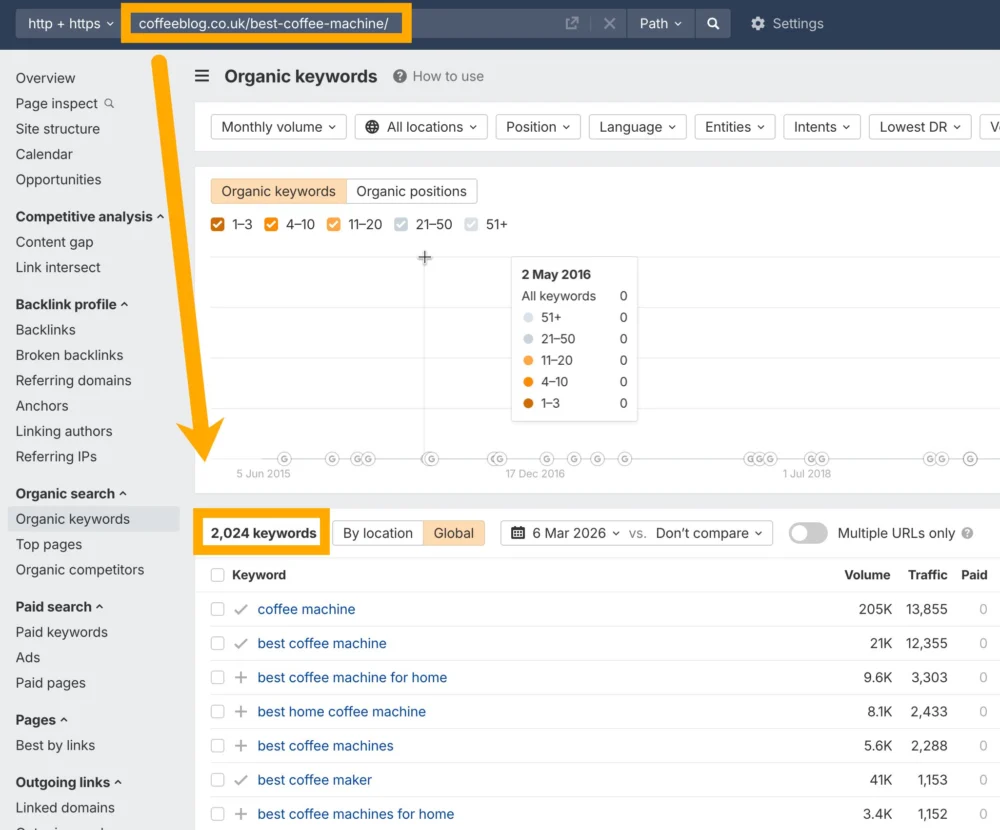
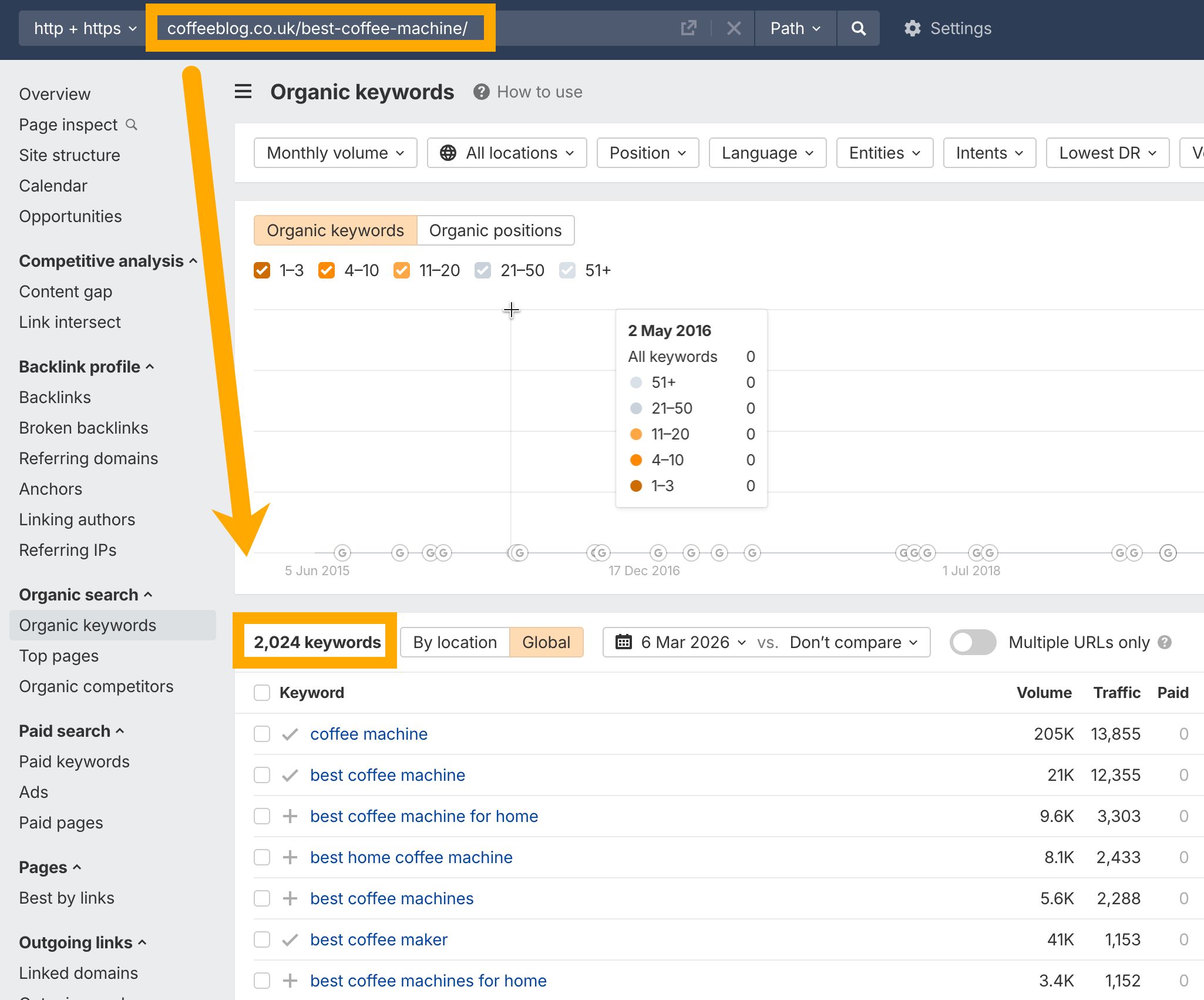
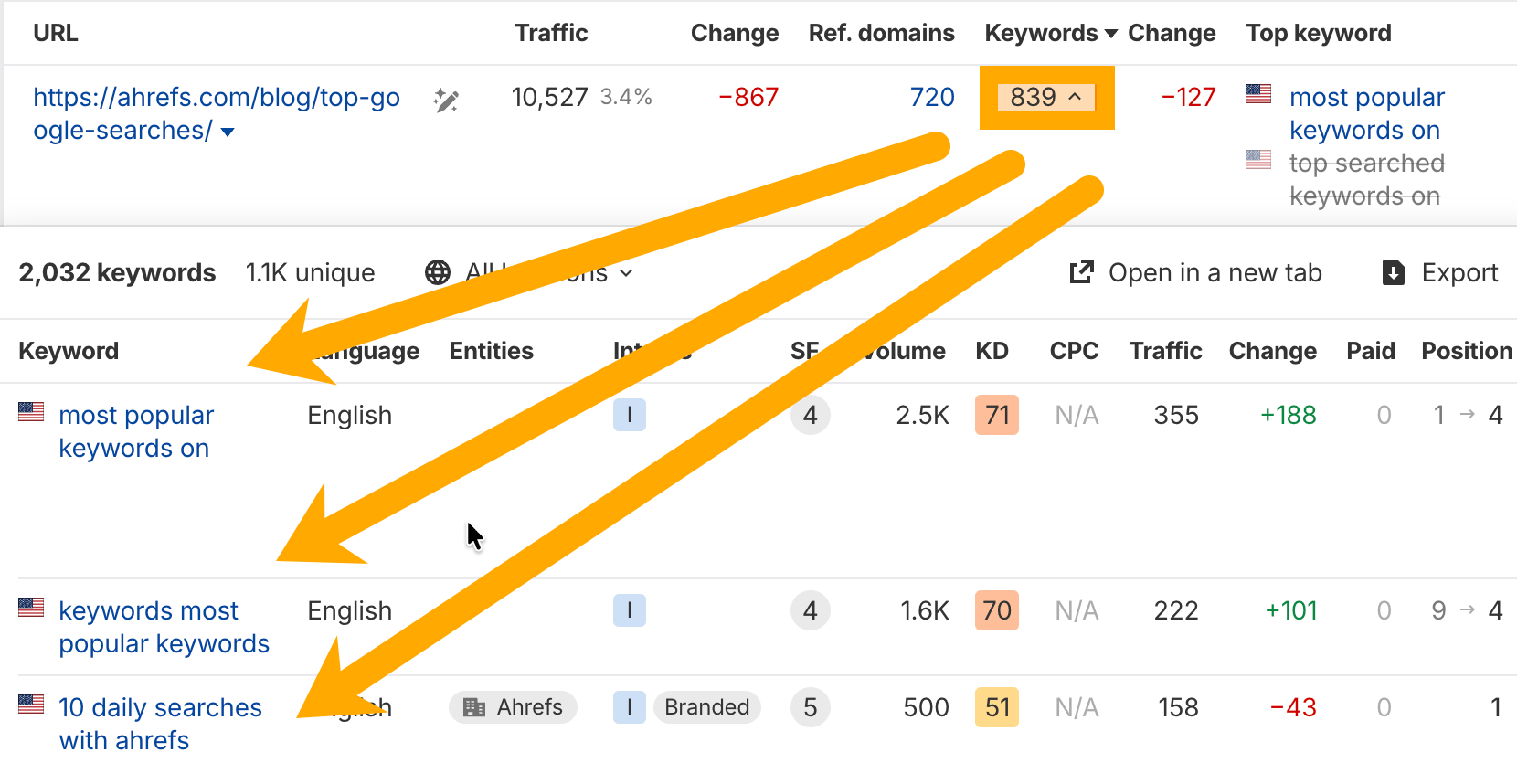
Analyze Competitor Rankings: Another effective strategy is to identify a well-ranking page for your target keyword and analyze the other keywords it ranks for. Using Ahrefs’ Site Explorer, input the URL of a top-ranking page and navigate to the "Organic keywords" report. This report details every keyword that specific page ranks for. Exporting this list allows for the identification of relevant secondary keywords, particularly useful for updating existing content by spotting gaps in your current rankings compared to competitors.
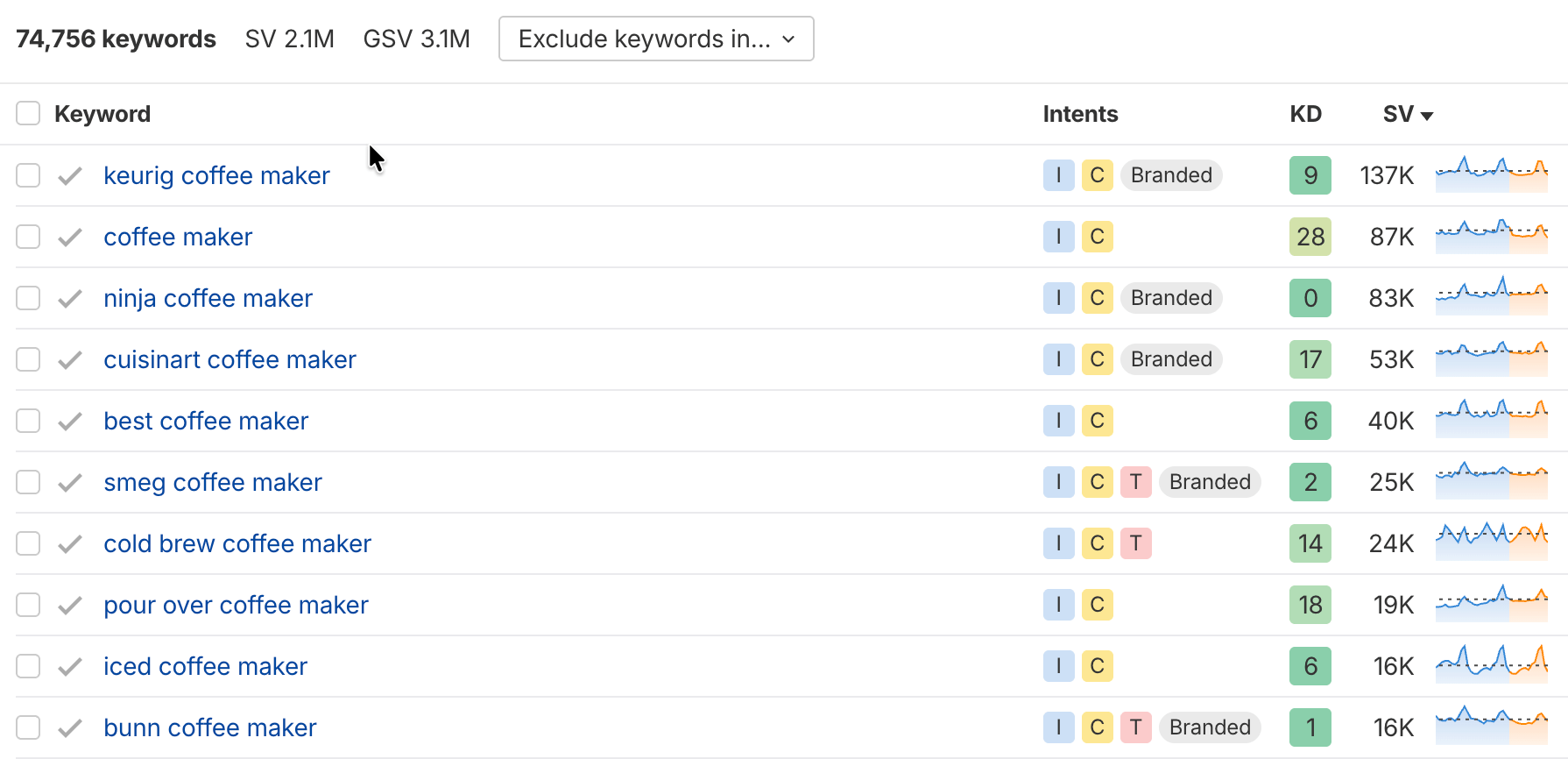
Leverage the Matching Terms Report: The "Matching terms" report in Keywords Explorer offers a different angle by showcasing keyword variations that include your seed terms. This report operates in two modes: "Exact match," which shows keywords containing your exact primary keyword, and "Phrase match," which includes keywords that contain your primary keyword as a phrase. For example, with "coffee maker" as the seed, "Exact match" might yield "best coffee maker," "cheap coffee maker," and "automatic coffee maker." The "Phrase match" mode could reveal terms like "coffee maker with grinder" or "coffee maker for small kitchen." This report is particularly valuable for uncovering question-based keywords, allowing you to filter by terms like "what," "how," or "why" to identify questions your article should address.
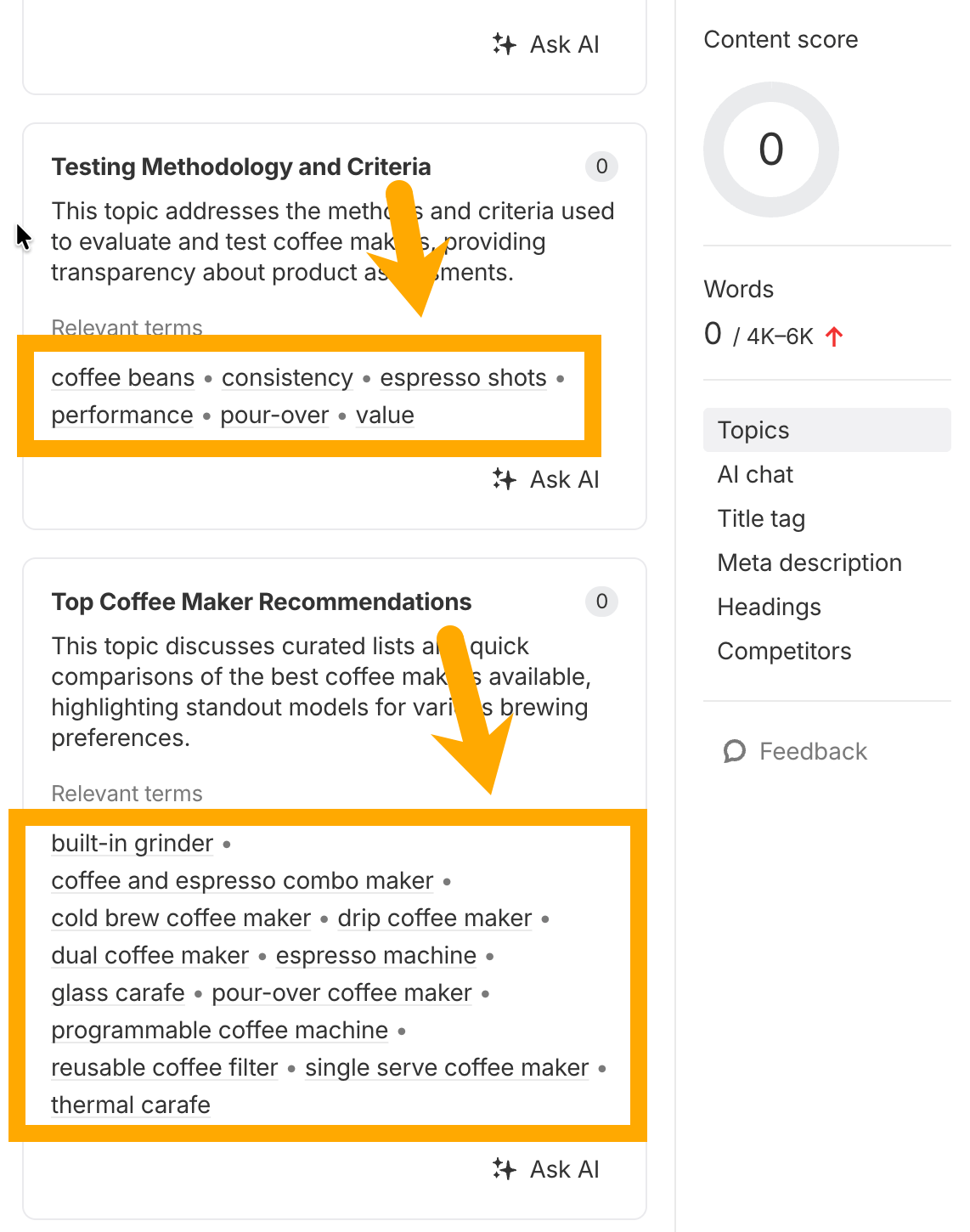
Employ AI Content Helper for Subtopic Suggestions: Ahrefs’ AI Content Helper analyzes top-ranking pages for your keyword and suggests relevant subtopics to cover. By scanning the content of current SERP leaders, it highlights potential gaps in your draft. Instead of manually reviewing numerous competing articles, this AI-generated tool provides a list of topics and questions that top-performing pages address. To use it, input your primary keyword into the tool, and it will then analyze the SERPs and suggest subtopics. This is especially beneficial for comprehensive guides where crucial angles might be overlooked, as the tool effectively reverse-engineers successful search result strategies.
Determining the Number of Secondary Keywords
There is no universal magic number for secondary keywords; the optimal amount depends on the topic’s depth and content format. A general guideline suggests targeting 3-5 main secondary keywords per article. These are the terms you will intentionally incorporate into subheadings and throughout the content. However, if the content is sufficiently comprehensive, it will naturally rank for many more, potentially dozens or even hundreds, of secondary keywords.
The key principle is to focus on topic coverage rather than counting keywords. By examining the keywords that top-ranking pages rank for, you can infer the subtopics your content should address. The goal is not to force every keyword into the text but to ensure that the same subtopics are covered. The "Parent Topic" feature in keyword research tools is invaluable here, as keywords with the same Parent Topic can generally be targeted together on a single page. If a keyword has a different Parent Topic, it may warrant its own dedicated article. It is crucial to avoid keyword stuffing; if a secondary keyword feels awkward or out of place, it should be omitted to maintain natural readability for both users and search engines.
Strategic Placement of Secondary Keywords
Once secondary keywords are identified, they should be integrated strategically:
It is imperative to avoid unnaturally stuffing keywords or forcing them into sentences where they disrupt the flow. The title should generally be reserved for the primary keyword. Readability should never be sacrificed for keyword inclusion. The ultimate objective is natural integration, ensuring the content reads smoothly and sounds human.
Secondary Keywords vs. Other Keyword Types
Confusion often arises between secondary keywords, long-tail keywords, and LSI keywords.
Secondary Keywords vs. Long-Tail Keywords: Long-tail keywords are characterized by their specificity and lower search volume, often being longer phrases. Secondary keywords are defined by their relationship to a primary keyword. While a secondary keyword can often be long-tail (e.g., "best drip coffee maker under $50" as a secondary to "coffee maker"), not all secondary keywords are long-tail (e.g., "coffee machine" as a secondary to "coffee maker"). The distinction lies in the keyword’s characteristic (long-tail vs. short-tail) versus its strategic role (primary vs. secondary).
Secondary Keywords vs. LSI Keywords: LSI (Latent Semantic Indexing) keywords refer to a concept from the 1980s, and in modern SEO, the term "LSI keywords" is often used loosely to mean "related keywords." However, Google does not use LSI; it employs more advanced natural language processing techniques. Secondary keywords offer a more practical and data-driven approach. Instead of relying on theoretical semantic relationships, secondary keyword identification focuses on keywords that actual pages rank for alongside the primary keyword, grounded in real search data.
Advanced Strategies: Clustering and Mapping
For larger websites, advanced strategies like keyword clustering and mapping can further optimize content organization and strategy.
Keyword Clustering: This process groups related keywords based on search intent and SERP overlap. If multiple keywords yield similar search results, they likely share the same intent and can be targeted with a single page. Clustering helps prevent keyword cannibalization, where multiple pages on the same site compete for the same keywords.
Keyword Mapping: This takes clustering a step further by assigning keyword clusters to specific pages within a content hierarchy. A keyword map visually represents which pages target which clusters, ensuring a clear structure and preventing overlap. It also helps identify content gaps—clusters for which no pages currently exist.
In Ahrefs, keyword clustering can be achieved using the "Clusters by Parent Topic" tab in Keywords Explorer, which groups keywords by their parent topic, serving as a proxy for search intent. Keyword mapping involves creating a spreadsheet that assigns clusters to specific URLs. This process helps identify opportunities for content consolidation or the creation of new pages. For larger sites, checking for existing keyword cannibalization using tools like Site Explorer is also crucial.
In conclusion, secondary keywords are indispensable for maximizing search visibility. By identifying and strategically integrating these related terms, content creators can significantly expand their reach, attract more targeted traffic, and enhance their pages’ authority in search engine results. The focus should remain on comprehensive topic coverage driven by data, ensuring content is natural, valuable, and addresses the diverse ways users search for information.