 11
11
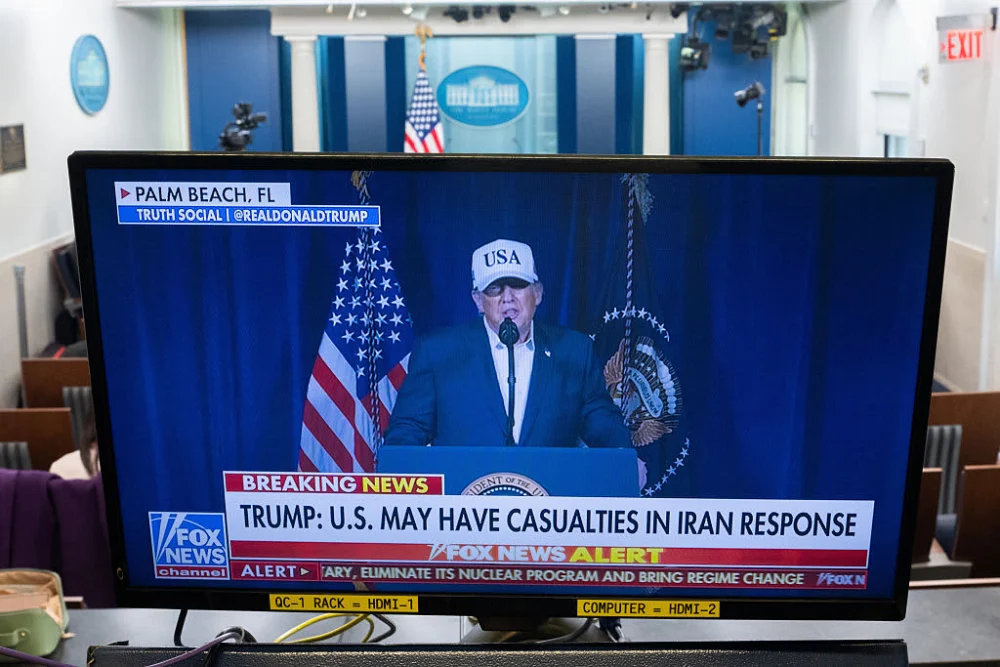
BEIJING – The prospect of U.S. President Donald Trump’s high-stakes visit to China is increasingly clouded by uncertainty, following a significant escalation in American foreign policy actions that have targeted two foreign leaders within a two-month span. The recent joint U.S.-Israeli strikes that resulted in the death of Iran’s Supreme Leader, Ayatollah Ali Khamenei, and the earlier capture of Venezuelan leader Nicolas Maduro and his wife, are poised to complicate Trump’s scheduled diplomatic engagement in Beijing.
The news of Khamenei’s demise, announced by Trump over the weekend, has sent ripples through international relations, particularly impacting Beijing’s strategic positioning. Analysts suggest that these assertive U.S. actions could significantly alter the tenor and potential outcomes of Trump’s upcoming trip. George Chen, a partner at The Asia Group, noted that Chinese President Xi Jinping is unlikely to feel at ease given Beijing’s generally stable relations with both Tehran and Caracas. "How can Xi feel everything is normal and alright and be prepared to welcome Trump to visit in [a] happy mood?" Chen questioned, advising investors to temper their expectations regarding what Trump might achieve during his potential visit.
Trump’s visit to Beijing, slated from March 31 to April 2, follows a delicate trade truce established in late October. This trip, if it materializes, would mark the first visit by a sitting U.S. president since 2017. However, Beijing has yet to officially confirm the dates, a point of significant observation.
China’s Ministry of Foreign Affairs issued a statement on Sunday condemning Khamenei’s killing, characterizing it as "a grave violation of Iran’s sovereignty and security." The ministry called for an immediate ceasefire, though its condemnation of the U.S. role was notably less direct than its response to the capture of Maduro. This nuanced diplomatic response suggests a strategic effort by China to balance its relationships and international standing.
A foreign business executive, speaking on condition of anonymity due to the sensitive nature of the situation, expressed concern that the U.S. might leverage the unfolding events in Iran to postpone or even cancel the trip if the situation deteriorates. "I worry the U.S. side might use Iran, if it’s going poorly, to delay the trip," the executive stated, adding, "I think the risk [of the trip falling apart] is on the U.S. side more than the Chinese side."

U.S.-based prediction markets have reflected this growing apprehension. As of late Monday morning, Polymarket indicated a significant decline in the probability of Trump visiting China by March 31, dropping to 42% from 83.9% on February 21. While wagers on a visit by April 30 remained robust at 81%, the immediate timeframe for the trip appears increasingly precarious. Kalshi, another prediction market, showed a slight dip in expectations for a visit by 2027, though it still registered a high confidence level of 91%.
Despite the palpable uncertainty, many analysts still anticipate the trip will proceed. However, the implications for U.S. businesses seeking to forge deals in China are becoming more complex. A number of American executives were expected to join Trump’s delegation, a common practice to foster bilateral economic ties. Yet, the current geopolitical climate has introduced new challenges.
"Prior to the attack on Iran, many American CEOs were already unwilling to go with Trump to China. Now the situation is even more tricky," commented an active member of the American business community in China, who also requested anonymity.
Neither the White House nor China’s Ministry of Foreign Affairs provided immediate comment when approached by CNBC.
Jack Lee, an analyst at China Macro Group, observed that China’s official statements thus far exhibit an "unusually softer tone." While he expects Trump’s visit to proceed as scheduled, he is closely monitoring whether Washington will signal any restraint regarding arms sales to Taiwan, a democratically self-ruled island that Beijing claims as its own territory and a persistent flashpoint in U.S.-China relations.
President Trump himself indicated to the British newspaper the Daily Mail that U.S. strikes on Iran could potentially last for four weeks. This timeframe directly overlaps with the planned commencement of his visit to China. Yue Su, principal economist at the Economist Intelligence Group, suggested that if the conflict were to escalate into a regional war beyond initial U.S. projections, a delay in Trump’s trip would not be impossible. Nevertheless, Su’s base case remains that Trump will proceed with his China visit. She also anticipates a phone conversation between Trump and Xi regarding the evolving situation.

This week, China is commencing its annual parliamentary meetings, during which top diplomat Wang Yi is expected to address the press. Earlier in February, Wang conveyed to U.S. Secretary of State Marco Rubio at the Munich Security Conference the importance of expanded cooperation between the U.S. and China. Beijing has consistently prioritized its national interests by cultivating bilateral relationships and advocating for multilateral engagement. Official communiqués following past U.S.-China meetings have emphasized the necessity of establishing favorable conditions for the development of bilateral relations.
Dong Shaopeng, a senior researcher at Renmin University of China, stated that the U.S. actions in Iran have diminished trust between the two nations. While he still expects the Trump-Xi meeting to occur, he expressed hope that the conflict would not extend to other Middle Eastern countries.
A state-affiliated Chinese columnist, "Niutanqing," writing for Sina Finance, described the conflict in Iran as more intense than the war in Ukraine. The columnist drew several lessons from the events, including the emergence of "traitors" from within and the potential for negotiations to mask an adversary’s true intentions.
Should the Trump-Xi meeting proceed as planned, it could serve as a critical platform for broader peace discussions and for addressing the strained U.S.-China relationship. Gary Dvorchak, managing director at Blueshirt Group, emphasized the significance of the scheduled meeting, noting that "The issues that they have to work out, China-U.S. trade, are pretty important, and the meeting has been scheduled to be in place for a long time, and so cancelling it would be pretty radical at this point." He concluded, "I don’t think it would … help the situation to cancel the meeting for any reason."