 11
11
The United States Navy has announced its most substantial robotics procurement to date, signing a pivotal five-year Indefinite Delivery, Indefinite Quantity (IDIQ) contract with Pittsburgh-based Gecko Robotics. This landmark agreement, facilitated in conjunction with the U.S. General Services Administration (GSA), aims to dramatically enhance the Navy’s fleet maintenance capabilities through advanced robotic inspections and data analytics, addressing critical challenges in ship readiness and operational efficiency.
The deal, which commences with an initial award of $54 million and boasts a ceiling value of $71 million, marks a significant commitment by the U.S. military branch to embrace cutting-edge robotic technology. Gecko Robotics, a company renowned for developing specialized robots and sensors designed for inspecting large industrial assets, will deploy its innovative solutions to monitor the health and status of the Navy’s vast fleet of ships. The initiative is set to kick off with a focus on 18 vessels within the strategically vital U.S. Pacific Fleet, a region of paramount importance for global security and naval operations.
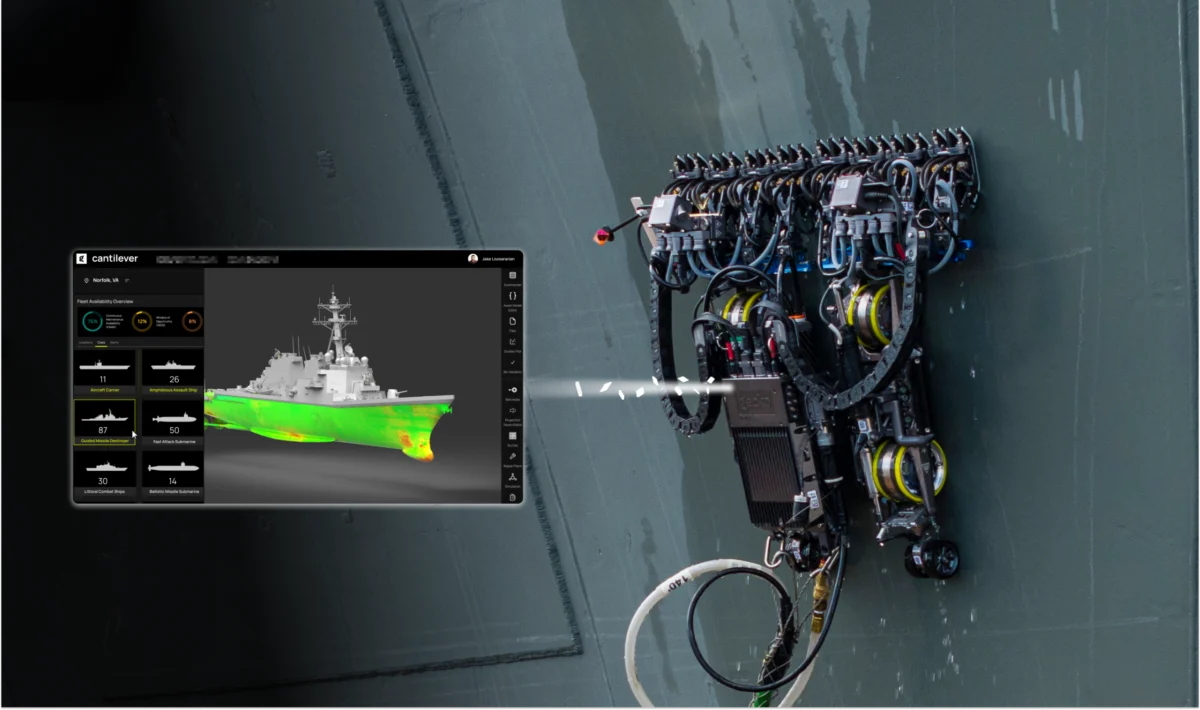
Gecko Robotics’ technology represents a transformative shift from traditional, often manual, and time-consuming inspection methods. Jake Loosararian, founder and CEO of Gecko Robotics, elaborated on the operational specifics of their system in an interview, explaining that the company’s robust robots are engineered to navigate and crawl into every intricate space and structural crevice of a ship. During these comprehensive inspections, the robots meticulously collect vast amounts of data, which is then used to construct a highly detailed digital replica of each vessel. This sophisticated virtual model, commonly referred to as a "digital twin," provides an unprecedented level of insight into the physical condition of the ship.
The creation of these digital twins is just the initial phase. Gecko’s proprietary software suite plays a crucial role in analyzing the collected data, allowing the Navy to continuously monitor the structural integrity and operational health of its assets. More critically, the software is designed to implement predictive maintenance protocols. Unlike traditional preventative maintenance, which relies on fixed schedules, predictive maintenance uses real-time data and analytical models to forecast potential equipment failures before they occur. This proactive approach enables the Navy to identify and address issues pre-emptively, significantly reducing unforeseen breakdowns, shortening maintenance cycles, and ultimately slashing operational costs.
"Once you create that digital representation using the robotic systems of the health and the condition of these assets, and even the digitization of the environment itself, then you can accelerate how quickly you can make decisions and repair," Loosararian stated. He emphasized the long-term vision behind the technology: "You want to be able to build this living, breathing model that ensures that you’re reducing days into the future that these assets have to spend [out of service]." This sentiment underscores the profound impact the technology is expected to have on fleet availability and operational readiness.
The urgency for such technological adoption is underscored by the current state of the Navy’s fleet readiness. The U.S. Navy has set an ambitious target of achieving 80% ship readiness by 2027. This goal is critical given that, at present, approximately 40% of the Navy’s fleet is unavailable for deployment at any given time. This significant unavailability is primarily attributable to the protracted and complex maintenance cycles inherent in servicing large naval vessels. The financial burden associated with these maintenance operations is staggering, with Loosararian highlighting annual costs ranging from $13 billion to $20 billion. "At a time when you need every asset you can get, that’s pretty critical. And these assets aren’t getting any younger either," he added, pointing to the aging infrastructure that further complicates maintenance efforts.
The IDIQ contract structure itself offers notable advantages for both the Navy and Gecko Robotics. An Indefinite Delivery, Indefinite Quantity contract is a flexible government contracting vehicle that provides for an indefinite quantity of services or supplies during a fixed period. This allows the Navy to order specific tasks or services from Gecko Robotics as needed, without committing to a full expenditure upfront. It ensures a streamlined procurement process for future requirements, enabling the Navy to adapt its needs and scope of work as the program evolves, while providing Gecko Robotics with a stable, long-term engagement. The involvement of the U.S. General Services Administration (GSA) further indicates the strategic importance and broad applicability of this contract, as the GSA typically manages procurement for federal agencies, ensuring efficiency and compliance.
The partnership between Gecko Robotics and the U.S. Navy is not a recent development, but rather the culmination of a four-year collaborative relationship. The initial contact was made when a port engineer stationed in Japan, recognizing the potential of Gecko’s innovative approach, reached out to learn more about the company’s capabilities. This initial inquiry led to a comprehensive evaluation and the development of a preventative maintenance plan by Gecko Robotics for naval assets. The Navy, evidently impressed by the efficacy and potential of Gecko’s solutions, steadily expanded the scope of its engagement, ultimately leading to the substantial contract announced this week. This organic growth of the relationship speaks to the proven value and reliability of Gecko’s technology in a demanding operational environment.
Gecko Robotics’ existing expertise in inspecting critical industrial infrastructure, such as power plants, oil and gas facilities, and pulp and paper mills, translates directly to the challenges faced by naval fleets. These environments share commonalities in requiring precise, non-invasive inspection of large, complex, and often hazardous structures to prevent catastrophic failures and optimize operational uptime. The transition of this proven technology to naval vessels is a testament to its versatility and robustness.
The long-term vision championed by Loosararian extends beyond mere maintenance efficiency. He envisions a future where the concept of a ship going through extended maintenance cycles becomes obsolete. "We’re helping to ensure that our critical assets live as long as they can and never are down," he articulated. "I want to live in a world where we don’t have ships going through maintenance cycles, because we just know what’s broken and what to fix while they’re actually deployed. That’s my vision of the future, whether it’s a military asset or it’s a power plant." This proactive, real-time maintenance paradigm promises not only significant cost savings but also a profound strategic advantage, ensuring that naval assets are continuously available and mission-ready, regardless of their location or operational status.
This deal underscores a broader trend in military modernization, where advanced robotics, artificial intelligence, and data analytics are increasingly being integrated into core operational functions to enhance efficiency, safety, and strategic advantage. For the U.S. Navy, this partnership with Gecko Robotics represents a crucial step towards a more resilient, cost-effective, and operationally ready fleet, capable of meeting the complex demands of 21st-century global security. The successful implementation of this technology could set a new standard for asset management across not just military branches, but also critical infrastructure sectors worldwide.