 11
11
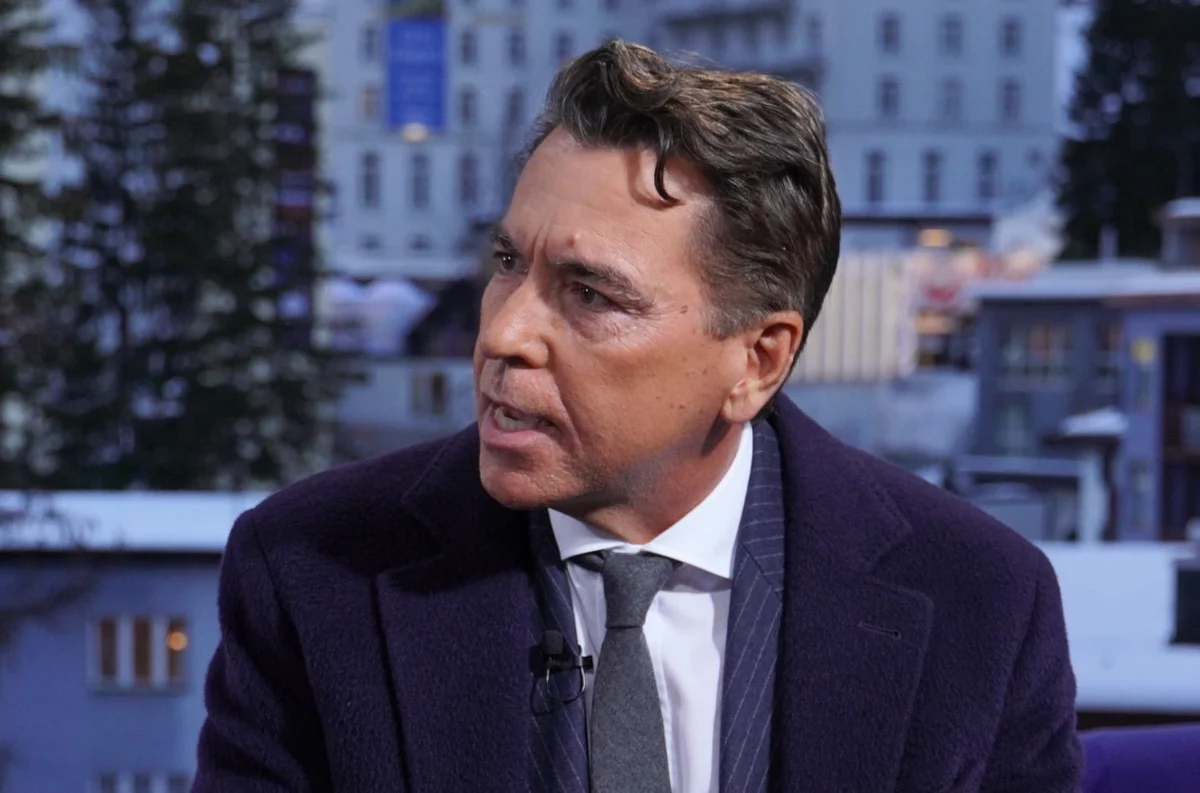
Orlando Bravo, the founder and managing partner of Thoma Bravo, has forcefully countered the intensifying criticism leveled against private markets, asserting that profound sector specialization is the defining factor distinguishing successful investments from those facing headwinds. He emphasized this point in the context of artificial intelligence (AI) triggering widespread disruption across the software industry.
"We have been living in the details of the space for a very, very long time, not on a high level, not investing in stocks, [but] investing in companies, customer contracts, knowing the details. So, yes, as a sector specialist in private equity, our companies are very, very different," Bravo stated during an interview with CNBC’s Leslie Picker. He further elaborated on the firm’s confidence in its private credit portfolio, attributing it to their selective investment approach. "We are so comfortable with our private credit book, given the choices we’ve made as a specialist."
Bravo’s remarks arrive at a critical juncture as investors are increasingly scrutinizing private market valuations and liquidity. This heightened scrutiny follows a period marked by significant asset value reductions and mounting redemption requests from investors across both private credit and equity funds. The current landscape has seen a noticeable increase in investor caution, with concerns about the true worth and accessibility of capital in these less liquid markets.
Adding to the broader industry concerns, Morgan Stanley recently projected that default rates in direct lending could escalate to approximately 8%, a figure that approaches the peaks observed during the COVID-19 pandemic. This forecast signals a potential increase in credit risk within the private lending sector. Concurrently, John Zito, a prominent figure at Apollo Global Management, advised UBS clients last month that many private equity firms are misrepresenting the actual value of their software investments. Zito controversially stated that "all the marks are wrong," suggesting a systemic overstatement of asset values in this segment of the market.
Despite these industry-wide challenges and critical commentary, Bravo conveyed that Thoma Bravo’s investor base, which comprises substantial U.S. pension funds and global sovereign wealth funds, has maintained its confidence. He attributed this unwavering trust to the firm’s extensive history of successful investments and its commitment to transparency. "They’ve seen our marks, they’ve seen our exits, they’ve seen our progression," Bravo asserted, underscoring the long-term relationships and performance history that underpin investor faith. "Everybody’s extremely comfortable."
Addressing a particularly visible investment misstep, Bravo candidly acknowledged that Thoma Bravo overpaid for the customer experience software company Medallia. This specific deal, a $6.4 billion take-private transaction completed in 2021, was highlighted by Apollo’s John Zito as an example of a problematic valuation. According to a report in The Wall Street Journal, Zito predicted that the Medallia deal would ultimately prove "worse than people expect."
Bravo elaborated on the Medallia acquisition, stating, "When we bought it, we way overestimated or extrapolated the very high rate of growth of that company into the future. We made a mistake. And that cost us to pay too much. Now, the equity from our standpoint has been impaired for a long time." He emphasized that the firm’s investors, who represent significant global capital, have been aware of this situation for years. "Our investors, this group that holds the capital in the world, has known that for years. So there is no new news." This statement suggests a level of transparency regarding past performance, even when it involves less-than-ideal outcomes.
Notwithstanding the acknowledged setback with Medallia, Bravo insisted that the broader Thoma Bravo portfolio is demonstrating robust performance. "The other 77 companies that we have, for the most part — and it’s so relevant for AI — they’re absolutely crushing it," he declared, highlighting the strong operational execution across the majority of their holdings. He positioned AI as a significant factor influencing the performance of these companies, suggesting it presents opportunities rather than solely threats within their specialized portfolio.
Bravo then drew a sharp distinction between companies owned by private equity firms, particularly those with deep sector expertise like Thoma Bravo, and many publicly traded software companies. He argued that the latter are facing accelerating disruption, and that recent valuation declines in some public software stocks are "very warranted." His assessment suggests that the inherent volatility and rapid shifts in the public markets, exacerbated by AI, are creating a more precarious environment for companies lacking specialized operational focus.
"In the public markets, if you look at it, there are many, many software companies in the public markets that will be disrupted from AI," Bravo observed. He elaborated on this point, stating, "Those companies were going to be disrupted anyway. AI will create a disruption a lot faster." This implies that while AI is an accelerant, some public software companies were already vulnerable to technological obsolescence or market shifts, and AI is merely hastening an inevitable decline. In contrast, he implicitly positions Thoma Bravo’s portfolio companies as being better insulated due to their specialized operational strategies and deep understanding of their respective niches within the software sector, which allows them to navigate or even leverage the AI-driven transformation more effectively. The firm’s approach, he suggests, is predicated on a granular understanding of market dynamics and technological evolution, enabling them to make more resilient investments compared to broader market plays.