11
11
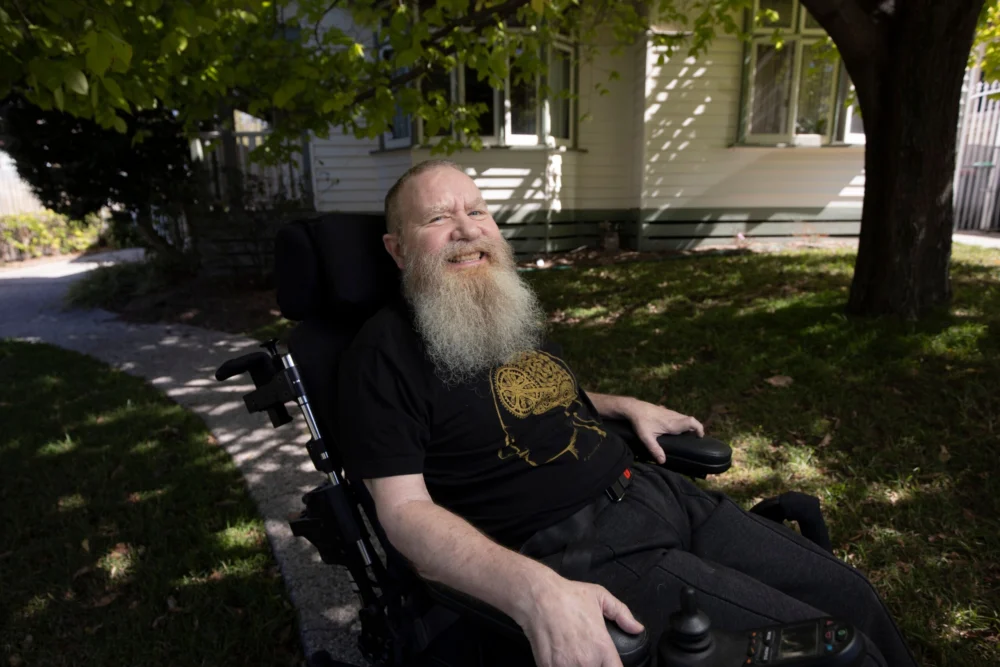
Rodney Gorham recently marked a significant personal and technological milestone, becoming one of the few individuals globally to have lived with a brain-computer interface (BCI) implanted for five continuous years. This experimental device, developed by the innovative startup Synchron, has profoundly transformed his daily life, offering a lifeline in the face of progressive paralysis. Gorham, now 65, lives with amyotrophic lateral sclerosis (ALS), a devastating neurodegenerative disease that has robbed him of the ability to walk, speak, or use his hands. Through the BCI, he can now control a computer and various digital devices within his home environment using only his thoughts, effectively restoring a degree of autonomy and connection to the world.
Synchron is at the forefront of a burgeoning field of neurotechnology companies, including high-profile ventures like Elon Musk’s Neuralink, all vying to commercialize BCIs to assist individuals suffering from paralysis and severe motor impairments. Over the past half-decade, Synchron’s proprietary software and hardware components have undergone numerous iterations, with Gorham playing an instrumental role in shaping the evolution and refinement of the technology. Among the ten volunteers who have received Synchron’s implant to date, Gorham holds the distinction of being the longest-term user. His journey with the device began in December 2020, when he received the implant as part of an early clinical trial conducted in Australia. While Gorham’s five-year tenure is remarkable, the record for the longest-ever user of an implanted BCI belongs to Nathan Copeland, who has utilized multiple research-grade arrays from Blackrock Neurotech for over a decade.
Tom Oxley, Synchron’s founding CEO, underscored Gorham’s critical contributions, stating, "We’ve done a lot of trial and error with Rodney trying out different things to figure out what we think the first use case we should build the first product and clinical trial around." Oxley further elaborated on Gorham’s integral participation, noting, "He’s played a pivotal role in helping us test out new decoders, new interaction methods, and application integrations." This collaborative approach between engineers and patients is crucial in developing technologies that are not only effective but also genuinely useful and user-friendly for those who need them most.
Synchron’s flagship product, the Stentrode, represents a groundbreaking approach to BCI implantation. Unlike more invasive BCIs that require direct brain surgery, the Stentrode is a tiny mesh tube designed for endovascular insertion. This innovative device is strategically placed within a blood vessel, where it rests against the brain tissue, enabling it to passively collect neural signals. The procedure involves inserting the Stentrode into the jugular vein at the base of the neck, from where it is carefully threaded through the intricate vascular network until it reaches the motor cortex—the specific region of the brain responsible for planning, controlling, and executing voluntary movements. Once neural signals are captured by the Stentrode, they are transmitted to a separate, surgically placed unit located in the patient’s chest. This chest unit then wirelessly relays the processed brain signals out of the body to an external receiver, which translates them into actionable commands for digital devices. This less invasive approach aims to minimize surgical risks and potentially enhance the long-term viability of the implant.
As Synchron progresses towards broader market availability, the company is preparing for a larger, so-called "pivotal trial," a crucial step required for obtaining regulatory approval from health authorities. Synchron has engaged in extensive discussions with the US Food and Drug Administration (FDA) to determine the appropriate clinical endpoint for this trial. A clinical endpoint is a measurable outcome used to assess the safety and effectiveness of a medical device or treatment. Defining the effectiveness of a BCI presents a unique set of challenges compared to traditional drugs or devices that directly treat a disease. The field of neurotechnology is actively grappling with how best to quantify the functional benefits and overall impact of these interfaces on patients’ lives, moving beyond simple metrics to encompass quality of life improvements and functional independence.
The core functionality of brain-computer interfaces relies heavily on sophisticated decoding algorithms. These algorithms are designed to interpret and translate complex patterns of brain activity into the user’s intended actions. For instance, a person might mentally "think" about making a fist or tapping their foot—even if their physical body cannot perform these movements—to generate a specific command, such as a mouse click on a computer screen. In individuals with paralysis, the neurons in their brain still fire in unique, discernible patterns when they attempt to execute these movements. The critical challenge for a decoder lies in its ability to consistently and accurately recognize these raw neural signals over time and under varying conditions, ensuring that the BCI remains reliable and useful for the user.
Over the five years of his implant, Rodney Gorham’s mastery of the BCI has shown remarkable progression. Initially, he could only execute single clicks, a foundational level of control. His capabilities then expanded to multi-clicks, followed by sliding control, which is analogous to adjusting a volume knob. Today, Gorham is proficient in 2D control, enabling him to fluidly move a computer cursor across a screen, navigating both horizontal and vertical planes with his thoughts alone. This evolution underscores the potential for users to adapt and gain increasing dexterity with these advanced interfaces.
Gorham’s journey has also seen him experiment with various devices through his implant. Zafar Faraz, a field clinical engineer for Synchron, highlighted Gorham’s direct contribution to the development of Switch Control, an innovative accessibility feature that Apple announced last year. This feature empowers BCI users to control iPhones, iPads, and even the Vision Pro mixed-reality headset purely with their thoughts, marking a significant step towards broader integration of BCI technology into mainstream digital ecosystems. A compelling video demonstration, showcased at an Nvidia conference in San Jose, California, vividly illustrated Gorham’s capabilities. In the video, he effortlessly played music from a smart speaker, turned on a fan, adjusted his home lighting, activated an automatic pet feeder, and commanded a robotic vacuum cleaner—all from his home in Melbourne, Australia. Faraz enthusiastically affirmed, "Rodney has been pushing the boundaries of what is possible."
.jpg)
As part of his role, Faraz visits Gorham at his home twice a week to conduct sessions focusing on the brain-computer interface. These regular visits are critical for monitoring the device’s performance, troubleshooting any issues that arise, and meticulously documenting the full range of actions Gorham can and cannot perform with the BCI. The data collected from these in-home sessions is invaluable to Synchron, providing crucial insights that drive improvements in the system’s reliability, user-friendliness, and overall functionality.
Over the years, Faraz and Gorham have engaged in extensive experimentation to explore the implant’s full potential. Faraz recounted an instance where Gorham simultaneously used two iPads, switching between playing a game on one and listening to music on the other. In another ambitious experiment, Gorham played a computer game that involved manipulating blocks on a virtual shelf. Remarkably, this game was wirelessly linked to an actual robotic arm located at the University of Melbourne, approximately six miles from Gorham’s residence, allowing him to remotely move real blocks in a laboratory setting.
Before his ALS diagnosis in 2016, Gorham enjoyed a distinguished career as an IBM software salesman. His wife, Caroline, noted that his current role in pioneering BCI technology perfectly aligns with his past experiences. "It fits Rodney’s set of life skills," she observed. "He spent 30 years in IT, talking to customers, finding out what they needed from their software, and then going back to the techos to actually develop what the customer needed. Now it’s sort of flipped around the other way." Caroline often witnesses her husband smiling broadly after a session with Faraz, indicative of the deep satisfaction he derives from contributing to such transformative technology.
Through these hands-on field visits and continuous user feedback, the Synchron team identified a critical area for improvement in their initial system design. The first-generation system required a wire cable with a paddle on one end to be positioned on the user’s chest. This paddle was responsible for collecting the brain signals transmitted through the chest and relaying them via the wire to an external unit for translation into commands. This setup, however, presented significant challenges. As Oxley explained, "If you have a wearable component where there’s a delicate communication layer, we learned that that’s a problem." He further elaborated on the specific difficulties encountered with a paralyzed population: "With a paralyzed population, you have to depend on someone to come and modify the wearable components and make sure the link is working. That was a huge learning piece for us." Consequently, Synchron is developing a second-generation system that will eliminate this external wire, aiming for a more seamless and less caregiver-dependent experience.
The importance of ease of setup and maintenance for caregivers cannot be overstated if brain-computer interfaces are to be widely adopted and regularly used in home environments. A system that requires constant adjustment or specialized knowledge from caregivers can become a barrier to consistent use, even for the most motivated patients.
During his years in the Synchron trial, Gorham’s ALS has continued its slow, inexorable progression. Operating his implant now demands significant concentration, and he tires more easily than before. While he once conducted interviews with reporters via WhatsApp, sustained texting has become increasingly difficult. This current story, therefore, relies on insights from his wife Caroline, field specialist Faraz, and CEO Oxley.
Gorham’s evolving condition raises profound questions for Synchron and other companies developing BCIs, particularly concerning their long-term utility for patients with progressive neurodegenerative diseases. Will patients be able to continue using these devices effectively as their disease worsens and their cognitive and physical reserves diminish? Furthermore, there are significant economic and logistical considerations: Will insurance providers cover such an expensive device, especially one that requires intricate surgery and may have a potentially limited lifespan for patients with rapidly progressing conditions? While the life expectancy after an ALS diagnosis typically ranges from three to five years, many individuals live longer. Tragically, since Synchron’s first surgery in 2019, some participants in their trials have passed away due to the natural progression of their ALS.
In contrast, individuals with more stable forms of paralysis—such as those resulting from spinal cord injuries—may potentially use a BCI for the remainder of their lives. Even for this group, however, mental fatigue from operating a device for several hours a day remains a significant consideration that research and development efforts are working to address.
Caroline Gorham articulated a crucial perspective from the patient’s family, emphasizing the need for a more human-centered approach: "From my point of view, I think the companies have to take into consideration the human component more, because every human is different." This sentiment underscores the necessity for personalized BCI solutions that can adapt to individual patient needs, disease progression, and unique circumstances, ensuring that these remarkable technological advancements truly serve to enhance lives in the most meaningful way possible.