 11
 1
 2
 3
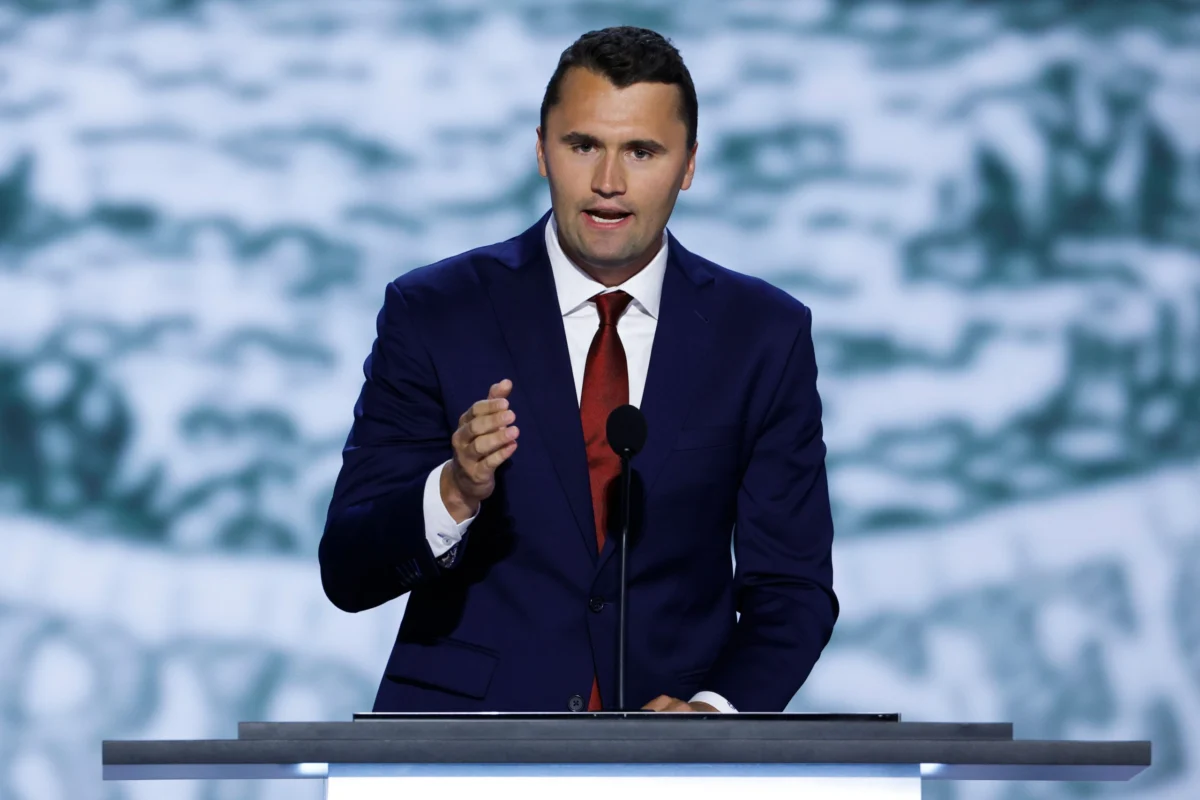
The assassination of conservative activist and Turning Point co-founder Charlie Kirk plunged the online world into immediate chaos and contention. In the days following his death, graphic videos of the shooting at Utah Valley University spread virally across digital platforms within minutes, starkly illustrating how the media’s role in disseminating information has irrevocably changed. Alongside these disturbing visuals, the online sphere became a battleground of extreme reactions. Far-right figures quickly seized upon the tragedy, issuing fervent calls for violence and vengeance, while prominent right-wing lawmakers and influencers demanded the "cancellation"—and, in some instances, even more severe repercussions—for anyone perceived to be celebrating Kirk’s death. It was in this volatile environment that the first whispers of conspiracy theories began to emerge, laying the groundwork for a narrative that would persist long after the initial shock subsided.
Now, one year has passed since Charlie Kirk’s death, and the conspiracy theories surrounding the shooting have not only endured but have been significantly amplified. This persistence is largely attributed to the potent combination of social media algorithms, which are designed to prioritize engagement, and the deliberate actions of influential right-wing personalities like Candace Owens. Leveraging her substantial online following, Owens has consistently used her platforms to push baseless allegations about the incident, contributing to the widespread dissemination of unverified claims. Her extensive content related to Kirk’s death has garnered hundreds of millions of views, demonstrating the immense reach and impact of such narratives in the digital age.
Experts in disinformation and online radicalization warn that these conspiracy theories are unlikely to wane in the foreseeable future. Jared Holt, a senior researcher at Open Measures, expressed a strong conviction regarding their longevity, telling WIRED, "There’s no reason to believe conspiracy theories about Kirk’s murder will lose steam anytime soon." Holt further predicted an escalation, stating, "If anything, I expect them to escalate further as the criminal trial against Tyler Robinson, the man accused of killing Kirk, plays out over the next year or so." He highlighted how the trial, anticipated to draw major media attention, would inevitably provide a fresh wellspring of "new material to work from" for conspiracy theorists, allowing them to dissect court proceedings, witness testimonies, and evidence through a conspiratorial lens, seeking out perceived inconsistencies or hidden meanings.
In the immediate aftermath of Kirk’s death, the internet was flooded with a variety of speculative narratives. Some early conspiracy theorists posited that the assassination was a "false flag" operation, meticulously orchestrated to divert public attention away from former President Donald Trump’s controversial connections to the late financier and convicted sex offender Jeffrey Epstein. This theory suggested a calculated effort to manipulate public discourse and shield high-profile figures. Others went even further, claiming that the entire event was a meticulously staged spectacle, a theatrical production designed to achieve a hidden agenda.
The inventive nature of these theories continued to expand. One particularly bizarre claim involved an "AI-powered gun," suggesting advanced technology was at play in the assassination. Another theory contended that the shooter, Tyler Robinson, was not an antagonist but rather a secret supporter of Kirk, implying an inside job or a more complex motive than initially presented. Perhaps the most outlandish theory asserted that Kirk was not actually dead, but merely faking his demise, a claim that often resurfaces in high-profile deaths within the conspiracy theory ecosystem.
However, amidst this flurry of varied claims, one baseless narrative has proven particularly resilient and central to the ongoing conspiracy campaign: the assertion that someone close to Kirk, or an entity operating on behalf of Israel, was ultimately responsible for his death. In this prevailing theory, Tyler Robinson is cast as a mere "patsy," a scapegoat used to obscure the true perpetrators. The actual cause of Kirk’s death, according to this narrative, was not a gunshot but an "exploding microphone." This specific, sensational detail has become a cornerstone of Candace Owens’ months-long crusade, distinguishing her campaign and providing a dramatic focal point for her considerable audience. Her extensive video documentaries and social media posts pushing this theory have accumulated hundreds of millions of views, solidifying its place in the broader conspiratorial landscape.
Owens’ remarkable success in propagating these theories is, in significant part, a product of the contemporary social media environment, which actively incentivizes and rewards content creation through specific algorithmic designs. Joan Donovan, an assistant professor of journalism and emerging media studies at Boston University, explained this phenomenon to WIRED, stating, "X [formerly Twitter] and YouTube are rife with speculation about Kirk’s death, where it is both still possible to recruit new audiences and monetize them." These platforms’ algorithms often amplify engaging, controversial, or emotionally charged content, regardless of its factual basis, pushing it into the feeds of wider audiences. This creates a powerful feedback loop: sensational conspiracy theories generate high engagement, which in turn leads to greater algorithmic promotion, more views, and subsequently, opportunities for monetization through advertising or direct audience support. The platforms, therefore, inadvertently become fertile ground for the proliferation of such narratives.
The ultimate consequence of this algorithmic amplification and influencer-driven content is that Kirk’s death has devolved into yet another "rabbit hole" for many, a captivating distraction from the complexities of reality. Renée DiResta, an associate research professor at Georgetown University who specializes in tracking disinformation, noted this psychological appeal when speaking with WIRED. She observed that "Candace and other conspiratorial influencers make things seem much more mysterious and exciting." DiResta further elaborated on the preference for such narratives, suggesting that "For many, her explanations are preferable to the reality of an act of violence by a solo individual." The allure of a grand, hidden plot can often be more compelling and emotionally satisfying than the potentially unsettling or mundane truth of a singular act of violence.
The spread of these online conspiracy theories has not remained confined to the digital realm; it has had tangible and dangerous real-world repercussions. Researchers at the Network Contagion Research Institute recently published findings indicating that "Candace Owens caused a measurable, statistically significant surge in death threats and calls for violence against [Charlie Kirk’s wife] Erika Kirk." This alarming report underscored the direct link between inflammatory online rhetoric and the incitement of offline harm. A chilling example of this occurred in May when a man was arrested for allegedly threatening to kill Erika Kirk ahead of her scheduled appearance at a Turning Point USA event in San Antonio, Texas. While the man has yet to be formally charged, the incident highlighted the severe and personal dangers faced by those targeted by these conspiracy theories. Candace Owens did not respond to requests for comment regarding these findings or the arrest.
In response to the relentless spread of these baseless rumors, Erika Kirk and Turning Point have repeatedly issued public appeals for Owens and others to cease their activities. They have called for an end to the dissemination of unverified claims that not only distort the truth of Charlie Kirk’s death but also endanger his grieving family. While these calls have largely gone unheeded by the purveyors of conspiracy theories, Turning Point expresses a cautious optimism that the overall impact of these theories is beginning to diminish.
Andrew Kolvet, a spokesperson for Turning Point, shared his perspective with WIRED, stating, "The conspiracy theories have much less reach and potency now than they did six months ago, and I think I’ll say the same six months from now." Kolvet acknowledged that the theories are unlikely to disappear entirely, noting, "They won’t stop because many of these personalities were completely unknown and broke before Charlie was killed and this is their money maker." He believes that for some, propagating these theories has become a lucrative enterprise, a means of gaining notoriety and financial stability. However, Kolvet remained confident in his assessment, concluding, "but their influence and credibility has collapsed and will continue to do so." He suggests that as time passes and the lack of evidence becomes increasingly apparent, the hold these narratives have on the public will weaken.
Despite Turning Point’s hopeful outlook, some experts offer a more sobering assessment, arguing that conspiratorial thinking is not a fleeting phenomenon but a deeply ingrained aspect of American life that has persisted for decades. Joseph Uscinski, a professor of political science at the University of Miami and author of American Conspiracy Theories, emphasized the historical context. "Historically, this is quite normal," Uscinski told WIRED. He drew a compelling parallel to one of the most enduring conspiracy theories in U.S. history: the assassination of President John F. Kennedy. Uscinski noted, "Majorities of Americans have believed for decades that JFK was killed by a conspiracy rather than by a lone gunman. In fact almost 80 percent of Americans believed in the 1970s there was a conspiracy behind the assassination." This historical perspective suggests that once a significant event becomes entwined with conspiratorial narratives, those beliefs can become remarkably resilient and resistant to factual counter-arguments, enduring across generations and defying official explanations. The ongoing saga of the Charlie Kirk assassination conspiracy theories, therefore, appears to be not an anomaly, but rather a contemporary manifestation of a deeply rooted societal inclination towards seeking hidden explanations for tragic events.