 11

New York is setting a national precedent by implementing one of the country’s most significant artificial intelligence safety laws. The state has initiated a crucial registration phase, opening a portal for large frontier AI developers, including major players like Anthropic and OpenAI, who will be mandated to register their operations by January 1, 2027. This proactive measure positions New York at the forefront of regulating advanced AI, aiming to ensure responsible development and deployment.
Central to this regulatory framework is the Responsible AI Innovation, Safety, and Evaluation (RAISE) Act, New York’s comprehensive safety and transparency bill, which takes full effect at the start of 2027. This landmark legislation targets large frontier AI developers, specifically defined as companies with more than $500 million in annual revenue. The RAISE Act imposes stringent requirements designed to enhance transparency, bolster safety protocols, and safeguard public welfare.
Under the provisions of the RAISE Act, mandated companies must publish detailed safety frameworks on their official websites. These frameworks are expected to articulate the methodologies, protocols, and safeguards employed to identify, assess, and mitigate potential risks associated with their AI systems, addressing issues such as bias, misinformation, privacy breaches, and systemic failures. This public disclosure requirement aims to foster greater accountability and allow for external scrutiny of the safety measures implemented by these powerful technology firms.
Furthermore, the Act establishes a critical incident reporting mechanism, compelling developers to report any significant safety incidents involving their AI systems within a rapid 72-hour timeframe. This swift reporting is vital for enabling timely intervention, investigation, and the dissemination of crucial information to prevent broader harm or systemic issues. Such incidents could include unexpected harmful outputs, system malfunctions, security breaches, or misuse. This provision underscores the state’s recognition of the speed at which AI-related issues can emerge.
In addition to safety frameworks and incident reporting, the RAISE Act mandates the publication of public model transparency reports. These reports are intended to offer detailed insights into the capabilities, limitations, and operational characteristics of advanced AI models. By requiring comprehensive disclosures, New York aims to provide policymakers, researchers, and the public with a clearer understanding of how these systems function, their potential societal implications, and the measures taken to ensure their ethical and safe deployment. This emphasis on transparency is a foundational element of the Act, designed to demystify complex AI technologies and build public trust.
The implementation and ongoing oversight of the RAISE Act will be managed by the newly formed Office of Digital Innovation, Governance, Integrity, and Trust (DIGIT). DIGIT is envisioned as a key state agency responsible for ensuring governance, integrity, and public trust in digital technologies, particularly AI. This office will be tasked with developing specific regulations, providing guidance to developers, and actively monitoring compliance with the RAISE Act’s provisions, signifying New York’s commitment to creating a dedicated governmental body equipped to handle the unique challenges posed by advanced AI.
Non-compliance with the RAISE Act carries substantial financial penalties, reflecting the state’s resolute stance on enforcement. Companies found in violation could face fines of up to $1 million for a single infraction, with subsequent violations incurring even higher penalties, reaching up to $3 million. Beyond monetary fines, the state is authorized to initiate enforcement actions against companies that fail to register with the new portal by the designated deadline. While specific details on these non-registration enforcement actions were not provided, the state’s authority implies various legal avenues to ensure adherence to its mandates, including potential operational restrictions or legal injunctions.
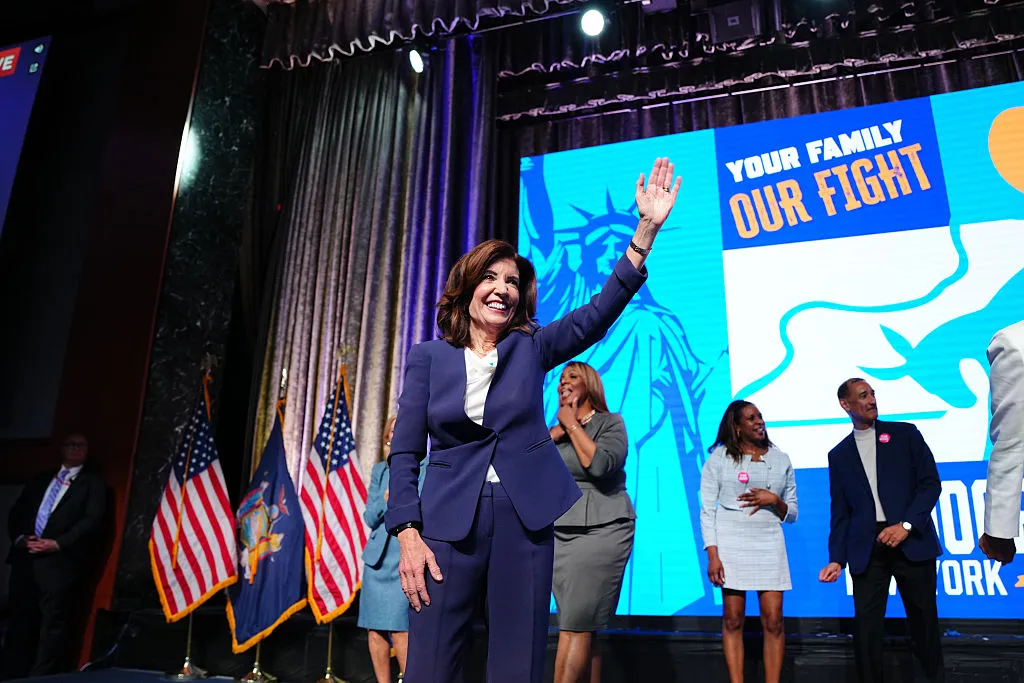
Governor Kathy Hochul articulated the philosophical underpinnings of New York’s robust regulatory approach during a recent press briefing. She directly challenged the prevailing narrative from technology leaders, stating, "Tech moguls tell us that their vision for AI is inevitable. They tell us get on board or get left behind… That any collateral damage is worth it as long as we win the race to the AI cliff." Her remarks underscore a critical perspective prioritizing public safety and societal well-being over unchecked technological acceleration, reinforcing the state’s position that innovation must be balanced with responsibility. Governor Hochul’s statements position New York as advocating for a more cautious and human-centric approach to AI development.
Further solidifying its comprehensive strategy, Governor Hochul also launched the New York Center for AI Responsibility and Research. This significant institution, strategically based at the State University of New York’s Binghamton University, is designed to serve as an independent hub for evaluating the safety, security, and operational integrity of advanced AI systems. The Center will play a crucial role in complementing DIGIT’s regulatory efforts by providing expert, unbiased analysis of AI technologies, including conducting independent assessments, developing testing methodologies, and offering scientific insights.
The New York Center for AI Responsibility and Research is also tasked with collaborating closely with DIGIT in reviewing the safety frameworks submitted by AI companies under the RAISE Act. This partnership ensures that regulatory oversight is informed by rigorous academic and technical expertise, adding a critical layer of verification to the self-reported safety measures of developers. Governor Hochul initially announced the center in January, supported by a substantial $55 million in donations and capital, signifying the state’s long-term investment in responsible AI innovation. Governor Hochul expressed her aspirations for these combined initiatives, stating, "We’re building a national model for smart, sensible AI regulation, a model that puts communities above corporations and people above powerful technology." This declaration positions New York’s efforts as a potential blueprint for other jurisdictions grappling with AI governance.
The RAISE Act is not an isolated measure but rather part of a broader, evolving legislative landscape in New York addressing various facets of AI’s societal impact. Last year, the state enacted and began enforcing a law targeting operators of AI companion applications. This legislation mandates operators regularly inform users they are interacting with an AI system. Crucially, it also requires AI companion operators to make reasonable efforts to detect and respond appropriately to indications of suicidal ideation and self-harm expressed by users, highlighting a profound recognition of user safety and mental well-being in AI interactions.
Building on this foundation, Governor Hochul signed a separate, yet equally important, chatbot safety law for minors in October. This legislation, scheduled to take effect on June 1, 2027, specifically restricts certain behaviors of AI chatbots when interacting with individuals under the age of 18. Prohibited actions include deceptive human-like interactions, emotionally manipulative or sycophantic responses, and the encouragement of harmful behaviors such as suicide, self-harm, or disordered eating. This comprehensive law reflects a deep concern for the ethical development and deployment of AI systems interacting with impressionable young individuals, seeking to protect them from potential exploitation and psychological harm.
New York’s pioneering efforts are part of a growing national trend, with other states also enacting similar AI safety and transparency bills. California’s SB 53, effective since January, mandates that frontier AI laboratories establish and publish robust safety frameworks, implement whistleblower protections, and report critical safety incidents within a 15-day timeframe. While California’s reporting window differs from New York’s, the core intent of proactive safety measures and transparency remains consistent.
Similarly, Illinois’ SB 315, slated to go into effect at the start of 2027, mirrors many of these requirements, including provisions for safety frameworks and critical incident reporting. A notable addition in Illinois’ legislation is the inclusion of independent safety compliance audits, providing an extra layer of external verification for AI systems. These examples from California and Illinois underscore a powerful movement among U.S. states to establish guardrails for AI development and deployment, especially in the absence of comprehensive federal legislation. New York’s RAISE Act, alongside its other AI-focused laws, positions the state at the forefront of this national conversation, potentially influencing future regulatory paradigms across the country and globally. The collective actions of these states demonstrate a shared recognition of the urgent need to balance AI innovation with robust safety and ethical considerations, aiming to foster a future where technology serves humanity responsibly.