 11
11
Los Angeles, California – July 29, 2026 – As the Bureau of Labor Statistics (BLS) prepares to unveil its comprehensive employment report for July on Friday, economists are collectively forecasting a modest gain of 85,000 jobs, according to consensus estimates compiled by Dow Jones. However, a contrasting sentiment is emerging from the speculative arena of prediction market platform Kalshi, where traders are suggesting that the actual figures may fall short of these expectations, hinting at a potentially more subdued labor market recovery than anticipated.
The discrepancy in outlook between traditional economic forecasting and the decentralized wisdom of crowds on Kalshi underscores the ongoing complexities and uncertainties surrounding the American labor force. While the BLS report will provide the definitive snapshot, the differing predictions highlight a palpable undercurrent of caution among those actively wagering on economic indicators.
On Kalshi, traders have assigned a mere 47% probability that employers added more than 80,000 jobs in July. This suggests a significant portion of market participants believe the job creation number could be lower than the widely anticipated 85,000. Digging deeper into the market’s sentiment, there’s a more robust consensus, with a 60% chance that the job gains will exceed 70,000. This indicates that while a substantial increase might be unlikely, a figure in the lower to mid-70,000s is considered a more probable outcome by a majority of Kalshi users.
The contracts on the Kalshi platform are structured to reflect specific thresholds for job growth. Traders are effectively betting on whether the official BLS figure for July will surpass a series of predetermined numbers. These contracts are ultimately settled based on the official data released by the Bureau of Labor Statistics, making them a direct gauge of market expectations against an authoritative source.
The possibility of a jobs report that "beats" consensus estimates, while not entirely out of the question, is perceived as less probable. Traders on Kalshi have assigned a 41% chance that employers added 90,000 jobs in July, a figure that would represent a modest positive surprise. Furthermore, there’s a slightly better than one-in-three chance, approximately 33.3%, that the job creation number could reach six figures, signifying a stronger-than-expected performance.
Conversely, the prediction market also reflects a notable degree of concern regarding a potential underperformance. Traders are factoring in a one-in-three chance, again around 33.3%, that the number of jobs added in July will come in below 60,000. This scenario would represent a significant miss of the consensus and could signal a more substantial slowdown in hiring than many economists are currently projecting.
The insights gleaned from Kalshi’s trading activity gain further context when viewed against recent performance. In the preceding month, June, Kalshi traders had expressed a strong degree of optimism regarding the upcoming jobs report. They placed a 63% chance that employers would add more than 125,000 jobs in June, a figure that was above the consensus estimates of 115,000. However, the subsequent official release from the BLS painted a different picture. The actual number of jobs added in June was significantly lower, coming in at just 57,000. This substantial discrepancy between prediction market sentiment and the final official data serves as a potent reminder of the inherent unpredictability of economic indicators and the potential for significant deviations from even well-informed expectations.
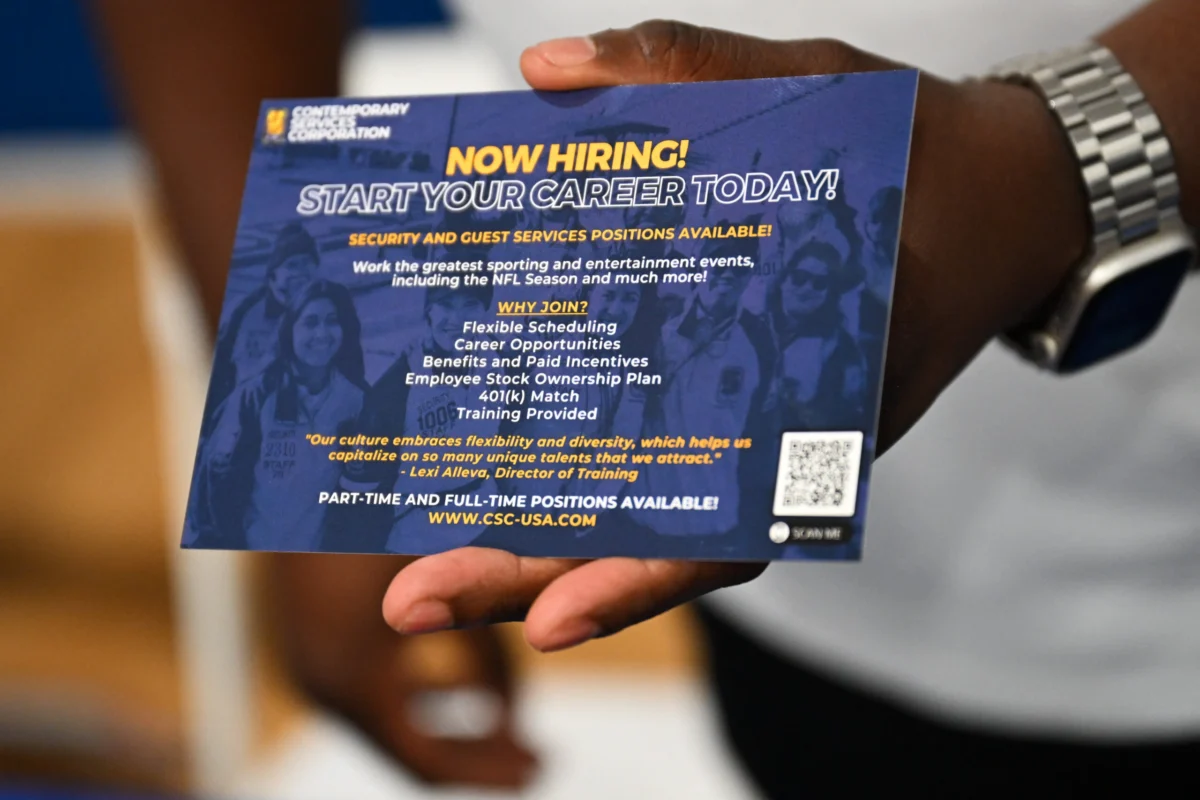
The image accompanying this report, a flyer for Contemporary Services Corporation (CSC) seeking event security guards, displayed at an Inspire Together job and resource fair in Los Angeles on July 29, 2026, offers a micro-level glimpse into the ongoing demand for labor in specific sectors. While the broader economic picture is being shaped by macroeconomic forces, events like these highlight the localized and sector-specific hiring efforts that contribute to the overall employment landscape. The need for event security personnel underscores the continued activity in the events and entertainment industries, even as broader economic trends are subject to scrutiny.
The falling labor force participation rate, a metric that has reached its lowest point in 50 years outside of the pandemic-induced disruptions, continues to be a significant factor influencing the overall employment narrative. This trend, where individuals are no longer employed nor actively seeking employment, can distort headline unemployment figures and present a more complex picture of the labor market’s true health. It suggests that a portion of the population has opted out of the workforce, for reasons that can range from early retirement to discouragement with job prospects or other personal circumstances. This demographic shift has profound implications for the availability of workers and the dynamics of wage growth.
The BLS report will not only detail the number of jobs created but also provide insights into wage growth, average hours worked, and changes in the labor force participation rate. These components, when analyzed together, offer a more nuanced understanding of the labor market’s trajectory. A gain in jobs accompanied by stagnant or declining wages, or a significant drop in participation, could signal underlying weaknesses that are not immediately apparent from headline job creation numbers alone.
The commercial relationship between CNBC and Kalshi, which includes customer acquisition and a minority investment, is a standard disclosure for such platforms and does not influence the factual reporting of the prediction market’s sentiment. The purpose of such disclosures is to ensure transparency regarding potential conflicts of interest.
In conclusion, as Friday approaches, the anticipation for the July employment report is heightened by the diverging signals from economic forecasters and the speculative trading activity on Kalshi. While economists project a modest job gain, the prediction market suggests a greater likelihood of a less robust outcome, with a significant possibility of falling below key thresholds. The persistent concern over labor force participation adds another layer of complexity to the analysis. The official BLS data will be crucial in clarifying the actual state of the labor market, but the sentiment on Kalshi indicates that a potential disappointment for Wall Street’s outlook remains a distinct possibility, echoing the experience of the previous month. The event security guard flyer serves as a reminder of the granular level of hiring that contributes to the broader economic picture, even as overarching trends remain a subject of intense scrutiny and varied prediction.