 11

Geothermal energy pioneer Fervo has announced a dramatic surge in its contracted revenue, reaching an impressive $11.9 billion, a substantial increase from the $7.2 billion reported in the previous quarter. This significant financial milestone, detailed in the company’s third-quarter earnings report released Monday, positions Fervo at a pivotal moment, coinciding with an unprecedented global demand for reliable, high-capacity electricity, largely driven by the burgeoning needs of artificial intelligence (AI) data centers. The company’s consistent delivery on project deadlines has undoubtedly played a crucial role in securing these substantial new orders and bolstering investor confidence.
The timing for Fervo’s operational successes could not be more opportune. As hyperscale cloud providers and technology giants frantically search for vast amounts of electricity to fuel their power-hungry AI infrastructure, Fervo’s enhanced geothermal systems (EGS) offer a compelling solution. Unlike intermittent renewable sources such as solar and wind, geothermal power provides a continuous, baseload supply of clean energy, a critical attribute for data centers requiring uninterrupted operations.
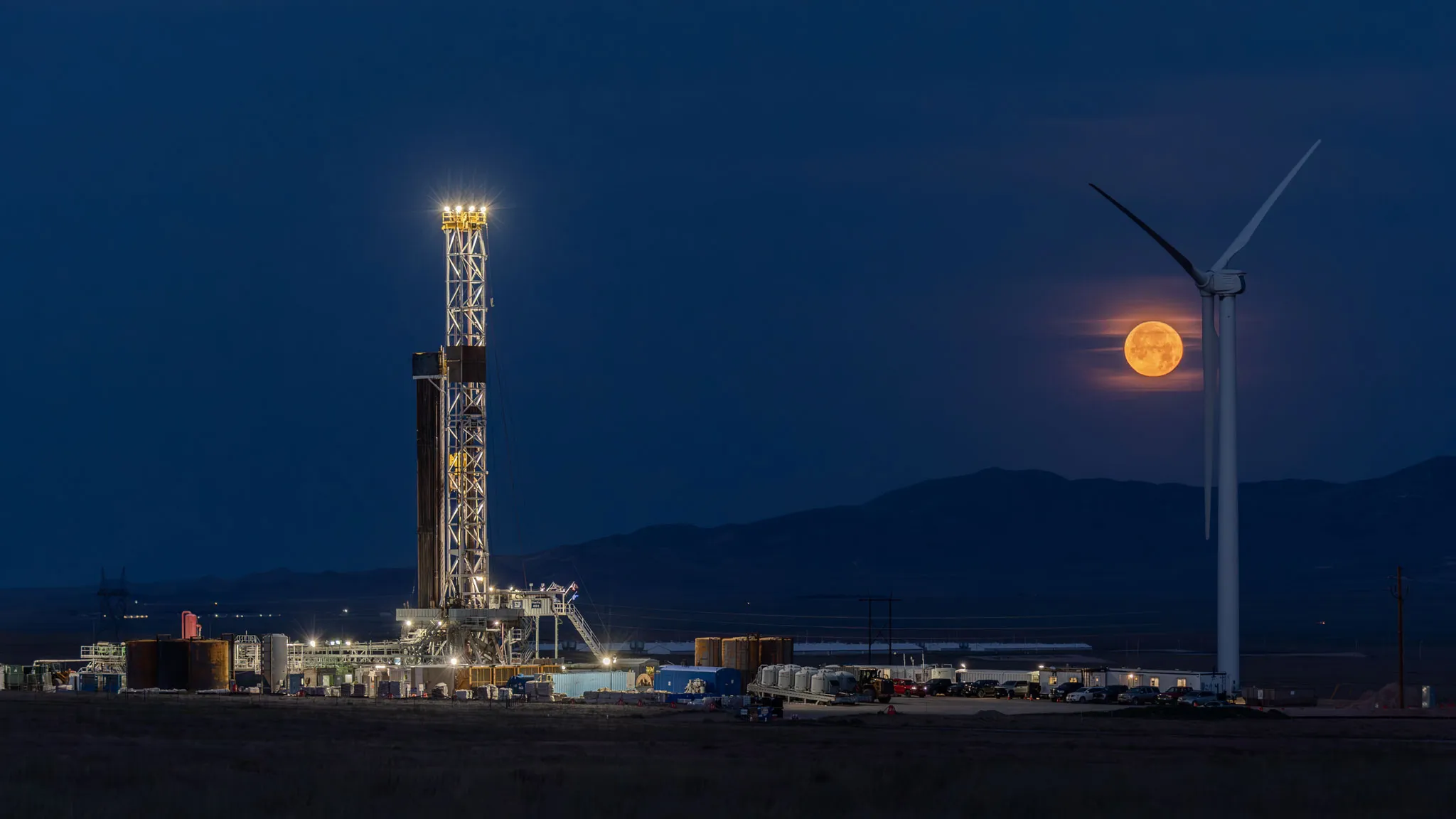
A cornerstone of Fervo’s current growth trajectory is its ambitious project with Google. The company is on track to complete a 396-megawatt (MW) power plant specifically designed to meet Google’s energy demands by the end of 2028. This substantial facility, now formally designated Cape Google 400, is situated at Fervo’s strategically important Cape Station site in Utah. This development builds upon Fervo’s earlier achievement this year, when it successfully connected its first 100 MW power plant to the grid, a project that was completed in a remarkably efficient 23 months. Both of these pioneering projects underscore Fervo’s ability to rapidly deploy and operationalize significant geothermal capacity.
The Cape Station resource itself has proven to be far more promising than initially anticipated. Experts had previously estimated the site’s potential at approximately 4 gigawatts (GW) of electricity generation. However, revised assessments now suggest that Cape Station could ultimately yield an astounding 8.4 GW, more than doubling its perceived capacity. This upward revision highlights the vast untapped potential of geothermal resources, particularly when approached with advanced drilling and reservoir management techniques employed by Fervo.
A key aspect of the Cape Google 400 project’s design is its grid-connected nature, as explained by Fervo co-founder and CEO Tim Latimer during the earnings call on Monday. This arrangement provides Google with substantial flexibility: while the power plant is dedicated to its energy needs, Google retains the option to draw power as required and, crucially, sell any surplus electricity back to the grid or to other customers if its data centers are not yet ready to utilize the full output. Latimer emphasized the mutual benefit of this phased approach, stating, "We build Cape Station on our schedule. Google can develop a potential data center on their schedule, and neither party is waiting on the other."
This statement from Latimer not only highlights the collaborative flexibility inherent in the Google partnership but also underscores a significant advantage that geothermal power, particularly Fervo’s modular approach, holds over competing baseload generating sources such as large nuclear or conventional natural gas power plants. Traditional large-scale power projects often involve lengthy construction periods, requiring enormous upfront capital and committing both the developer and the off-taker to a rigid, multi-year timeline before any power can be delivered. Geothermal, in contrast, allows for a more incremental, phased construction and deployment strategy.
Fervo’s innovative GeoBlock technology exemplifies this modularity. The company’s newer wells are designed to be deeper and hotter than previous iterations, with each individual well capable of generating a gross power output of 15 MW. Multiple such wells are then linked together to form what Fervo terms a "GeoBlock." The initial completed GeoBlock demonstrated a capacity of 33 MW, while more recent GeoBlocks have achieved an impressive 50 MW. This sizing is highly strategic, as these GeoBlocks are designed to match the typical power demand of a single data center hall. This enables hyperscalers to bring new energy capacity online in smaller, manageable increments as their data center facilities are completed and brought into service, minimizing financial exposure and optimizing deployment schedules. This agility provides a critical competitive edge in a rapidly evolving market where speed and flexibility are paramount.
Despite its remarkable revenue growth and operational successes, Fervo, as a business, acknowledges that it is still in its early stages of development. The company reported an operating loss of $43.7 million for the quarter. However, this loss is tempered by a robust financial position, including cash and cash equivalents totaling $1.9 billion and long-term debt of $301.6 million. These figures indicate a strong balance sheet and provide Fervo with considerable financial runway to continue its aggressive development and expansion plans, allowing it to invest in further research, technology refinement, and project deployment.
A critical factor for Fervo’s sustained long-term success and ultimate market dominance will be its ability to continuously drive down the cost of its power plants. While hyperscalers are currently ravenous for electricity and may be less sensitive to price in their immediate quest for power, this dynamic may not persist indefinitely. As the market matures and more clean energy solutions become available, price competitiveness will become increasingly important.
Encouragingly, Fervo is already demonstrating significant progress on this front. The first phase of its Cape Station project, a pioneering effort, incurred a cost of approximately $7,000 per kilowatt (kW) of capacity. However, the subsequent Google project reflects a substantial reduction in costs, estimated at $5,500 per kilowatt. This notable 21% decrease in cost per kilowatt suggests that Fervo is on a clear and effective path towards achieving greater efficiency and economies of scale in its construction and operational methodologies.
To put this into perspective, Fervo estimates that the $5,500 per kilowatt cost, when factoring in available subsidies for clean energy, is roughly equivalent to the cost of a new natural gas power plant operating on fuel priced at $6 per million BTUs. While this still represents about twice the cost of natural gas at current market prices, the trend is unequivocally moving in the right direction, bringing geothermal closer to par with conventional fossil fuel generation.
Looking ahead, Fervo has set an ambitious long-term target of reducing its power plant costs to an extraordinary $3,000 per kilowatt. Should the company successfully achieve this target, it would fundamentally transform the energy landscape. At $3,000 per kilowatt, Fervo’s geothermal power could significantly undercut the cost of natural gas power, even at today’s relatively low prices, making it an exceptionally compelling and economically superior energy source. This aggressive cost reduction target, while challenging, is underpinned by the significant strides the company has already made in just a few short years. The impressive progress in technology and cost efficiency provides a clear rationale for why a forward-thinking corporation like Google has chosen to invest early and heavily in Fervo’s enhanced geothermal capabilities, recognizing its potential as a long-term, sustainable, and increasingly cost-effective energy solution.