 11
11
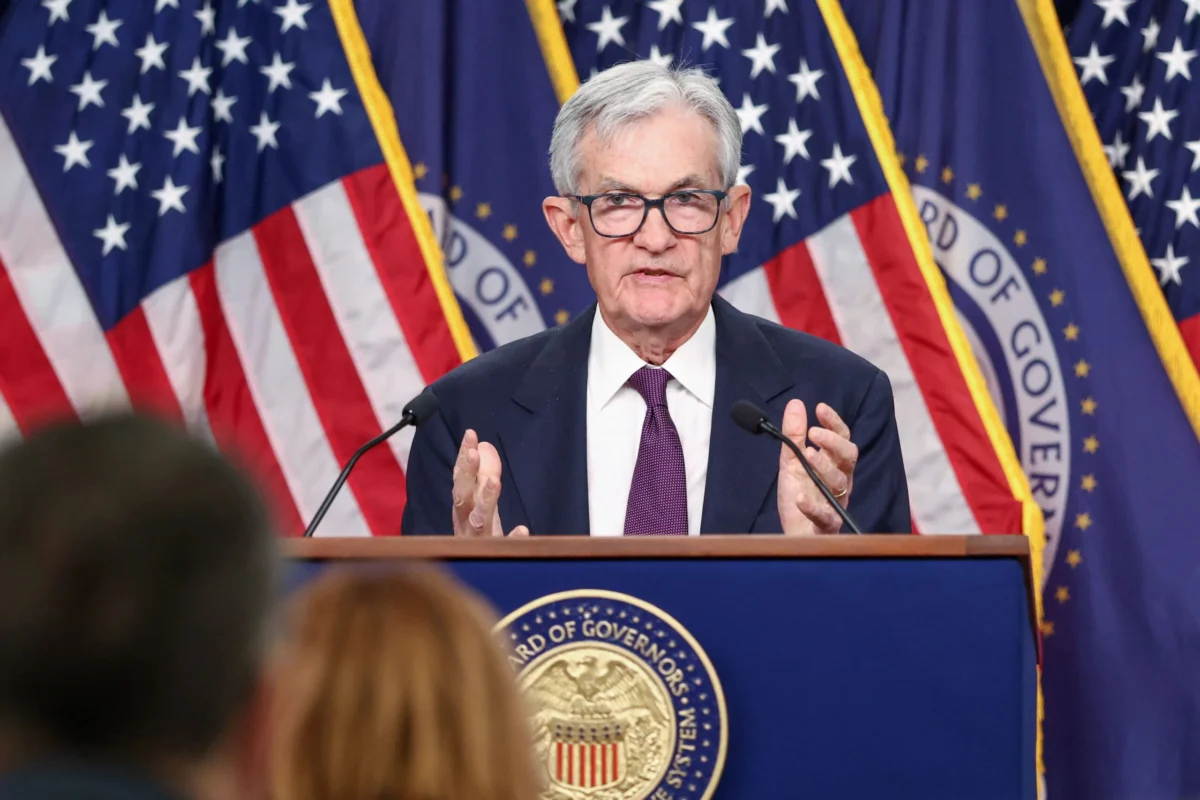
Washington D.C. – March 18, 2026 – In the wake of a two-day meeting of the Federal Open Market Committee (FOMC), Federal Reserve Chair Jerome Powell convened a press conference to discuss the committee’s decisions and outlook. While no immediate policy shifts were anticipated, the market was keenly observing for signals regarding the Federal Reserve’s future trajectory. However, the post-meeting statement, updated economic projections, and Powell’s own remarks offered little in the way of definitive guidance. The official statement featured only minor alterations, the economic projections known as the "dot plot" indicated a modest dovish tilt, and Chairman Powell himself used variations of the word "uncertain" on more than half a dozen occasions, underscoring the prevailing ambiguity.
A significant complicating factor shaping the Federal Reserve’s deliberations is the ongoing conflict between the United States and Iran. Powell explicitly stated that forecasting the economic future and formulating policy in such a volatile geopolitical climate is a near-impossible task. He was repeatedly questioned about the impact of the oil shock stemming from the war, emphasizing that it has significantly clouded the Federal Reserve’s ability to make accurate predictions. "The thing I really want to emphasize is that nobody knows," Powell stated. "The economic effects could be bigger, they could be smaller, they could be much smaller or much bigger. We just don’t know." This admission highlights the unprecedented challenges faced by policymakers when the global economic landscape is destabilized by active warfare.
Despite the pervasive uncertainty, the updated "dot plot" continues to suggest that at least one interest rate cut is anticipated before the end of 2026, with another potential cut in the following year. However, the distribution of individual committee members’ projections within the "dot plot" resembled a complex maze rather than a clear consensus, revealing a significant divergence of opinion within the FOMC. The disparity is particularly evident when examining projections for 2027. For that year, one official anticipates an interest rate hike, three foresee no change from the prevailing level, four expect an additional cut, six project two more reductions, three forecast three cuts, one official is at four cuts, and a final participant, presumably Governor Stephen Miran, is projecting five cuts. This wide range of expectations underscores the lack of a unified view on the appropriate path for monetary policy in the coming years.
During the press conference, Powell also addressed questions regarding his future at the Federal Reserve. When asked about his intentions to remain as a governor after his term as Chair concludes, he reiterated that he has not yet made a decision. While this leaves the possibility open, Powell also indicated that he is not planning to depart imminently. He stated that he would continue in his role as Chair as long as an ongoing investigation into him persists, and that he would also serve in a "chair pro tem" capacity until a successor is confirmed. This successor is widely believed to be former Governor Kevin Warsh.
Powell was also firm in his rejection of the term "stagflation" when describing the current state of the U.S. economy. He pushed back against the notion that the nation is heading towards a scenario reminiscent of the economic struggles of the 1970s, despite a lackluster hiring rate and inflation that has remained above the Federal Reserve’s target for nearly five years. Powell characterized the current situation as "very difficult" but insisted it bore no resemblance to the conditions faced in the 1970s. "I would reserve ‘stagflation’ for that," he said, adding, "Maybe that’s just me." His stance suggests a belief that the underlying economic fundamentals, including solid growth and a low unemployment rate, differentiate the present from past periods of economic malaise.
Several market observers offered their perspectives following the press conference. Gina Bolvin, president of Bolvin Wealth Management Group, noted that the Fed’s decision not to act was not unexpected, and that the central bank appears "comfortable waiting, watching, and staying flexible." She interpreted the single projected rate cut as an indication that "the Fed is not in a rush, and neither should investors be."
Felix Aidala, an economist at Indeed, highlighted the difficult position the Fed finds itself in, facing pressure on both its mandates of maintaining high employment and low inflation. He also pointed to the challenge of making critical decisions based on data that may not fully capture the rapid pace of economic shifts, thereby increasing the risk of policy being either too late or based on outdated assumptions.
Stephen Coltman, head of macro at 21shares, suggested that given the volatile global situation, the committee’s preference would be to "do as little as possible so as not to rock the boat ahead of the new Fed chair taking over." This sentiment reflects a view that stability and a smooth transition of leadership might be prioritized over aggressive policy adjustments in the current environment.