 11
11
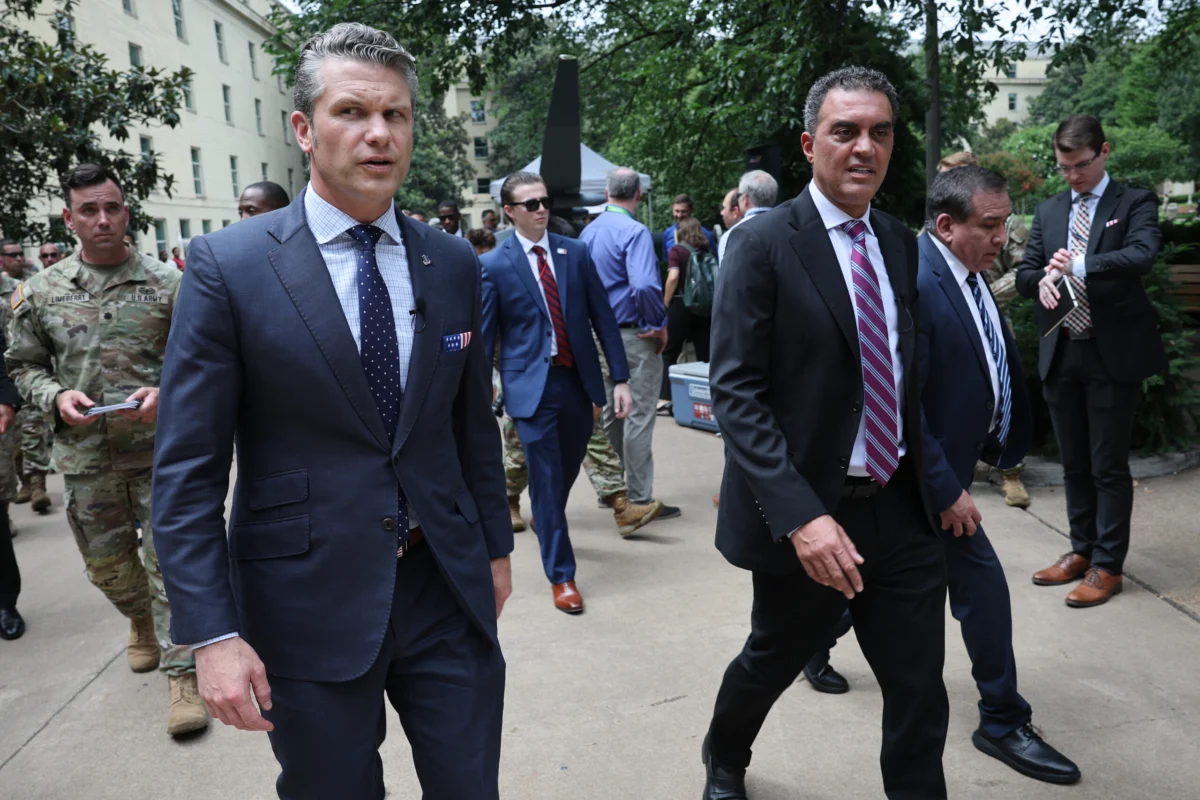
Emil Michael, a prominent senior technology official within the Department of Defense (DoD), has once again drawn significant attention, this time amidst the government’s escalating conflict with artificial intelligence developer Anthropic. A newly released podcast interview has offered an unprecedentedly detailed glimpse into Michael’s perspective on this crucial dispute, alongside an unreserved revisiting of long-standing grievances from his tenure at Uber.
The interview, which debuted on Monday and was conducted last month by Joubin Mirzadegan, a partner at the esteemed venture capital firm Kleiner Perkins and head of its portfolio operating team, delved into an extensive array of subjects. These ranged from critical policy discussions impacting national security to intimate details of Michael’s personal and professional history. Notably, the conversation took place prior to the DoD’s public feud with Anthropic reaching its current critical juncture. However, it was Michael’s candid remarks concerning his departure from Uber, imbued with a barely disguised sense of bitterness, that initially commanded significant attention from listeners and industry observers alike.
When Mirzadegan directly questioned Michael about whether he had been effectively ousted from Uber alongside the company’s co-founder and former CEO, Travis Kalanick, Michael’s response was succinct yet telling: "Effectively." This single word conveyed a profound sense of an involuntary exit, despite his formal resignation.
Michael’s resignation occurred on June 12, 2017, just eight days before Kalanick himself stepped down. This period marked a tumultuous fallout stemming from a comprehensive workplace investigation that had been instigated by serious allegations of widespread sexual harassment and gender discrimination within the high-profile ride-sharing company. While Michael was not personally named in these specific allegations, the independent inquiry, led by former U.S. Attorney General Eric Holder, ultimately concluded that his removal from the company was necessary. Kalanick’s subsequent departure was widely characterized by The New York Times as a "shareholder revolt," orchestrated by some of Uber’s most influential investors, including the powerful venture capital firm Benchmark.
Mirzadegan pressed Michael further, asking if he remained "salty" about the circumstances of his exit. Michael responded with unequivocal clarity, stating, "I’ll never forget that, nor forgive." This statement underscored a deep-seated resentment that clearly persists years after the events unfolded, highlighting the profound personal and professional impact of his unceremonious departure from a company he helped build.
The ouster continues to be a source of significant grievance for both Michael and Kalanick. Beyond the considerable damage inflicted upon their individual reputations, they shared — and evidently still hold — a fervent belief that autonomous driving represented the unequivocal future of Uber. They contend that the very investors who engineered their removal ultimately sabotaged this transformative vision, prioritizing short-term financial gains over the company’s long-term, groundbreaking potential.
During the podcast interview, Michael forcefully argued that the critical decision to force them out was driven primarily by a desire to safeguard existing "embedded gains" and near-term returns for investors, rather than fostering the ambition to construct a truly enduring, multi-trillion-dollar enterprise. This perspective paints a picture of a clash between visionary long-term strategy and more conventional, immediate financial imperatives.
"They wanted to preserve their embedded gains, rather than try to make this a trillion-dollar company," Michael asserted, articulating his conviction that investor impatience stifled Uber’s most ambitious projects. Kalanick has consistently echoed these sentiments with equal vehemence. At the Abundance Summit in Los Angeles last year, he lamented the cancellation of Uber’s autonomous driving program, stating that it was second only to Waymo in its capabilities at the time of its closure and rapidly narrowing the competitive gap. He pointedly remarked to the audience, "You could say, ‘Wish we had an autonomous ride-sharing product right now. That would be great.’"
Uber ultimately divested its self-driving unit, known as Uber ATG, to Aurora in 2020. This transaction was widely perceived across the industry as a "fire sale," occurring three years after both Michael and Kalanick had left the company. At the time, the decision to sell appeared defensible; autonomous driving technology was a significant drain on cash resources, and fully viable self-driving solutions seemed to be a distant prospect. However, the landscape has since dramatically shifted. Today, Waymo’s robotaxis are actively operating in ten U.S. cities and are aggressively expanding into new markets. This stark contrast raises a lingering question: whether Uber, under its original leadership, possessed the strategic foresight and financial resilience to endure the lengthy development phase and ultimately achieve similar success. It is clear that this unresolved question continues to haunt both Emil Michael and Travis Kalanick.
For his part, Travis Kalanick never truly ceased his entrepreneurial pursuits. Just this month, he publicly unveiled Atoms, a robotics company he had been meticulously developing in stealth mode since approximately the time of his departure from Uber eight years ago. Kalanick also disclosed that he is the largest investor in Pronto, an autonomous vehicle startup that specializes in off-road applications for industrial and mining sites. Pronto was founded by Anthony Levandowski, Kalanick’s former colleague from Uber, and Kalanick indicated that he is on the cusp of acquiring the company outright, signaling his continued commitment to the autonomous technology sector.
Meanwhile, Emil Michael has redirected his formidable energies to a new and critical battlefront within the Department of Defense. The podcast interview with Mirzadegan was recorded just before the DoD’s negotiations with Anthropic publicly collapsed, making Michael’s account of that standoff particularly insightful and prescient. He described Anthropic as one of only a select few approved vendors for large language models (LLMs) within the department, with its approval partly facilitated through its partnerships with defense contractor Palantir. Michael framed the DoD’s operational environment as anything but an unregulated free-for-all, emphasizing that it functions under such an intricate and dense web of federal laws, regulations, and internal policies that "we almost choke on them." His core argument against Anthropic is that the company seeks to impose an additional, self-determined layer of policy preferences on top of this already complex legal and operational framework.
"What I can’t do is have any one company impose their own policy preferences on top of the laws and on top of my internal policies," Michael stated, employing a relatable analogy to clarify his point. "If you buy the Microsoft Office Suite, they don’t tell you what you could write in a Word document, or what email you can send." This analogy underscores his position that a technology provider should not dictate the permissible uses of its tools, especially for a critical government entity.
Michael then escalated his argument further, invoking a technical finding that Anthropic itself had published last month, prior to his conversation with Mirzadegan. He highlighted that Chinese technology companies had been repeatedly targeting Anthropic’s models using a sophisticated technique known as "distillation." This process essentially involves reverse-engineering a model’s behavior with such precision that its core capabilities can be effectively replicated. Michael contended that, under China’s pervasive civil-military fusion laws, this would grant the People’s Liberation Army (PLA) access to something functionally equivalent to Anthropic’s full, unrestricted model. In stark contrast, the DoD would be constrained to operate with a version of the technology that is hemmed in by Anthropic’s own self-imposed guidelines and restrictions.
"I’d be one-armed, tied behind my back against an Anthropic model that’s fully capable — by an adversary," Michael declared, underscoring the perceived strategic disadvantage. "It’s totally Orwellian." His strong language conveyed the gravity of the national security implications as he sees them. Michael further emphasized the expectation for American technology leaders, adding later in the interview before transitioning topics, "If you’re an American champion — and I believe they are, they’re one of the most important companies in the country — don’t you want to help your Department of War succeed with the best tools available?"
As industry watchers are acutely aware, the dispute between the DoD and Anthropic has since transitioned from the negotiating table to the courtroom. Defense Secretary Pete Hegseth publicly declared Anthropic a "supply-chain risk" in late February, signaling a significant escalation. The government further intensified its legal offensive last week, filing a comprehensive 40-page brief in the U.S. District Court for the Northern District of California. This legal document argued that granting Anthropic access to the DoD’s critical war-fighting infrastructure would introduce an "unacceptable risk" into its supply chains. The brief specifically contended that the company could theoretically disable or unilaterally alter its own technology to align with its corporate interests rather than those of the United States in a time of conflict.
Anthropic swiftly responded on Friday, submitting its own legal brief accompanied by sworn declarations. The company argued that the government’s entire case rests upon fundamental technical misunderstandings and allegations that were never even raised during the preceding months of extensive negotiations. One of these crucial declarations, filed by Thiyagu Ramasamy, Anthropic’s head of public sector, directly challenged the government’s central claim that Anthropic possesses the technical capability to interfere with military operations by disabling or altering its technology’s behavior. Ramasamy explicitly stated that such interference is "not technically possible," directly refuting the DoD’s core concern.
A hearing in this high-stakes legal battle is currently scheduled for Tuesday in San Francisco, where both parties will present their arguments to the court, potentially shaping the future of AI integration in national defense.