 11
11
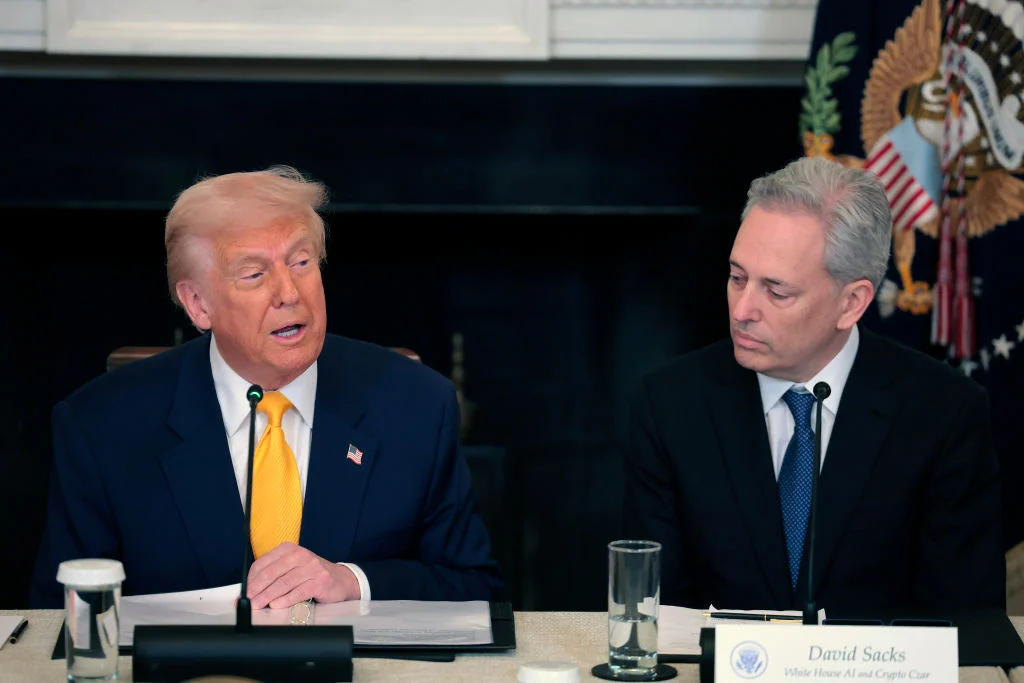
David Sacks, the prominent entrepreneur, investor, and podcaster, has officially concluded his tenure as Donald Trump’s special government employee focused on AI and cryptocurrency. Speaking with Bloomberg on Thursday, Sacks confirmed the end of his non-consecutive 130-day stint, announcing his transition to a new advisory role: co-chairing the President’s Council of Advisors on Science and Technology (PCAST) alongside senior White House technology adviser Michael Kratsios.
Sacks, a well-known figure in Silicon Valley often associated with the "PayPal Mafia" and recognized for founding Yammer and co-founding Craft Ventures, expressed his enthusiasm for the broadened scope of his responsibilities. "I think moving forward as co-chair of PCAST, I can now make recommendations on not just AI but an expanded range of technology topics," he told Bloomberg in a video interview, confirming, "So yes, this is how I’ll be involved moving forward."
This shift marks a significant change in Sacks’ proximity to the center of power in Washington. As the informal "AI and crypto czar" during this second Trump administration, Sacks held a direct line to the President and was actively involved in shaping policy, particularly concerning artificial intelligence and digital assets. His new role on PCAST, however, places him in a federal advisory body. While PCAST is tasked with studying critical issues, producing reports, and submitting recommendations up the chain of command, it does not possess direct policy-making authority. This transition moves Sacks further from the executive decision-making process he previously influenced.
The President’s Council of Advisors on Science and Technology boasts a long and storied history, having existed in various forms since the administration of President Franklin D. Roosevelt. It serves as a vital external advisory group, providing independent counsel to the President on matters of science, technology, and innovation. Sacks, in his conversation with Bloomberg, made a point of emphasizing the extraordinary caliber of the current PCAST iteration, asserting it possesses "the most star power of any group like this" ever assembled. The impressive roster of initial 15 members indeed makes a compelling case for this claim, featuring some of the most influential figures in the global technology landscape.
Among these distinguished members are Jensen Huang, the visionary CEO of Nvidia, a company at the forefront of AI and semiconductor innovation; Mark Zuckerberg, the co-founder and CEO of Meta Platforms, a dominant force in social media and virtual reality; Larry Ellison, the co-founder and chairman of Oracle, a titan in enterprise software and cloud computing; Sergey Brin, the co-founder of Google, whose pioneering work revolutionized information access; Marc Andreessen, a renowned venture capitalist and co-founder of Netscape and Andreessen Horowitz, a key player in shaping the internet and venture capital; Lisa Su, the CEO of AMD, a leading designer of high-performance processors; and Michael Dell, the founder and CEO of Dell Technologies, a global leader in computer hardware. This collection of billionaires and industry titans underscores the council’s unprecedented corporate executive influence.
Sacks outlined the critical technological domains PCAST is set to tackle, including artificial intelligence, advanced semiconductors, quantum computing, and nuclear power. He indicated that the council’s immediate focus would be on advancing President Trump’s national AI framework, which was unveiled just last week. This framework is designed to address what Sacks described as a convoluted and inefficient regulatory environment at the state level. He highlighted the challenge posed by a "mess of conflicting state-level rules," noting, "You’ve got 50 different states regulating this in 50 different ways, and it’s creating a patchwork of regulation that’s difficult for our innovators to comply with." The framework aims to streamline these regulations, fostering a more coherent national approach to AI governance.
A significant, unspoken question surrounding Sacks’ transition is the timing of this change and whether his recent public comments played a role. Earlier this month, on the widely popular "All In" podcast, which he co-hosts, Sacks publicly urged the administration to seek an exit from the U.S.-backed war with Iran. During the podcast, he meticulously outlined a series of escalating and worsening scenarios, including potential attacks on oil infrastructure in neighboring countries, the destruction of desalination plants, and the grave possibility of nuclear weapon use by Israel. He advocated for a "polite way out" of the conflict. This public divergence from the administration’s stance prompted a direct response from President Trump, who told reporters that Sacks "hadn’t spoken to him" about the war. The U.S.-Israel war on Iran has now been going on for approximately 27 days, as noted in the original report.
When pressed by Bloomberg on Thursday about the podcast episode, Sacks distanced himself from the foreign policy discussion, stating, "I’m not on the foreign policy team or the national security team." He clarified that his comments on the podcast represented his personal views, not an official position of the administration. Despite this explanation, the incident raised questions about the appropriateness of a government advisor publicly contradicting or offering alternative strategies to the President’s declared foreign policy, particularly given his direct access in his previous role.
While the current PCAST boasts an impressive lineup, its potential impact must be viewed through the lens of the council’s historical efficacy. PCAST has traditionally been an advisory body whose influence has varied significantly across different administrations. President Obama’s version of PCAST is often cited as the most productive on record. Over his eight years in office, the council churned out an impressive 36 reports, two of which notably led to concrete policy changes, including a pivotal FDA rule that opened the market for over-the-counter hearing aids.
In stark contrast, President Trump’s first-term council faced significant delays, taking nearly three years just to appoint its initial members. It ultimately produced only a handful of reports and left no particular mark on policy or scientific discourse. President Biden’s council, on the other hand, skewed heavily academic, comprising numerous Nobel laureates, MacArthur fellows, and National Academy members. While it issued a modest number of reports, its term concluded without the administration implementing major policy shifts directly attributable to its advice. The current PCAST, with its composition almost entirely drawn from the executive suites of the very companies shaping the technology it will advise on, represents a distinct departure from previous iterations, potentially signaling a new era of industry-driven technological guidance.
With his governmental stint concluded, Sacks is now poised to fully resume his life as an unencumbered executive, investor, and entrepreneur. A spokesperson for Craft Ventures, the venture capital firm Sacks co-founded and where he continues to serve as a partner, has not yet provided comments regarding his next steps. It is worth recalling that TechCrunch reported last year on the ethics waivers Sacks obtained to allow him to maintain significant financial stakes in AI and cryptocurrency companies while simultaneously shaping federal policy in both these areas. This arrangement drew sharp criticism from numerous ethics experts and lawmakers, who raised concerns about potential conflicts of interest and the blurring lines between private financial interests and public service.
TechCrunch Event
San Francisco, CA | October 13-15, 2026
About the Author
Connie Loizos has been reporting on Silicon Valley since the late 1990s, when she joined the original Red Herring magazine. Previously the Silicon Valley Editor of TechCrunch, she was named Editor in Chief and General Manager of TechCrunch in September 2023. She is also the founder of StrictlyVC, a daily e-newsletter and lecture series acquired by Yahoo in August 2023 and now operated as a sub-brand of TechCrunch.
You can contact or verify outreach from Connie by emailing [email protected] or [email protected], or via encrypted message at ConnieLoizos.53 on Signal.
View Bio