 11
11 1
1 2
2 3
3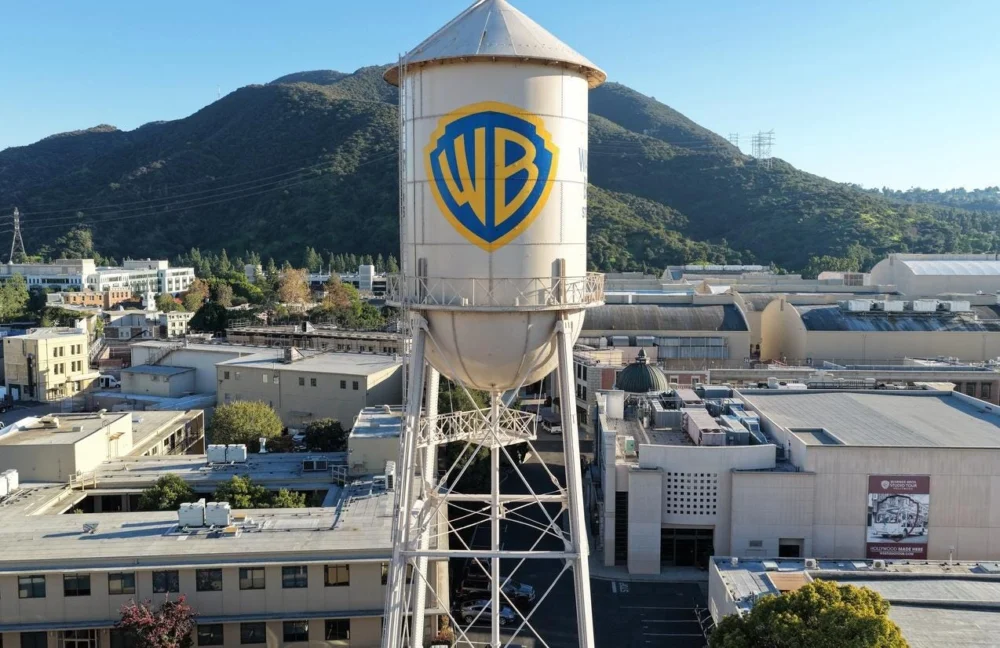
David Ellison, a figure often noted for his industry lineage, has laid out an audacious vision for the impending merger of Paramount Skydance and Warner Bros. Discovery, a deal that promises to reshape the Hollywood landscape. Having successfully navigated the acquisition of Paramount, outmaneuvering competing bids, and subsequently securing Warner Bros. Discovery over the world’s largest streaming service, Netflix, Ellison now faces the monumental task of consolidating these media giants. His plan, detailed in a recent CNBC interview, involves a series of high-stakes maneuvers: retaining both iconic studio backlots, doubling annual film production, diligently paying down billions in new debt, averting widespread layoffs, and restoring the combined entity’s bond ratings to investment grade within three years. Should Ellison succeed in this multifaceted endeavor, it would undoubtedly stand as a remarkable feat in corporate restructuring and media strategy.
The core of Ellison’s strategy hinges on aggressive technological integration and cost rationalization. He revealed intentions to merge the disparate "tech stacks" and cloud services inherited from the multiple vendors previously serving Paramount and Warner Bros. Discovery. This process is not new to Skydance, as Ellison’s team undertook a similar integration last year when Skydance Entertainment absorbed Paramount, consolidating three distinct tech stacks and cloud service sets. This prior experience, he suggests, provides a valuable blueprint for the even larger undertaking ahead.
"We want to be the most technologically capable media company," Ellison stated emphatically during the CNBC interview. He articulated a clear objective: "We’re using technology to transform every single aspect of this business, and we’re going to rationalize the cost." This technological transformation is envisioned across a wide array of functions, from video production and marketing to customer engagement, programming recommendations, and targeted advertising, with a particular emphasis on leveraging the capabilities of artificial intelligence. Such a goal is widely pursued by traditional media companies, with varying degrees of success. Netflix, notably, has often been cited as a leader in its interface design and AI-driven technological prowess, a benchmark Ellison’s new entity will now strive to match and surpass.
A significant element of the merger involves streamlining the direct-to-consumer offerings. The company plans to merge its subscription streaming services, HBO Max and Paramount Plus, "as soon as possible." While Ellison declined to specify future pricing for the combined service, he acknowledged that the current separate monthly fees for the two platforms range from approximately $19 to $37, depending on advertising tiers and content access. This consolidation aims to offer a more cohesive and potentially more attractive proposition to consumers, while also driving operational efficiencies.
The financial landscape for the newly merged entity presents one of the most immediate and substantial challenges. The combined operation will shoulder an estimated $79 billion in debt, a figure that has already prompted credit rating agencies to take action. Fitch’s recent downgrade of the company’s bonds to junk status underscores the market’s concern. Standard & Poor’s also issued a warning this week, indicating that any leverage beyond a 3.8X debt-to-EBITDA ratio would trigger a rerating into the expensive junk-debt category.
Ellison, however, offered a contextualized view of this debt. He projected that the combined operation would generate a substantial $10 billion in cash flow from $69 billion in revenue this year. He outlined a plan to generate $6 billion in "synergies"—a term in mergers and acquisitions that typically encompasses cost savings from redundancies, operational efficiencies, and sometimes asset sales or workforce reductions. Ellison explicitly rejected the $16 billion in cuts estimated by Netflix Co-CEO Ted Sarandos as necessary to achieve investment-grade status within the three-year timeframe.
"I want to be clear: it’s not the ($16 billion in cuts) that some people have reported," Ellison clarified. "It’ll be $6 billion in synergies. And with that cash flow, that includes us actually spending more on content than any of our peers. So, basically, we’re going to be able to use basically that capital deployed towards content, deployed towards technology to be able to grow and scale the business. And we also have the cash flow to be able to manage the debt and ensure that we’re investment grade three years after closing." This commitment to increased content spending while simultaneously deleveraging and achieving investment grade within a tight timeline highlights the ambitious nature of his financial strategy.

On the content front, the company intends to significantly ramp up film production, aiming for 30 movies annually. This strategy represents a substantial investment and carries inherent risks, as many past Hollywood ventures with deep pockets have discovered the volatile nature of the box office. These films are slated for a minimum 45-day theatrical window, a move designed to boost in-theater attendance and cultivate broader franchise awareness. This theatrical exposure is then expected to translate into greater value when the films transition to streaming platforms and subsequent licensing windows.
Ellison also addressed concerns regarding the declining performance of linear television assets, which, despite their gradual erosion, still generate considerable and much-needed cash flow. "I think if you look at where the Warner-Discovery merger basically, you know, really kind of got into trouble is that linear declined faster than people anticipated," he acknowledged, referencing the challenges faced by previous large-scale media mergers, including Discovery Networks three years prior and AT&T three years before that. "They actually overdelivered on their cost saves but linear was declining faster. I think that linear decline curve is now incredibly well understood, and we’ve taken a very, very conservative view to that in our models to ensure that we never get into a position where that’s not manageable."
Regarding potential layoffs, Ellison was circumspect, stating, "we will absolutely have to rationalize the overall corporate overhead of the company, but that’s not the primary driver of the synergies in the deal." He pointed to other areas for significant savings, particularly procurement. Paramount’s experience, he noted, saw internal expectations for procurement savings of $50 million to $100 million "well in excess of five times that" in reality, suggesting a substantial opportunity for similar gains in the merged entity.
Real estate strategy also formed part of Ellison’s discussion. He affirmed plans to retain both the historic Paramount lot in the heart of Hollywood and the expansive Warner Bros. lot in Burbank, California, just a few miles north. "Those are iconic and we are going to absolutely hold onto those," he declared. However, he also indicated that the company would "rationalize the real-estate footprint of both of these companies." This suggests that while the core studio lots will be preserved, other satellite facilities or non-essential properties in the Los Angeles area could be divested, mirroring previous sales by Warner Bros. Discovery and CBS (Paramount’s parent company) of properties like Television City, the Radford lot, and the Warner Ranch facility, often accompanied by lease-back agreements for production space.
Perhaps one of the most significant external factors hanging over the combined company is the future of NFL television rights. The league’s current 11-year, $111 billion contract with CBS and other broadcasters included a "look-in provision" for 2029, allowing a review of the importance of broadcast and cable providers versus emerging tech giants like YouTube TV, Amazon Prime Video, and Apple TV. However, this deadline was reportedly accelerated following the NBA’s massive new contract with Disney’s ESPN, Amazon, and Comcast’s NBC, which notably ended a 40-year relationship with Warner. Despite the NFL’s enormous current deal, the NBA’s new terms highlighted that the per-hour/per-rating point value of the NFL’s existing agreement might be undervalued.
The NFL remains, by far, the most-watched programming on linear television, showing no signs of audience decline. CBS alone pays $2.1 billion annually for its weekly games. With this unparalleled leverage, the league has pushed up negotiations with its partners into the current year. For the merged entity, securing a renewed NFL deal, whatever the cost, is a near-existential matter for the CBS broadcast network. Its loss would severely diminish the combined companies’ massive sports portfolio. Despite the high stakes, Ellison expressed optimism, stating, "We have a phenomenal relationship with the NFL, and we anticipate that continuing for the foreseeable future. Genuinely, they are one of our most important partners, and we plan for them to stay one of our most important partners having just delivered a historic season, really, in partnership with them. And, you know, ongoing negotiations, we’re not really in a position where we can comment."
Finally, Ellison dismissed concerns about potential regulatory hurdles. State regulators, including California Attorney General Rob Bonta, have voiced intentions to potentially form a coalition of states to oppose the deal. Additionally, regulatory bodies in Europe, the United Kingdom, and approximately 50 other jurisdictions worldwide could pose challenges. However, Ellison appeared confident in overcoming these obstacles.
The immediate future will test Ellison’s ambitious plans. His "magic trick" in progress—to produce an investment-grade, technologically advanced, legally approved, and financially robust media conglomerate—is now under the intense scrutiny of Wall Street, the entire entertainment industry, and global regulators. The execution of this complex strategy, with its high stakes and public visibility, will define the next chapter for these historic Hollywood studios.