 11
11
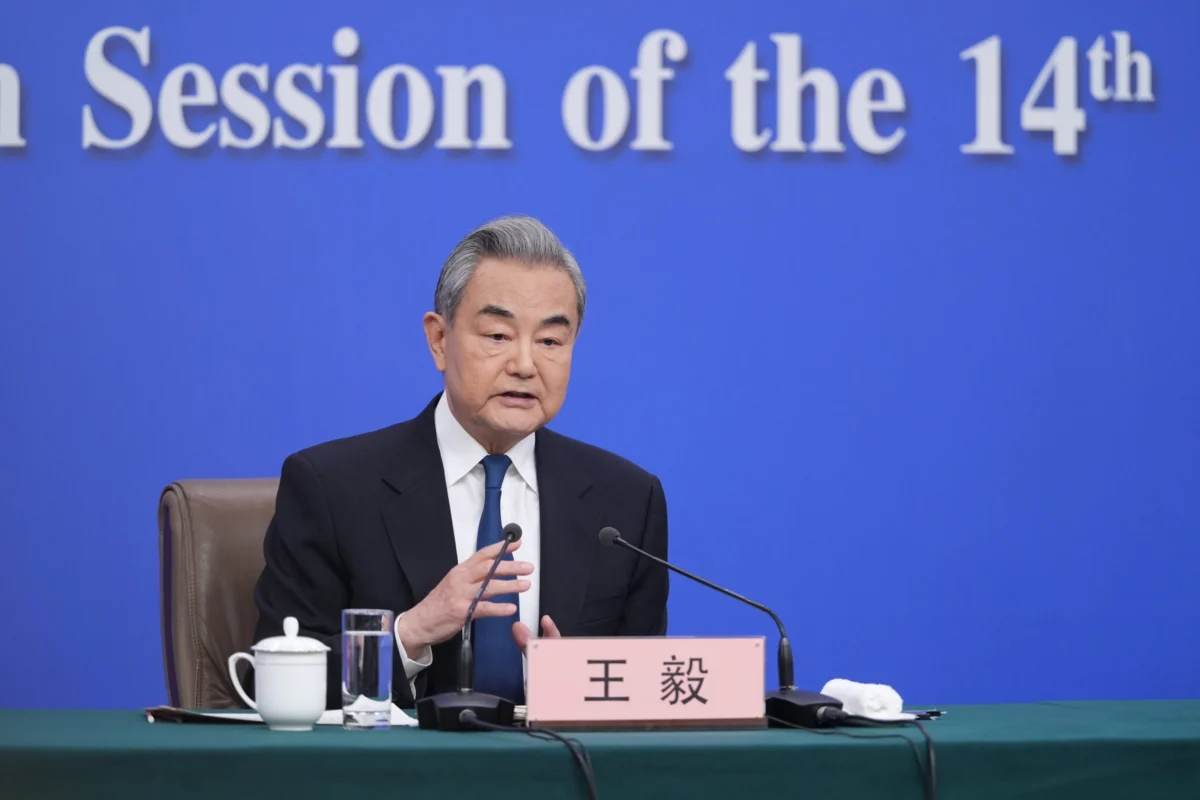
BEIJING – China’s Foreign Minister Wang Yi emphasized the importance of engagement with the United States on Sunday, indicating that preparations are underway for a planned high-level meeting between the two nations’ leaders. This comes at a time of significant global friction, including the ongoing conflict in Iran and persistent trade tariffs.
"The agenda of high-level exchanges is already on the table," Wang told reporters in Mandarin Chinese, as per an official translation. "What the two sides need to do now is make thorough preparations accordingly, create a suitable environment, manage the risks that do exist and remove unnecessary disruptions."
Wang articulated a clear vision for the bilateral relationship, stating, "Turning our backs on each other would only lead to mutual misperception and miscalculation. Sliding into conflict or confrontation would only drag the whole world down."
Following an in-person meeting in South Korea during the autumn of 2025, Chinese President Xi Jinping and U.S. President Donald Trump had signaled intentions to visit each other’s countries. President Trump is reportedly scheduled to visit China from March 31 to April 2, 2026, a trip that would mark the first visit by a sitting U.S. president to the country since 2017. However, Beijing has not yet officially confirmed the exact dates of President Trump’s potential visit. While Wang did not provide further details on the timing, he did acknowledge that the high-level interactions between the U.S. and Chinese presidents have "provided [an] important strategic safeguard for the China-U.S. relationship to improve and move forward."

The prospect of President Trump’s visit has been met with some skepticism from analysts regarding its timely execution. This uncertainty is particularly pronounced given the timing, which would likely follow joint U.S.-Israeli military actions in Iran that resulted in the death of its Supreme Leader, Ayatollah Ali Khamenei, and the U.S. apprehension of Venezuelan leader Nicolas Maduro.
While Wang did not directly reference these specific individuals or events in his press remarks on Sunday morning, he reiterated Beijing’s consistent call for a ceasefire in the Iran conflict. "This is a war that should not have happened," he stated. "It is a war that does no one any good."
Official readouts indicate that since the commencement of the joint U.S.-Israel strikes on Iran on February 28, 2026, Wang has engaged in phone conversations with at least seven foreign ministers, including those from Russia, Iran, and Israel.
Wang was addressing reporters on the sidelines of China’s annual eight-day parliamentary meeting, which is scheduled to conclude on Thursday. This significant gathering in Beijing brings together top Chinese leaders, including President Xi Jinping, Premier Li Qiang, and Vice Premier He Lifeng, with delegates from across the nation.
Tariffs Remain a Point of Contention

The ongoing bilateral discussions are occurring against the backdrop of a fragile truce established in October 2025, which saw the U.S. and China agree to lower tariffs on each other’s goods to below 50% for a period of one year. This followed a period of escalating trade tensions, during which duties had risen to well over 100% at the peak of disagreements in the spring of 2025.
In response to a question about President Trump’s characterization of U.S.-China relations as a new "G2" framework for global leadership, Wang expressed reservations. He pushed back against the notion that two countries alone would steer global affairs, instead advocating for a multipolar international order.
Without explicitly naming the United States, Wang issued a caution against policies that involve "erecting tariff barriers and pushing [for] economic and technological decoupling." He metaphorically described such actions as detrimental, stating, "This is no different from using kindling to put out a fire. You will only get burned."
The news conference, held on March 8, 2026, in Beijing, provided a platform for China’s top diplomat to articulate the nation’s foreign policy stance amidst a complex and evolving global landscape. The emphasis on dialogue and careful preparation for leader-level meetings underscores China’s strategic approach to managing its relationship with the United States, even as significant geopolitical and economic challenges persist. The international community will be closely observing the outcomes of these diplomatic engagements as they unfold.