 11
11
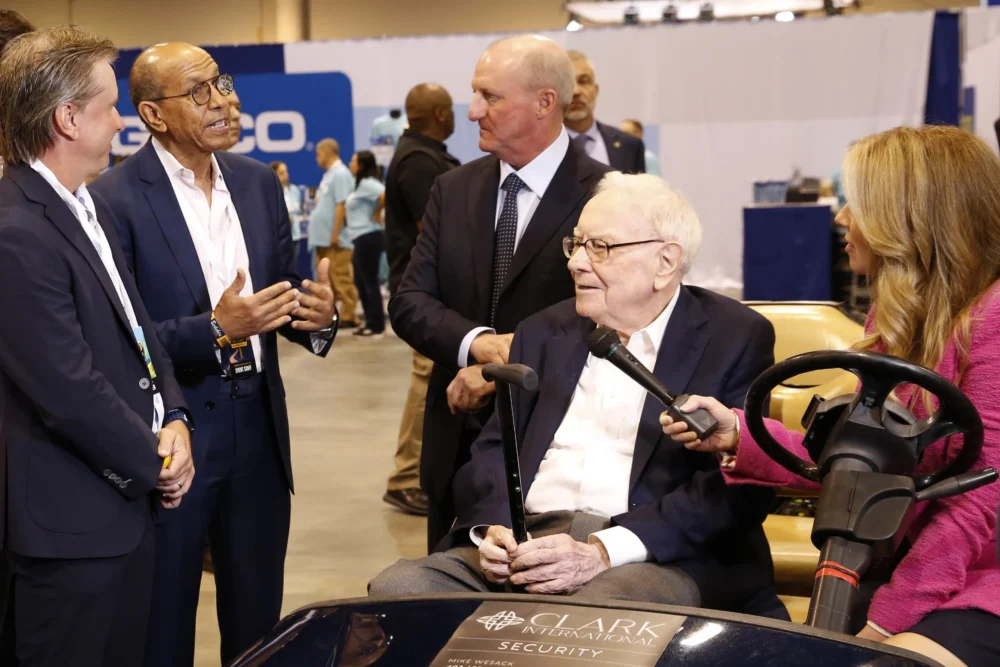
Omaha, Nebraska – Berkshire Hathaway Class A shares experienced a notable decline on Monday, reflecting investor reaction to the conglomerate’s reported sharp drop in fourth-quarter operating earnings. In his first communication to shareholders since assuming the CEO role from Warren Buffett at the beginning of 2026, Greg Abel offered little indication of an immediate, significant strategic shift, emphasizing a continuation of the company’s established capital allocation philosophy.
The Omaha-based conglomerate’s Class A shares slid 4.9% at the start of the trading week. This downturn followed the release of Berkshire’s fourth-quarter operating earnings, which stood at $10.2 billion. This figure represents a substantial decrease of more than 29% when compared to the $14.56 billion reported in the same period a year prior. The primary driver behind this earnings contraction was identified as weakness within the company’s insurance operations. Underwriting profits in this segment tumbled by 54%, falling to $1.56 billion from $3.41 billion in the corresponding quarter of the previous year.
These results present an early test for Greg Abel, who officially took the helm as CEO on January 1, 2026, succeeding the legendary Warren Buffett. While Abel’s inaugural annual shareholder letter, released in late February 2026, was broadly met with praise from investors for its reaffirmation of Berkshire’s bedrock principles of financial strength and disciplined investing, some market participants had harbored expectations for more assertive signals regarding capital deployment. This expectation was particularly amplified by the company’s continuously growing cash reserves.
As of the close of 2025, Berkshire Hathaway held a formidable war chest exceeding $370 billion in cash and Treasury holdings. In his letter, Abel reiterated the company’s long-standing stance: it does not intend to initiate a dividend policy as long as it believes that reinvesting retained earnings can generate greater than a dollar of market value for its shareholders.
This commitment to retaining earnings and foregoing dividends drew commentary from industry analysts. Meyer Shields, an analyst at KBW, noted in a research report, "We were just a little surprised by the absence of any sort of dividend, and a little more by the stated sustained unwillingness to pay dividends. Given Berkshire’s very significant current cash position and — just as important, in our view — its prospects for sustained cash generation, we’d seen some chance of persistent dividends accompanying the CEO transition."
Instead of a dividend, Abel’s communication underscored the company’s continued focus on reinvestment in its businesses and opportunistic share repurchases. This strategy is employed when Berkshire Hathaway’s stock is trading below its intrinsic value, a capital allocation framework that has been a hallmark of Warren Buffett’s leadership for decades.
However, not all analysts expressed a bearish outlook following the earnings report and Abel’s letter. Brian Meredith of UBS suggested that despite the weaker-than-expected quarterly results, Berkshire’s inherent defensive characteristics could provide a supportive backdrop for its stock.
"We actually anticipate BRK’s shares will outperform the broader market given the elevated geopolitical tensions," Meredith wrote in a note to clients. He elaborated, stating, "BRK is generally considered very defensive. Historically, BRK shares have outperformed during periods of market volatility benefiting from their diversified earnings streams, liquidity position, and largely U.S.-focused businesses."
Meredith further observed that Berkshire’s annual letter effectively reiterated these fundamental principles and values. Looking ahead to the 2026 and 2027 fiscal years, he anticipates that Berkshire Hathaway’s management will concentrate on enhancing operating margins at its railroad subsidiary, BNSF, with the objective of bringing them more in line with industry peers. Additionally, he expects a focus on boosting policy retentions at its insurance giant, Geico, while simultaneously maintaining its profitability.
The Q4 earnings report also provided a glimpse into specific business segment performance. Beyond the significant decline in insurance underwriting profits, the conglomerate’s manufacturing, service, and retail operations reported a notable drop in pretax earnings. This segment saw its earnings fall to $2.5 billion from $3.2 billion in the prior year’s fourth quarter, a decrease of 21.9%. This weakening was attributed to lower earnings from Berkshire’s energy businesses, which experienced a 16.7% decline in pretax earnings, alongside a reduction in earnings from its automotive dealerships.
Conversely, Berkshire Hathaway’s railroad, utilities, and energy segment, which includes BNSF Railway, reported pretax earnings of $1.9 billion, an increase of 3.3% compared to the previous year. This segment’s resilience was attributed to higher earnings from Berkshire Hathaway Energy, which saw a 7.7% rise in pretax earnings, offsetting a decline in earnings from BNSF.
The conglomerate’s energy operations benefited from increased earnings generated from its renewable energy projects and regulated utilities. BNSF, however, faced headwinds from lower freight volumes and increased operating expenses.
Berkshire Hathaway’s significant cash pile, while a source of strength and strategic flexibility, also presents a challenge in terms of deployment. The company has consistently faced scrutiny over its ability to effectively deploy this substantial capital, particularly in an environment where attractive acquisition targets or investment opportunities may be scarce. Abel’s reiteration of a disciplined approach, prioritizing value creation over immediate distribution to shareholders, signals a commitment to a long-term perspective.
The market’s reaction on Monday suggests that investors are weighing the short-term impact of the earnings decline against the long-term strategy articulated by the new CEO. The coming quarters will be crucial in demonstrating Berkshire Hathaway’s ability to navigate economic uncertainties and to effectively deploy its vast resources under Greg Abel’s leadership, while maintaining the core values that have defined its success under Warren Buffett.