 11

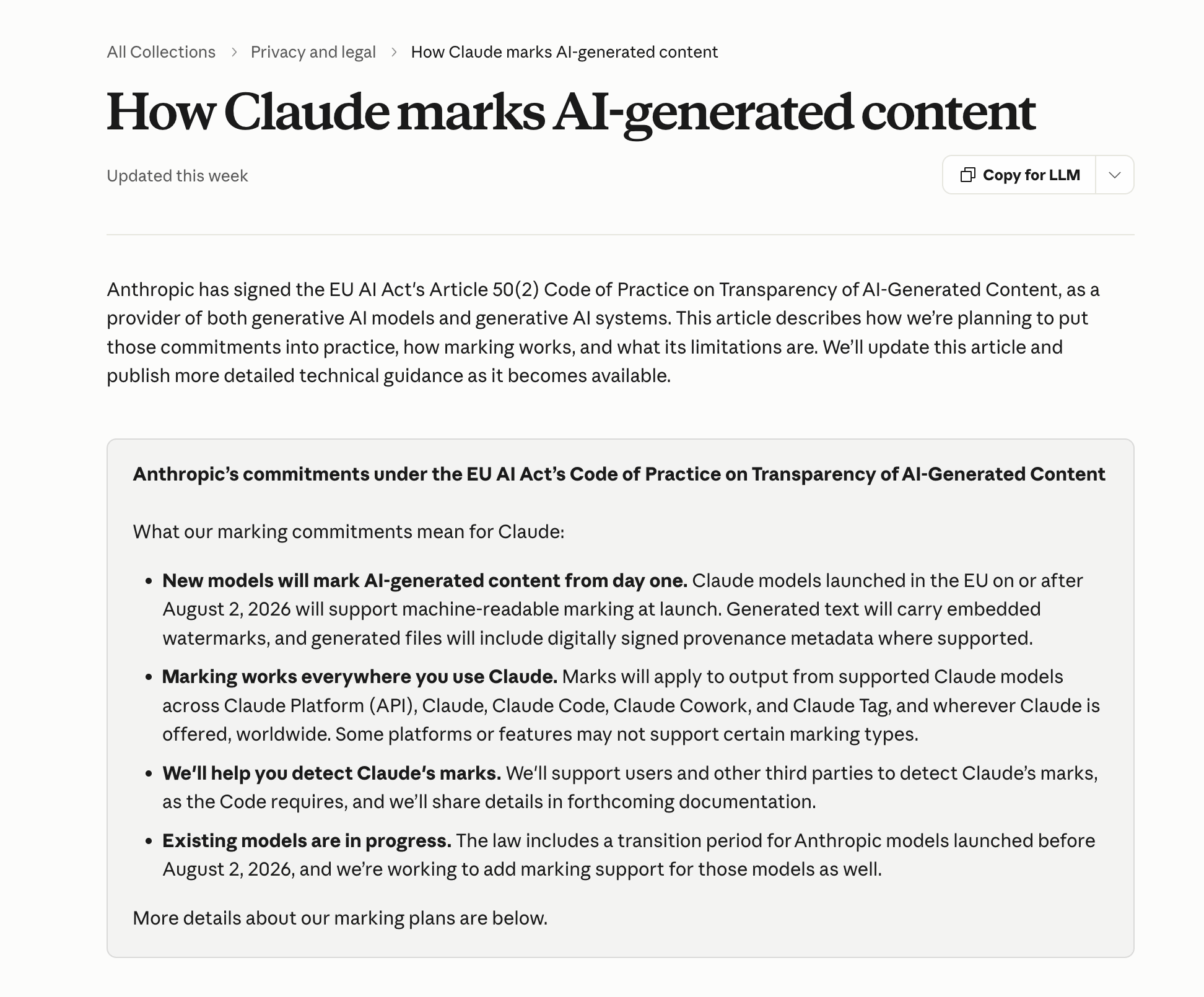
Anthropic has begun embedding an imperceptible, machine-readable watermark into all content generated by its AI model, Claude. This invisible mark is designed to be woven directly into the text, ensuring its persistence through copy-and-paste operations and applying across all global versions of Claude. The move is a proactive measure to comply with the European Union’s Artificial Intelligence (AI) Act, specifically Article 50, which mandates that providers of generative AI systems mark their output in a machine-readable format. This regulation became applicable on August 2, 2026.
For most marketers, this development is unlikely to be a cause for significant concern. The integration of AI into everyday marketing tools has become ubiquitous, with applications like Gmail, Google Docs, Canva, Notion, and Grammarly now featuring AI generation as a default function. The challenge arises primarily when AI-generated work is presented as entirely human-authored, especially when such a representation is contrary to an agreement or promise. However, for those who are transparent about their content creation processes, the presence of a watermark should not be a point of anxiety.
Anthropic’s announcement details that the watermark signifies content that "may have been processed by Claude." It is crucial to note that the term "processed" is key here. If a user pastes their own draft into Claude for tasks such as typo correction, translation, or summarization, the resulting output may carry the watermark. This indicates Claude’s involvement in the pipeline but does not necessarily imply that Claude was the original author of the core text. Furthermore, Anthropic acknowledges that the absence of a watermark does not definitively prove content is human-generated. Watermarks can be undetectable in short passages, heavily rewritten text, or when format conversions strip away file metadata.
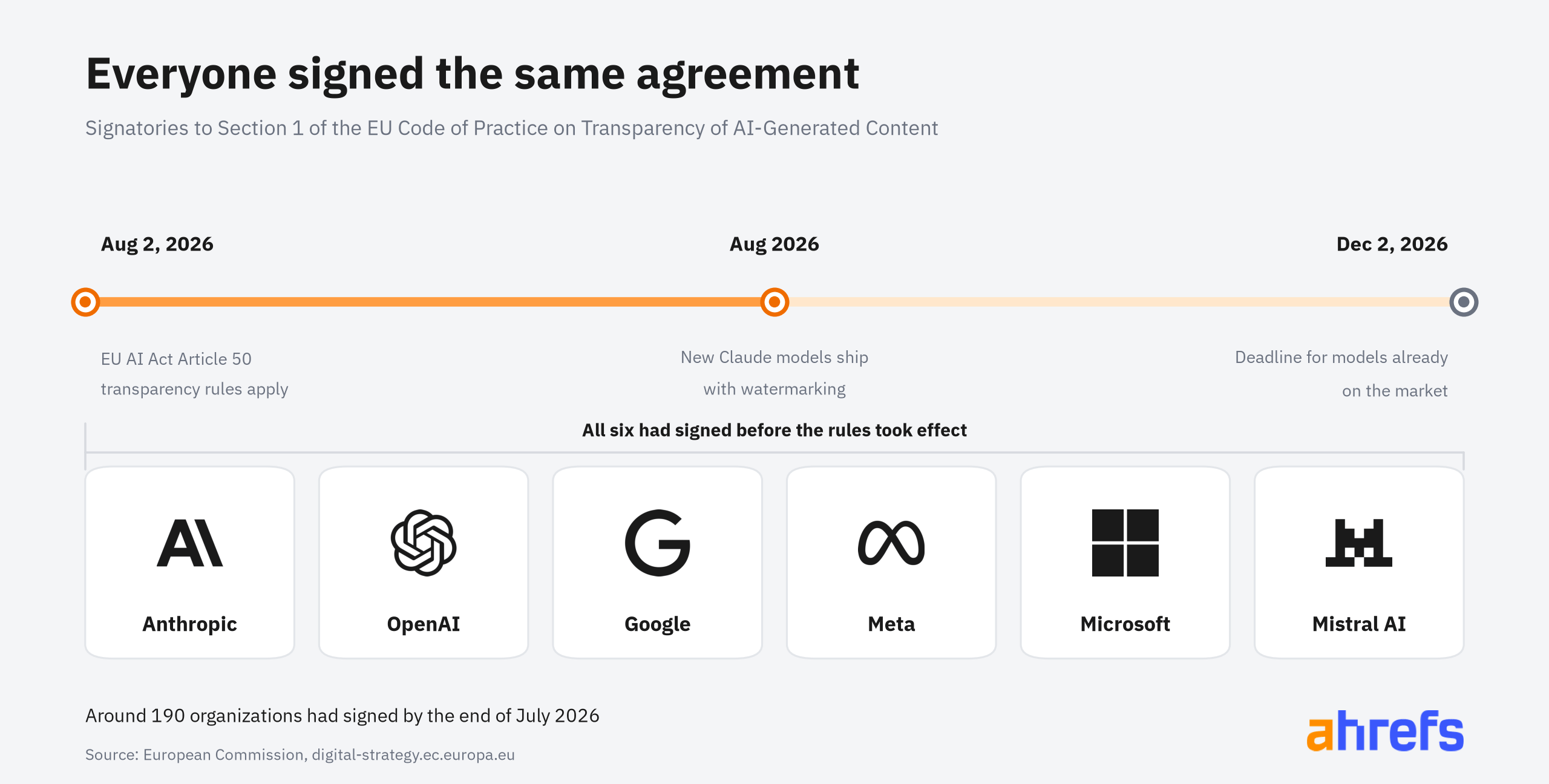
The requirement to watermark AI-generated content is not unique to Anthropic. The EU AI Act’s Article 50 obligates all major AI providers to implement similar measures. This means that switching to other AI models, such as those offered by OpenAI, will not circumvent the eventual implementation of watermarking. A graphic from the EU Code signatories timeline indicates that other major AI companies are also committed to this obligation, with implementations expected to roll out in the coming months.
A second obligation, Article 50(4) of the EU AI Act, specifically targets publishers. It requires disclosure for AI-generated text published to inform the public on matters of public interest. However, guidance from the European Commission clarifies that this requirement is waived if the text has undergone human review or editorial control, and a natural or legal person holds editorial responsibility for the publication. This suggests that human oversight can negate the need for explicit AI disclosure.
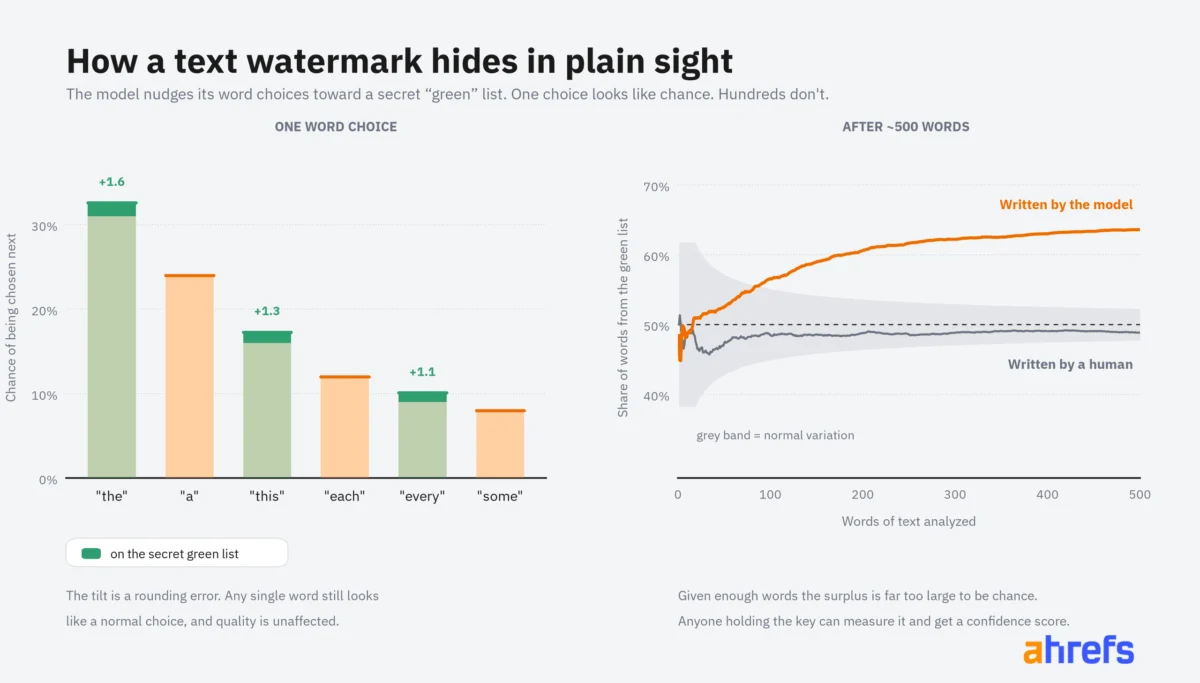
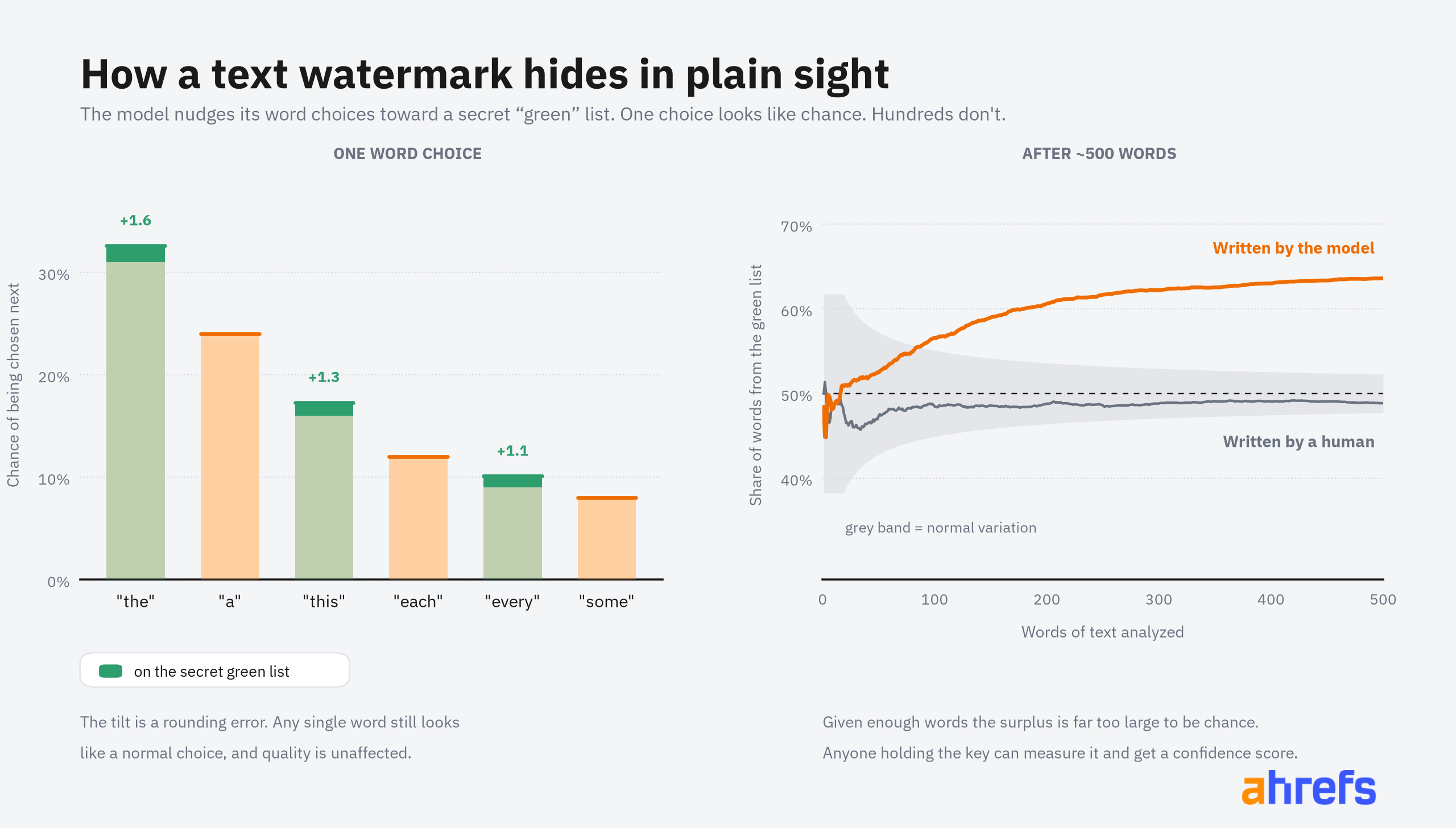
The technical mechanism behind text watermarking involves subtle nudges in the AI model’s word choices. When a Large Language Model (LLM) generates text, it predicts the most probable next token (a unit of text, akin to a word or part of a word) by scoring various options. Watermarking interferes with this scoring process. A foundational approach, as described by Kirchenbauer et al., involves pre-selecting a randomized set of "green" tokens before generation and then softly promoting their use during the sampling phase. Individually, these word choices appear natural. However, when applied across hundreds of words, a discernible pattern emerges that is statistically improbable to be coincidental. Those with the "key" can analyze this pattern to determine a confidence score indicating the likelihood of watermarking.
It is important to understand the limitations of this watermarking technology. Short texts may not contain sufficient signal for reliable detection. Extensive rewriting can degrade the watermark, and studies, such as those by Google DeepMind, show that confidence scores drop significantly when text is thoroughly rewritten or translated. File metadata, which can carry watermarking information, is often lost during re-saving. Crucially, detection of these watermarks requires a specific key, which, for now, is held exclusively by Anthropic as they have not yet published their detection methodology.
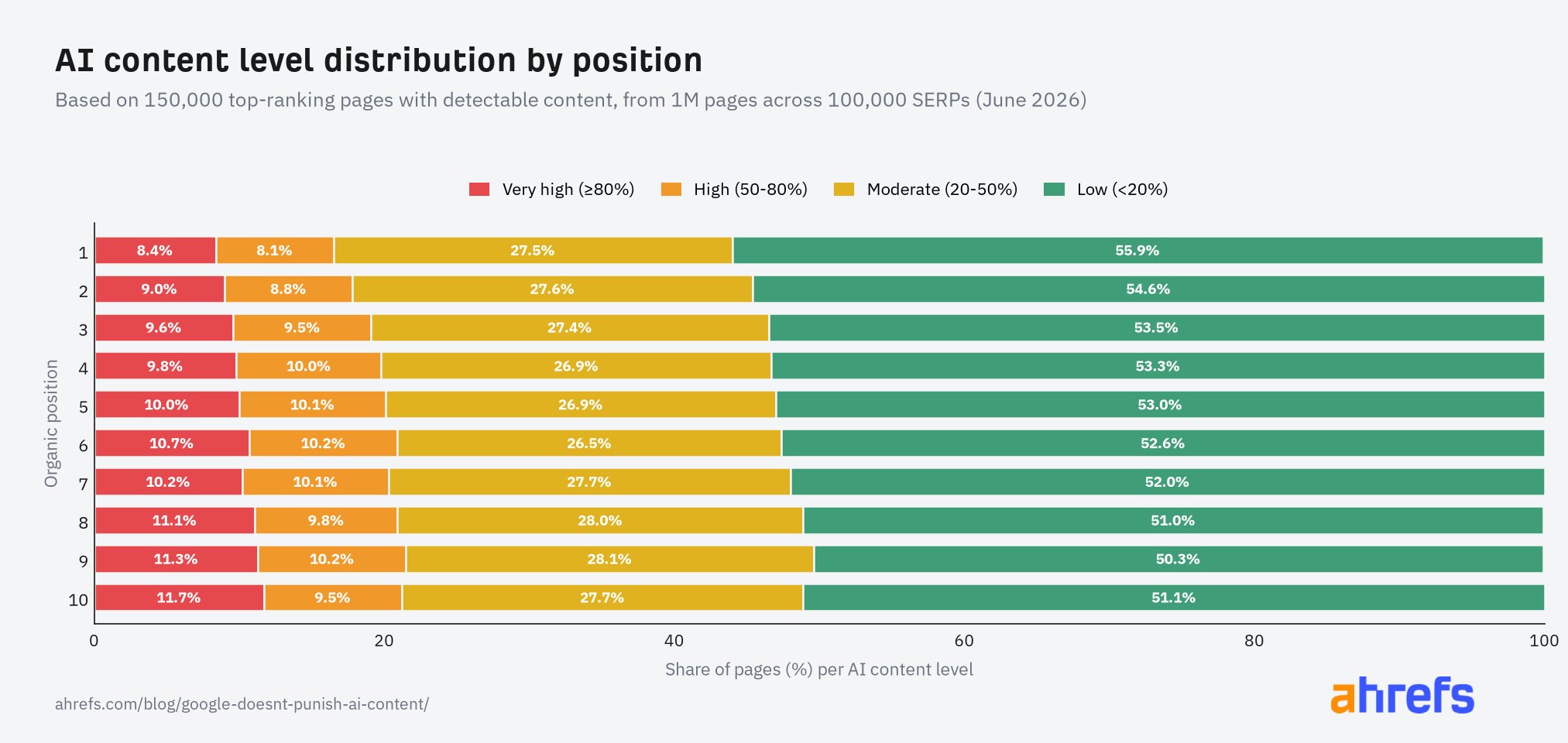
The implications of this watermarking for Google rankings are likely to be minimal. Google has historically stated its neutrality regarding the use of AI in content creation, emphasizing instead the quality and usefulness of the content itself. Research suggests that AI-generated content can and does achieve top rankings in Google search results. While there might be a slight decrease in the prevalence of AI content as one moves up the search engine results pages (SERPs), the trend is gradual, with no abrupt drop-off observed in data. Similarly, indexing rates for AI content show only a marginal difference compared to content with lower AI involvement.
The existence of AI content detection methods predates this watermarking initiative. If Google were inclined to penalize content solely based on its AI origin, such a policy would likely be more apparent in the data. The prevailing hypothesis is that Google’s focus remains on penalizing "bad content," which often, but not always, coincides with poorly executed AI-generated content. Therefore, it is improbable that watermarking will become a direct ranking signal. Its primary utility is expected to be in contractual contexts, such as disputes where an agency has agreed to a no-AI clause or a client is verifying the human authorship of content for which they paid. Even in these scenarios, a detected mark only signifies Claude’s involvement, while the absence of a mark offers little definitive information.
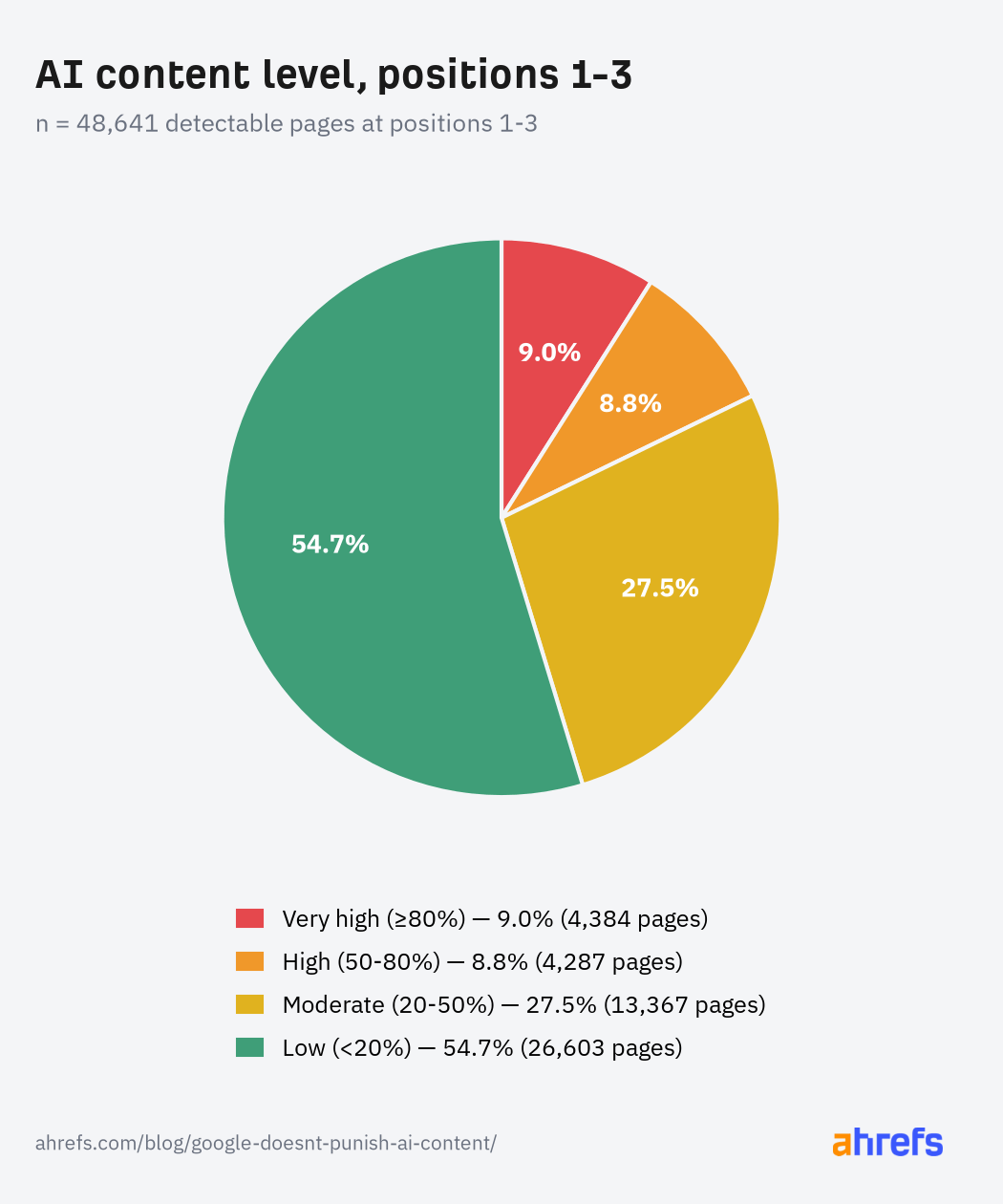
Tools are available to assess the AI content level of web pages, even without access to proprietary watermarking keys. For instance, Ahrefs’ Site Explorer offers an AI content level rating for every page, allowing for comprehensive analysis of entire websites, including competitors. This capability operates independently of AI providers’ cooperation or secret keys, effectively filling the detection gap left open by watermarking. The detector used in this research is the same technology behind these AI content assessment features.
The arrival of watermarking across major AI providers is driven by a legal deadline. Industry observers anticipate that OpenAI and Google will introduce their own watermarking solutions within months, having already committed to the regulatory requirements. The impact on search engine optimization is expected to be limited. Fully AI-generated pages currently rank highly, and Google’s stated policy prioritizes content quality over its origin.
The argument that AI content creation is problematic is often misdirected. The true issue lies not in the use of AI itself, but in its application to produce content that is inferior to what could be achieved through traditional human efforts. The focus should remain on the quality and value of the content delivered to the end-user, regardless of the tools used in its creation.