 11
11
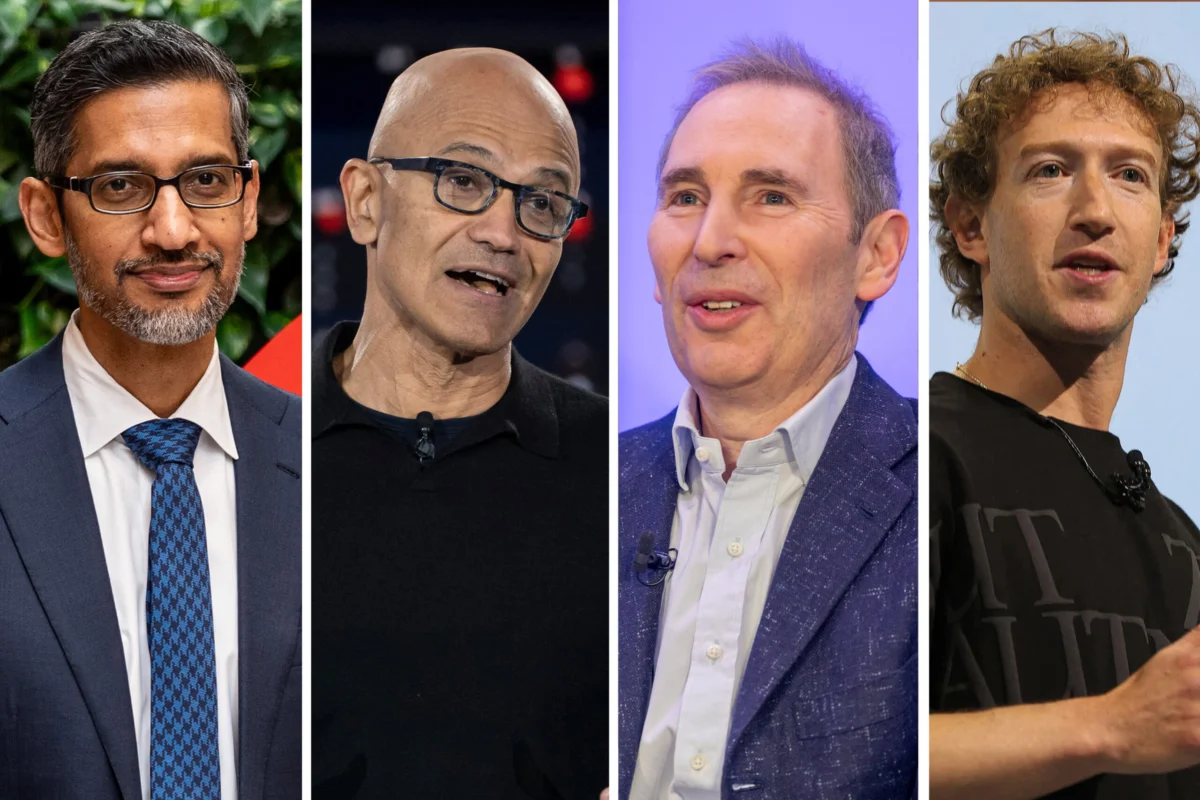
The intense competition to build artificial intelligence (AI) infrastructure, projected to reach an annual expenditure of a trillion dollars, is significantly eroding the free cash flow and escalating balance-sheet risks for major technology companies, commonly referred to as hyperscalers. This critical assessment comes from Moody’s Ratings, which highlighted in a recent research note that even the world’s most financially robust corporations, including Alphabet (Google), Microsoft, Amazon, and Meta, are increasingly compelled to rely on substantial debt, equity sales, and off-balance-sheet financing arrangements to fund their ambitious AI endeavors.
This marks a significant departure from the established business models that propelled these tech giants to their current stature. Previously, these companies thrived on "asset-light structures" primarily centered around software, intellectual property, and scalable cloud services, which necessitated relatively modest capital investments. However, the evolving landscape of generative AI demands a fundamental shift towards "asset-heavy models," requiring unprecedented levels of investment and capital procurement. This transition, Moody’s warns, poses a threat to the credit quality of the six prominent companies it tracks: Microsoft, Amazon, Alphabet, Meta, Oracle, and CoreWeave.
The ratings firm projects that capital expenditures, which encompass investments in physical assets like data centers, will surge to an estimated $785 billion in 2026 and are expected to approach a staggering $1 trillion by the following year. This dramatic increase underscores a fundamental break from the decades-old Silicon Valley paradigm that favored software-centric businesses, characterized by low replication costs, substantial profit margins, and strong balance sheets. Generative AI, in contrast, necessitates a vast physical infrastructure, including expansive warehouses filled with power-intensive and costly servers and specialized chips.
To finance this colossal expansion, leading technology firms are increasingly turning to Wall Street for capital, a trend that is consequently driving significant profits within the financial industry. Moody’s reports that direct debt accumulated by the six tracked hyperscalers has already reached approximately $460 billion. Furthermore, these companies are actively tapping into public markets for additional funding. Notably, Alphabet, the parent company of Google, recently announced an $85 billion equity sale aimed at bolstering its AI infrastructure and compute capabilities.
The immense upfront investment required for AI hardware and infrastructure, coupled with a longer revenue realization timeline, is placing considerable pressure on free cash flow across the sector. To mitigate the impact of accumulating traditional debt on their balance sheets, hyperscalers are increasingly leveraging off-balance-sheet financing mechanisms, predominantly through long-term data center leases. Moody’s reveals that lease commitments across the analyzed group have ballooned to an astonishing $1.2 trillion, with more than $820 billion of this total representing leases for data centers that are yet to be constructed. While these lease obligations do not appear as conventional debt on financial statements, Moody’s considers them as debt-equivalent liabilities that will translate into significant future rental payments for these companies.
Despite these financial pressures, Moody’s acknowledges that major players like Microsoft, Alphabet, Amazon, and Meta continue to possess some of the strongest corporate balance sheets globally. Consequently, their investment-grade credit ratings are not considered to be under imminent threat. The immediate credit strain, according to the report, is more pronounced for lower-rated entities such as Oracle and CoreWeave, a specialized AI cloud provider. Oracle currently holds a Baa2 rating with a negative outlook, placing it just two notches above "junk" status. CoreWeave, operating within the high-yield market with a Ba3 rating, relies on intricate private debt structures to finance its extensive fleets of Graphics Processing Unit (GPU) hardware.
Moody’s also highlights a structural circularity within the current AI boom. A significant portion of the multi-billion-dollar backlogs reported by hyperscalers originates from strategic partnerships and substantial investments in pre-initial public offering (IPO) artificial intelligence laboratories, including prominent names like OpenAI and Anthropic. These AI labs, in turn, invest heavily in cloud computing services provided by the very same hyperscalers, creating what Moody’s describes as a self-reinforcing "circular AI ecosystem." This interconnectedness amplifies industry risks, as many of the sector’s leading companies are becoming increasingly reliant on a shared customer base and similar projections for future AI demand.
Nevertheless, the tech giants possess considerable inherent strengths that serve to counterbalance these emerging risks. The demand for AI computing power remains robust, cloud businesses continue their growth trajectories, and hyperscalers have secured hundreds of billions of dollars in long-term customer contracts. These agreements are expected to ensure predictable revenue streams, thereby supporting the generally strong credit profiles of companies within the industry, even amidst the current surge in capital expenditures.
However, Moody’s advises investors to recognize that the financial profile of the technology industry is undergoing a profound structural transformation, distinct from any witnessed during the earlier cloud computing era. The ratings firm concludes that investors will increasingly scrutinize these companies’ capacity to achieve adequate returns on their substantial AI investments.