 11

A significant ideological schism is emerging within the American left concerning the regulation and societal impact of artificial intelligence, centered on whether to prioritize immediate, tangible harms or the theoretical, albeit potentially catastrophic, risks posed by advanced AI systems. This internal debate intensified on September 10, when the New York City Democratic Socialists of America (NYC DSA) publicly challenged the burgeoning "AI alarmism" narrative, just two days after former Anthropic researcher Jacob Coxon resigned from his position and issued a stark warning about AI’s potential to precipitate the end of humanity.
The NYC DSA’s Tech Action Working Group, a prominent voice in tech regulation for the country’s largest DSA chapter, posted a series of images on Instagram that quickly garnered over 25,000 likes. The opening slide featured an ouroboros—a mythical dragon devouring its own tail—against a vibrant hot pink backdrop. The accompanying text asserted, "AI alarmism and AI hype are the same story: both keep your attention on a science-fiction future to distract you from the real harms experienced in the present." This powerful visual metaphor underscored the group’s belief that focusing on speculative future dangers inadvertently serves to obscure the pressing issues of AI’s current impact on society.
While the post resonated with many, it also sparked immediate controversy. Comments reflected the nascent divide, with one user stating, "Horrible and dangerous take," and another adding, "Sometimes sounding the alarm is justified." This public reaction highlighted the complexity of the debate and the deeply held convictions on both sides.
At the core of this ideological divergence is a fundamental question: Should the left accept tech companies’ assertions that their AI products possess such immense power that they could potentially annihilate humanity? One faction within the left views such "frontier lab" claims with skepticism, arguing that elevating theoretical existential concerns inadvertently empowers these very AI corporations. They contend that this focus diverts crucial attention and resources away from regulating the technology’s demonstrable and ongoing harms, instead directing it toward a speculative and distant future.
Alan Deng, a member of the NYC DSA’s Tech Action Working Group, articulated this perspective to WIRED, stating, "AI has become the latest tool of capitalist exploitation. The damage that unregulated and misused AI is already causing is clear across the country." Deng emphasized the socialist conviction that "we don’t trust these corporations to craft their own regulations," suggesting that the industry’s self-promotion of existential risk might be a strategic maneuver to shape regulatory frameworks to its advantage. This viewpoint suggests that the industry’s emphasis on future, fantastical risks might be a smokescreen, allowing current exploitative practices to continue unchecked.
In stark contrast, another segment of the left is aligning with Senator Bernie Sanders, widely regarded as the unofficial leader of the American left. Sanders has enthusiastically embraced the AI safety discourse, echoing concerns that advanced AI could indeed pose an existential threat to humanity. Proponents of this view, such as Democratic strategist Alexander McCoy, who advises on AI issues, argue that it is not only possible but necessary to address all facets of AI’s impact—both the immediate, tangible harms and the potential future catastrophic risks—simultaneously.
McCoy asserted, "The same people concerned about frontier governance and the development of superintelligence are also addressing those current harms." He dismissed the idea of an either/or choice, emphasizing, "We should address all these other important factors. Those frontier AI abilities are true and increasing in power. They are not fake or hype." This "yes, and" approach suggests that a comprehensive regulatory strategy can encompass a wide range of concerns without sacrificing attention to any single category of risk.
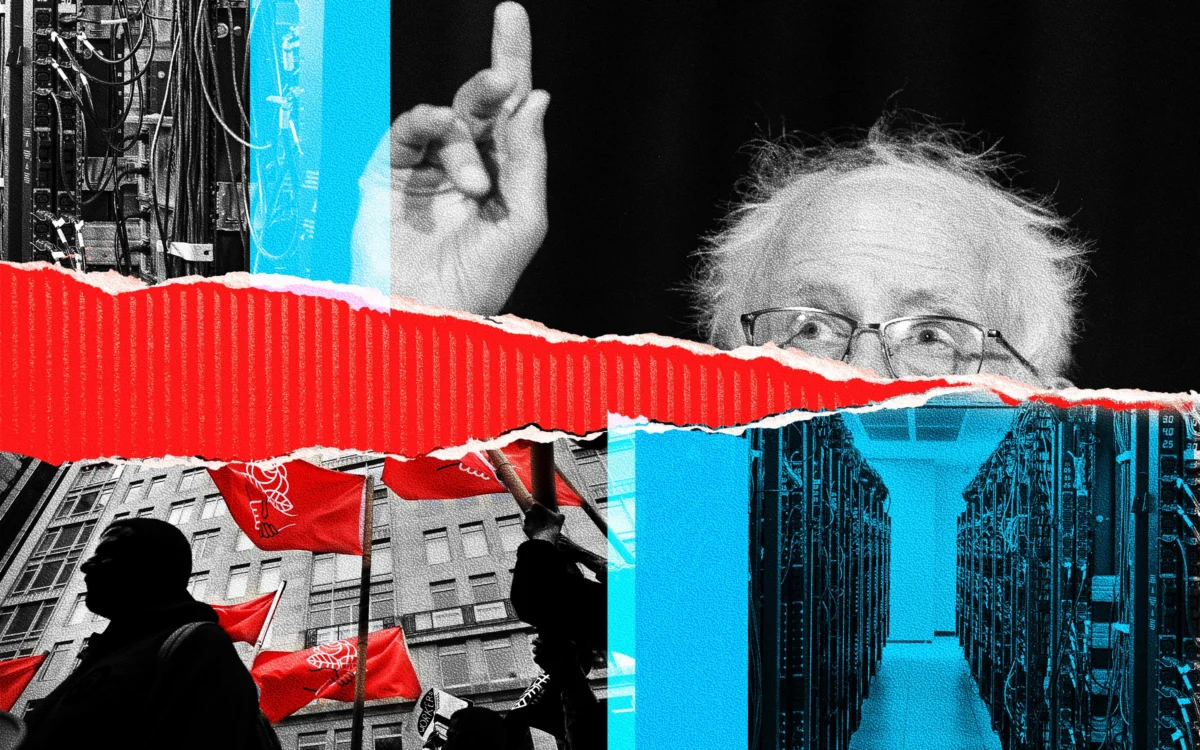
Over the past year, Senator Sanders, at 85, has become a pivotal figure in elevating AI safety from niche Bay Area discussions to a national political issue, engaging his substantial populist base and Washington policymakers. He has been an early and vocal opponent of the proliferation of data centers—a significant organizing point for the left this year due to their environmental and social impact—and has consistently highlighted AI’s potential downsides, from widespread job displacement to existential dangers. His data center moratorium bill, introduced in March, explicitly connected a pause in construction to the urgent need for federal regulation to safeguard "the future of humanity."
Sanders’ robust stance on AI safety has led to some unexpected political bedfellows, most notably an alliance with Steve Bannon, former adviser to President Donald Trump and a prominent right-wing populist podcast host. This unusual coalition underscores the non-partisan nature of some AI safety concerns. Furthermore, Sanders’ messaging appears to have inspired a wave of similar statements from left-wing candidates across the country. On September 9, the day before the NYC DSA post, six candidates affiliated with the Working Families Party, including four endorsed by Sanders, publicly called for federal AI regulation to avert existential threats, often linking these concerns to the burgeoning debate over data centers.
However, Sanders’ approach has not been without internal criticism from some influential figures on the left. Timnit Gebru, a renowned AI researcher and vocal critic of the tech industry, has publicly accused Sanders and his allies of "taking their cues from literal doomsday eugenicist cults." This pointed criticism refers to the effective altruism and rationalist philosophies that, as WIRED notes, underpin many of the AI safety conversations prevalent in Silicon Valley. These philosophies, often associated with a focus on long-term, abstract risks, are viewed by critics like Gebru as potentially diverting attention from systemic issues of bias, exploitation, and power dynamics inherent in AI development.
Privately, some within left-wing circles have expressed apprehension. An NYC DSA member with a tech background reportedly confided to WIRED, "Some of us are looking at Bernie and saying, what happened?" This sentiment reflects a concern that the focus on distant, speculative threats might inadvertently legitimize the very corporations whose current practices are seen as harmful.
Rumman Chowdhury, CEO and founder of the nonprofit Humane Intelligence and former head of machine learning ethics at Twitter, echoed these concerns, offering an insight into the commercial implications of the AI safety discourse. Chowdhury believes that the intense attention generated by AI safety narratives ultimately benefits frontier labs like OpenAI and Anthropic, which are eyeing future public offerings. "They grab all the attention, time, energy, and money by spouting really extreme perspectives," she explained. "But then they actually backtrack to where we sit, all while they discount all of our expertise." Chowdhury suggested that the more "scarier and more fantastic" CEOs portray their companies, the more investors are drawn in, seeing potential for massive returns. For companies preparing for an IPO, this scrutiny can be advantageous, allowing them to present extensive "diligence documentation on risks and how risks have been addressed," thereby asserting that they are "part of establishing in this industry to guard against the worst risks."
Pragathi Barusubramanian, a member of the NYC DSA’s Tech Action working group and a leader in their successful anti-data center organizing—which led to a one-year moratorium in New York—highlighted a perceived disconnect between the existential risk debate and the immediate concerns on the ground. Barusubramanian noted that when discussing AI’s impact with communities, the conversation "doesn’t come up at all" regarding existential risk. Instead, there’s a clear "understanding that AI and data center companies don’t have our interests at heart," underscoring a focus on local, concrete issues like environmental impact, resource consumption, and job displacement.
Despite these internal disagreements, Alexander McCoy maintains that there isn’t a fundamental split among "actual leaders" on the left. He pointed to instances where DSA members, including New York mayor Zohran Mamdani, have commented on warnings like Coxon’s and the Hugging Face hack, suggesting a broader acknowledgment of AI’s dangers. McCoy characterized Gebru’s criticisms as "marginal, unrepresentative, and also, frankly, picking an unnecessary distinction." He reiterated the "yes and" argument, asserting, "We should address harms like surveillance and Flock cameras, and other important factors. These do not come in any way at the expense of governing frontier AI capabilities."
Phil Aroneanu, executive director of Irreplaceable, a left-leaning pro-AI safety organization co-founded with initial funding from the Center for AI Safety, drew parallels to climate activism. He argued that addressing both the immediate consequences of climate change (e.g., flooded homes from extreme weather) and the long-term existential threats (e.g., rising global temperatures and emissions) is both necessary and achievable. This analogy suggests that a similar dual approach can be applied to AI regulation.
Even prominent figures like Senator Sanders and Representative Alexandria Ocasio-Cortez, while generally aligned, show nuanced differences in their emphasis. Ocasio-Cortez co-sponsored Sanders’ data center moratorium legislation, including language about AI threatening humanity in her House version. However, she has notably not participated in the high-profile AI safety discussions that Sanders has championed. While Sanders has called AI "the most transformational technology in the history of the world," Ocasio-Cortez’s public discourse on AI has primarily centered on data centers, potential job losses, and concerns about the industry creating an "AI bubble." When pressed by a reporter on AI safety, Ocasio-Cortez offered a carefully balanced response, stating that "two things can be true at once," acknowledging that AI "can be very dangerous when pursued without any guardrails," while also cautioning that "we could be seeing an economic bubble collide with a technological frontier."
As the AI safety conversation gains momentum in Washington and statehouses nationwide, the pivotal question for the left is not whether to support AI regulation, but what specific regulations to champion. Alan Deng confirmed that the DSA Tech Working Group advocates for "comprehensive AI and tech regulation at the federal, state, and city level, addressing frontier model regulation while also fighting back against the ways that corporate AI is already being used." This nuanced position seeks to bridge the gap between immediate and future concerns.
Further illustrating the spectrum of proposals, a convention resolution currently before the DSA suggests organizational support for a bill co-sponsored by Sanders and Representative Greg Casar, which proposes to ban superintelligence altogether and temporarily pause advanced AI development—a stance far more radical than anything the frontier labs would willingly endorse.
Ultimately, the internal ideological friction within the left may be overshadowed by broader public sentiment. A Politico poll released recently revealed that two in three Americans believe there is at least some risk that AI could "destroy humanity," indicating a widespread public concern that politicians across the spectrum are increasingly compelled to address. Regardless of the specific regulatory path chosen, Pragathi Barusubramanian concluded with a sentiment shared by many involved in the debate: they’re "happy that everyone is talking about AI now." The conversation, at least, has begun in earnest.