 11

In the ever-evolving realm of search engine optimization (SEO), businesses often encounter a significant hurdle: their own websites may not always rank for the keywords that are most likely to attract their ideal customers. Prominent directories, influential review sites, and established major publishers frequently dominate the first page of search results, making it an uphill battle for newer or smaller entities to achieve top rankings. However, a strategic approach known as "barnacle SEO" offers a viable path to ensure a brand’s presence on these highly ranked pages.
Barnacle SEO, a tactic first articulated in 2008, involves attaching your brand’s presence to existing high-authority web pages that already rank well in search engine results pages (SERPs). This strategy is closely related to "parasite SEO," a practice that Google actively penalizes. Despite this proximity, barnacle SEO, when executed correctly, remains a smart marketing maneuver. It effectively places a brand within prominent search results and ongoing industry conversations that would otherwise be difficult to penetrate. Furthermore, its relevance extends to the burgeoning field of AI-generated answers, where off-site mentions increasingly influence visibility.
Understanding Barnacle SEO
Barnacle SEO is defined as the strategy of securing a brand’s featured presence on web pages that already possess strong search rankings, rather than solely relying on one’s own website to climb the rankings. This can be achieved through various means, including earning spots via customer reviews, strategic outreach, and recommendations, or through paid avenues such as advertising, sponsored listings, and premium directory profiles.
Will Scott, the founder of Search Influence, coined the term "barnacle SEO" in 2008, initially conceptualizing it as a local SEO tactic for small businesses. He likened it to a barnacle attaching itself to a whale, benefiting from its journey. In this context, the "whales" are authoritative websites like directories, review platforms, forums, and major publishing outlets. Later, Rand Fishkin expanded this concept to encompass any keyword deemed too competitive for a business’s own site to rank for.
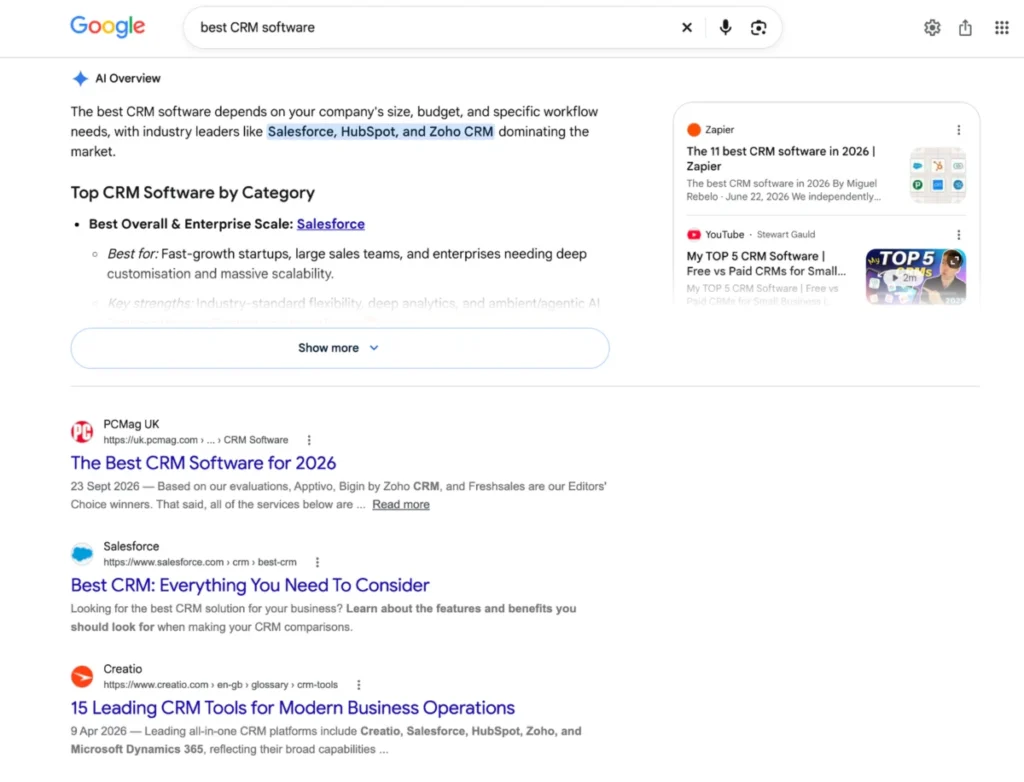
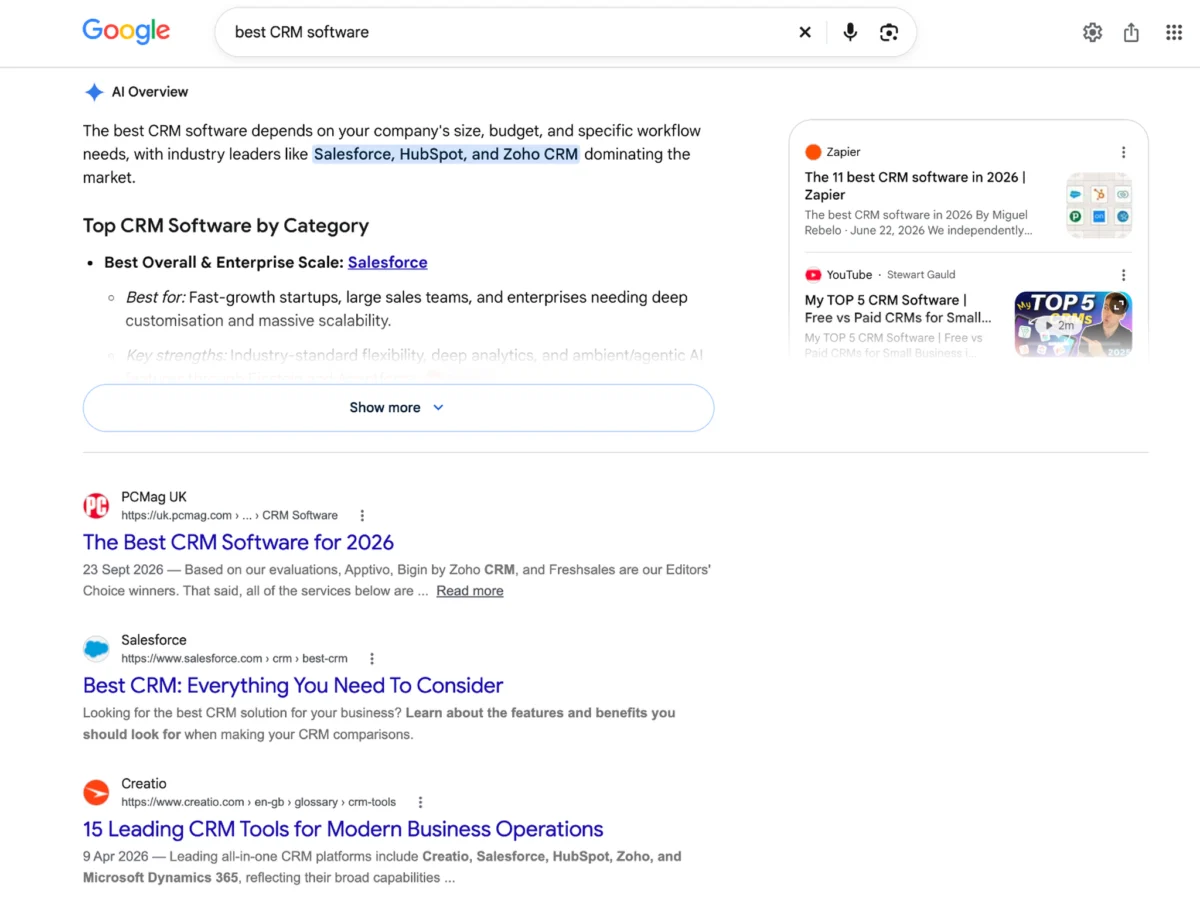
For example, a newly launched CRM company would likely find it nearly impossible to rank for a broad term like "best CRM software," given that listicles and review sites already occupy the top positions. However, that same company can aim to be featured on those existing listicles or undergo reviews on platforms like G2. This ensures that potential customers searching for "best CRM software" can discover the new company, even if its own website isn’t directly ranking for the term. This approach fundamentally shifts traditional keyword research, moving from targeting keywords that a site can win to purposefully targeting the most competitive keywords and winning visibility on other authoritative pages. This strategy is particularly effective for small or new businesses, and for local entities competing against large directories.
The Enduring Relevance of Barnacle SEO in 2026
The continued relevance of barnacle SEO stems from the reality that the pages ranking on search engines, and increasingly the AI-generated answers derived from them, are often owned by entities other than the business itself. It is crucial, however, to understand the fine line between barnacle SEO and tactics that Google may penalize.
Barnacle SEO vs. Parasite SEO vs. Surround Sound SEO
The distinction between these strategies is critical:
Is Barnacle SEO Risky?
Barnacle SEO is generally considered low-risk because Google’s spam policies primarily target pages and links created solely to manipulate search rankings. A listing, review, or mention on an established, authoritative page that already ranks does not typically fall into this category, as the page’s purpose is to serve its readers, and the inclusion of a brand is at the owner’s discretion.
The risk emerges when brands venture into parasite SEO, which involves creating new pages on large websites with the intent to exploit their authority for ranking purposes, rather than genuinely contributing value to the host site’s audience. Google identifies this as site reputation abuse. This is precisely why major news outlets like CNN, USA Today, and the LA Times have experienced the demotion of entire sections of third-party coupon pages from search results in 2024. These pages, often bearing little relevance to the core news content of the publisher, were judged by Google as leveraging the publisher’s reputation for ranking gains.
While it is permissible to pay for barnacle SEO opportunities, certain guidelines must be followed. A paid inclusion in a legitimate "best of" list is acceptable and can be considered advertising, provided it is clearly disclosed to readers and any associated link is marked with rel="sponsored". However, there is a growing concern that quietly sold mentions within listicles, intended to influence SEO and AI answers, pose an increasing risk. Before pursuing any paid placement, it is advisable to assess whether the page genuinely serves its readers and whether the brand’s inclusion is genuinely warranted, irrespective of payment. If the answer is no, the opportunity should be approached with caution.
Barnacle SEO Mentions Continue to Yield Results in 2026
When implemented correctly, barnacle SEO can expedite a brand’s appearance in Google search results and AI-generated answers more effectively than solely focusing on one’s own website ranking. Ahrefs, for instance, observes that a significant portion of its appearances in AI answers (up to 89%) is due to mentions on other websites. The study highlights a strong correlation between off-site brand mentions across various platforms—from Reddit threads and YouTube videos to news articles—and a brand’s frequency in AI answers, including ChatGPT, AI Mode, and AI Overviews. Essentially, brands that are frequently mentioned by other sites tend to be more prominently featured in AI-generated content.
Building a Barnacle SEO Strategy
A successful barnacle SEO strategy involves identifying high-ranking searches that are beyond your current ranking capabilities, strategically integrating your brand into those pages, and then actively promoting these placements. While manual identification of host pages is possible through Google searches, tools like Ahrefs can significantly scale this process across numerous keywords.
Step 1: Identify Target Keywords You Can’t Rank For
Barnacle SEO is most effective for keywords that hold significant business value but are too competitive for your website to rank for currently. Prioritizing high-volume keywords maximizes exposure. Keyword Difficulty (KD), a metric estimating the challenge of ranking in the top 10 based on backlinks, is crucial for identifying out-of-reach keywords. For instance, "CRM software" has a high KD, with its top-ranking pages dominated by authoritative sites like Salesforce and HubSpot. However, sites like PCMag, G2, and Forbes, which review CRMs without selling them, present viable barnacle SEO opportunities. Tools like Ahrefs’ Keywords Explorer can help identify such keywords by analyzing matching terms and applying KD filters. Content Gap analysis in Ahrefs can also reveal keywords used by competitors that you don’t currently rank for.
Step 2: Discover Dominant Barnacle SEO Sites
Once target keywords are identified, the next step is to find the websites that consistently rank for these terms in both Google and AI answers. These are the pages where brand visibility is sought. Using Ahrefs’ Keywords Explorer, one can input multiple related keywords to identify domains and pages with the largest share of organic search traffic for those terms. Competitor sites should be excluded. Barnacle SEO opportunities typically fall into three categories: review sites, directories, and authoritative publishers that create "best of" lists.
It is also essential to examine pages cited by AI assistants, as they may differ from those ranking directly. Ahrefs’ Brand Radar tool, specifically the "Cited pages" report, can reveal third-party pages AI assistants reference for a given topic. Filtering these results to focus on articles and excluding pages where the brand is already mentioned can help identify new opportunities. Pages that already mention competitors might be easier targets, indicating a willingness to cover similar brands.
Step 3: Assess Host Page Traffic
The effectiveness of a mention hinges on the readership of the host page. Therefore, assessing its estimated traffic is vital before pursuing inclusion. Tools like Ahrefs’ Site Explorer and Traffic Analytics can provide estimated visits from various channels, including direct, referral, and AI. Prioritize pages with consistent estimated traffic, particularly those receiving significant direct and referral traffic, indicating a user base independent of search engine rankings.
Step 4: Integrate Your Brand into Host Pages
It is crucial to maintain a clear distinction between barnacle SEO and riskier tactics like parasite SEO. Barnacle SEO involves obtaining a slot on an existing, ranking page or feature, such as a directory listing, a review profile, a map pack entry, or a mention in a "best X" list or a relevant Reddit thread. Claiming an existing profile or earning a spot is the core principle. Creating a new page on another site, like a guest post, falls under content marketing or PR, unless its primary purpose is to exploit the host’s rankings, which then constitutes parasite SEO.
Step 5: Promote and Optimize Barnacle SEO Efforts
Securing a placement is only the beginning. Treat these placements as assets to be actively promoted and leveraged.
Step 6: Measure Barnacle SEO Results
Success in barnacle SEO relies on the continued ranking and presence of the host page. Maintain a list of key placements, the keywords they rank for, and monitor their performance monthly. Track key metrics such as the host page’s ranking for target keywords, its estimated traffic, and direct referral traffic from the host page to your site.
It is also important to monitor for lost placements. Pages can change or remove mentions without notice. Tools can help track brand disappearances from relied-upon pages, signaling the need for renewed outreach efforts.
Conclusion
Barnacle SEO empowers small or new brands to gain visibility for searches they could not otherwise rank for. When executed ethically by earning spots or paying transparently on pages that genuinely serve their audiences, it remains a low-risk, high-reward strategy. Each successful placement can continue to drive visibility and customer engagement in both Google search results and emerging AI-driven information channels long after it has been secured.