 11


Atlassian has released the inaugural edition of its AI SDLC Index, a comprehensive analysis of how artificial intelligence is reshaping the software development lifecycle (SDLC). Drawing on real-world data from more than 340,000 engineers across 500 engineering organizations, the report provides a granular look at the economic and technical impacts of AI adoption. The index, built on data from Atlassian’s engineering intelligence platform, DX, aims to move the industry conversation beyond anecdotal evidence toward a data-grounded understanding of AI’s role in modern software teams.
According to Mike Cannon-Brookes, CEO and Co-Founder of Atlassian, while AI has significantly lowered the cost of generating code, the broader process of building software remains complex. The index addresses two primary concerns currently facing engineering leadership: the total cost of AI implementation and the actual quality of the resulting output. The findings suggest that while the industry experienced a period of rising costs and fluctuating quality throughout much of 2026, the month of October marked a potential turning point in AI efficiency.
The index tracks "AI spend per unit of output," a metric designed to compare the cost of AI tools against the actual work delivered. Output is defined as merged pull requests (PRs), weighted by their size and complexity to ensure that major feature developments are distinguished from minor bug fixes.
Data from April to September 2026 showed a dramatic 4.5x increase in AI spend per unit of output, peaking at nearly $40. However, in October 2026, this figure dropped by approximately 28%, falling to $29.11. Cannon-Brookes attributes this decline to three primary factors: increased developer proficiency in utilizing AI, the release of more efficient and cost-effective AI models, and a strategic shift toward "agentic" workflows that automate larger chunks of work rather than just individual lines of code.
Jose Ramirez, Executive Director of Enterprise Agility & Delivery at Kaplan North America, noted in the report that leaders must prioritize delivery outcomes—such as cycle time, throughput, and quality—over simple usage metrics. Counting the number of AI seats or total spend does not necessarily correlate with shipped products.
A central pillar of the index is "code survivorship," which measures the percentage of AI-authored lines of code that remain in the codebase through subsequent commits. This metric serves as a proxy for the quality and relevance of AI-generated work.
The volume of AI-authored code has seen a steady climb, rising from 49% of total merged code in April 2026 to 69.7% by October 2026. However, as the volume increased, the survivorship of that code initially struggled. Between April and September, survivorship fell from 80% to 59%, indicating that a significant portion of AI-generated code was being rewritten or discarded shortly after its creation.
October 2026 saw a notable reversal in this trend, with survivorship jumping 9 percentage points to 68.2%. This rebound suggests that developers are developing a "sharper judgment" regarding which tasks are suitable for AI automation versus human augmentation. Sudhanva Ramesh, VP at Synchrony’s Office of Agile Tools & Analytics, emphasized that while improved survivorship is encouraging, the writing of code is only one segment of the development journey.
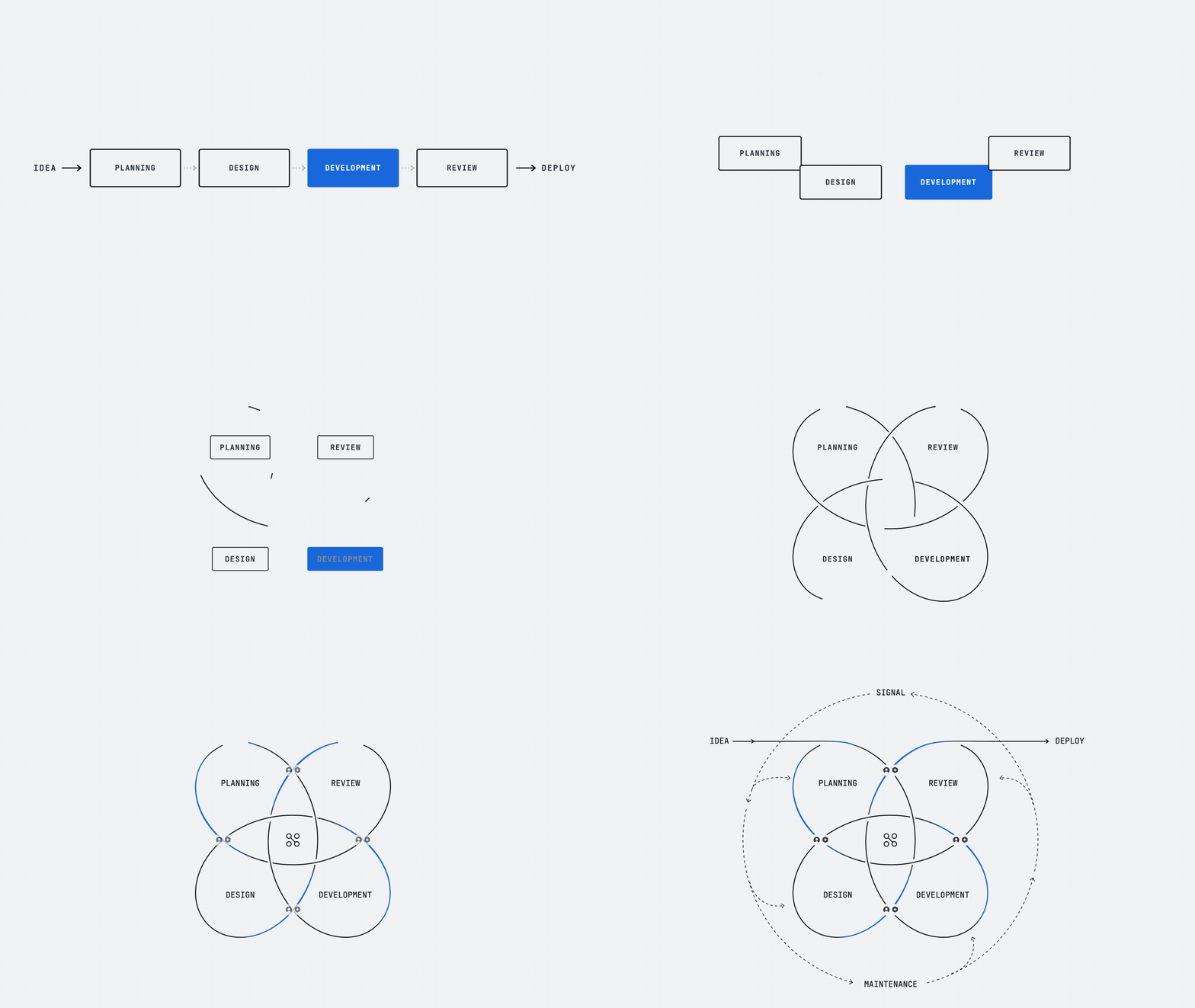
The data suggests that AI has effectively "squeezed the middle" of the software lifecycle. By making the actual writing of code faster and cheaper, the primary bottlenecks have migrated to the surrounding phases: planning and review.
In October 2026, human pull request review volume grew at a faster rate than in previous months. Despite the speed of AI generation, a human developer must still read, test, and take responsibility for the code before it is merged. Guillaume Roy, CPTO and Co-founder of Workleap, shared that his organization addressed this by building AI classifiers to handle simple PRs, thereby freeing up human reviewers for more complex tasks.
A significant finding of the report is that AI adoption has not yet led to a corresponding increase in the time developers spend on innovation. For nearly two years, the ratio of time spent on new feature development versus maintenance has remained static at approximately 58%.
The report suggests that when AI frees up time, developers instinctively apply that time to existing, well-scoped tasks in their backlogs rather than shifting toward creative innovation. Molly Sands, Head of Atlassian’s Teamwork Lab, argued that organizations must actively shift their reward structures to encourage innovation, as engineers will otherwise naturally prioritize checking off more tasks from their lists. Because software engineering is often output-bound rather than input-bound, freed-up time is quickly consumed by the existing roadmap unless leadership creates specific conditions for innovative work.
The index includes a "Developer Experience" (DevEx) analysis, where developers rated 14 different aspects of their work environment. By correlating these ratings with four key outcomes—speed, quality, ease of delivery, and ease of release—the index identifies which factors offer the highest potential for improvement.
Two areas identified as critical opportunities for improving code quality are planning processes and documentation. Both factors are strongly linked to high-quality code, yet only 62% of organizations reported that the majority of their developers view these areas favorably. The data shows that "Production Debugging" and "Documentation" are high-impact drivers that currently suffer from low favorability, making them prime targets for organizational intervention.
Conversely, "Incident Handling" was the most highly rated factor and showed the strongest link to technical stability. Factors such as "Change Confidence" and "Local Iteration Speed" also performed well across the surveyed organizations.
The index concludes that because AI relies on the quality of the information it is fed, the importance of clear specifications and up-to-date documentation has only increased. High-performing teams are those that ensure work is well-scoped and contextually rich before the first line of code is generated.
Based on the data, the Atlassian AI SDLC Index offers several actionable insights for engineering leadership:
Mike Cannon-Brookes expressed optimism about the future of AI in software development, noting that as the cost of building software decreases, the industry typically discovers more valuable things to build. Atlassian intends to update the AI SDLC Index every quarter to determine whether the efficiency gains and quality improvements observed in late 2026 represent a lasting trend or a temporary fluctuation in the market.
The report serves as a reminder that while AI handles the execution of code, the human elements of engineering—judgment, alignment, and strategic planning—remain the definitive factors in successful software delivery.