 11


The rapid integration of artificial intelligence into the software development lifecycle has fundamentally altered the cadence of digital service delivery, creating a new set of challenges for IT operations, Site Reliability Engineering (SRE), and platform teams. As AI-assisted coding tools enable developers to move from initial concepts to pull requests and production deployments at unprecedented speeds, the traditional friction between development velocity and operational stability has intensified. In response to this shifting landscape, Atlassian has announced a comprehensive expansion of its AIOps capabilities within Jira Service Management, specifically housed under its new Service Collection. This suite of tools—including the Prevention Center, the Incident Command Center, and sophisticated third-party integrations—aims to provide a continuous operational loop that ensures reliability does not become a casualty of speed.
The central thesis of Atlassian’s latest update is that the question facing modern engineering teams has evolved. It is no longer sufficient to ask whether a change "worked" in a vacuum; instead, teams must be equipped to immediately identify what happened during a failure, why it occurred, and which specific personnel are best suited to intervene. Traditionally, these answers were buried within fragmented ecosystems consisting of disconnected monitoring dashboards, transient Slack conversations, and static runbooks. Atlassian’s new AIOps framework seeks to consolidate this context into a unified environment, grounding every operational decision in trusted telemetry and institutional knowledge.
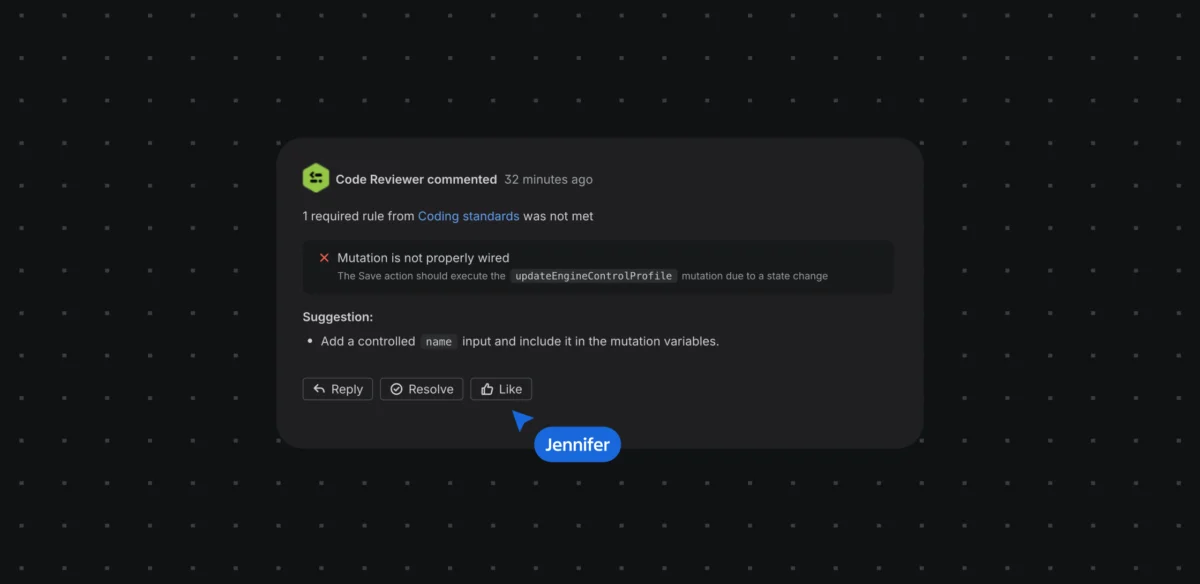
At the forefront of this initiative is the Prevention Center, a feature designed to address the growing "review burden" placed on operations teams. As AI coding assistants increase the sheer volume of changes being pushed to production, the manual review of every deployment has become a logistical impossibility for most organizations. The Prevention Center introduces an AI-native, human-in-the-loop experience that prioritizes high-risk changes for human scrutiny. Rather than treating every update with equal urgency, the system uses AI to analyze change context and risk profiles, allowing teams to focus their limited bandwidth on the deployments most likely to cause service disruptions.
The Prevention Center’s risk assessment capabilities are not limited to generic algorithmic analysis. Organizations can incorporate their specific internal knowledge bases, historical data, and compliance standards into the evaluation process. This allows the AI to tailor its risk scores and suggested mitigations to the unique policies of the business. By providing change approvers with a clearer, data-driven perspective on potential hazards, the Prevention Center acts as a proactive gatekeeper, preventing avoidable incidents without introducing the bottleneck of a traditional manual handoff. The goal is to allow developers to maintain their AI-driven velocity while providing operations teams with the confidence that the production environment remains protected.
Despite the most robust preventative measures, the complexity of modern software ensures that some incidents will inevitably occur. For these scenarios, Atlassian has introduced the Incident Command Center. This AI-native incident response environment is engineered to facilitate coordination and investigation at the same accelerated pace as the development cycle. Powered by Atlassian’s Rovo—an AI agent designed for workplace productivity—and the Teamwork Graph, the Incident Command Center aggregates all relevant data points into a single, actionable view.
The Incident Command Center functions by automatically connecting an ongoing incident to a variety of critical data sources, including recent code deployments, related system alerts, historical incident records, and real-time observability data. By utilizing the Teamwork Graph—a foundational data layer that maps the relationships between people, work, and tools across the Atlassian platform—Rovo can surface the most pertinent context to responders. This eliminates the need for manual "swivel-chair" investigations, where engineers must jump between different platforms to piece together a timeline of events. Instead, the AI pinpoints the likely root cause and suggests mitigation strategies based on evidence found within the connected ecosystem.

A critical component of the Incident Command Center is its role in the post-incident phase. Once a service is restored, the system leverages the accumulated data to generate a comprehensive post-incident review (PIR). This automated summary includes specific action items aimed at addressing the underlying vulnerabilities discovered during the outage. These action items are then converted into Jira work items, ensuring that the lessons learned from an incident are directly fed back into the development backlog. This creates a closed-loop system where every failure contributes to the long-term resilience of the service, preventing the recurrence of known issues and allowing teams to iterate with greater security.
The effectiveness of these AI-driven tools is heavily dependent on the quality of the data they consume. To ensure that AI agents have access to the most accurate signals, Atlassian has introduced new, MCP-powered integrations with industry-leading observability and application performance monitoring (APM) providers, including Datadog, Sentry, and Splunk. These integrations allow third-party telemetry and application context to flow directly into Jira Service Management, enriching the incident record with real-time performance metrics and error logs.
These signals are not merely displayed alongside the incident; they are integrated into the Teamwork Graph, providing a deeper layer of intelligence. When Rovo analyzes an incident, it can draw upon this external telemetry to provide evidence-based summaries. For example, rather than just notifying a responder of a service spike, the AI can identify the specific affected service, name the owners of that service, locate a similar incident from the past year, suggest the most relevant runbook, and identify the specific code change that likely triggered the alert. This level of automated synthesis allows human responders to remain accountable for final decisions while significantly reducing the cognitive load required to reach those decisions.
The integration of Datadog, Sentry, and Splunk represents a strategic move to break down the silos between "development history" and "real-time operations." By housing observability data within the same platform where work is managed, Atlassian is positioning Jira Service Management as the central nervous system for the modern AI SDLC (Software Development Life Cycle). This approach acknowledges that in an era of rapid, AI-assisted releases, the boundary between "writing code" and "running code" has effectively vanished.
Ultimately, the launch of these AIOps capabilities reflects a broader shift in how enterprise software companies are approaching artificial intelligence. Rather than viewing AI solely as a tool for generating code, Atlassian is focusing on AI as a tool for managing the consequences of that code. The Service Collection represents a bid to provide a stabilized framework for organizations that are currently struggling to govern the high volume of changes produced by AI-augmented engineering teams.
For IT operations and SRE professionals, these updates offer a path away from reactive "firefighting" and toward a more controlled, data-centric operational model. By automating the routine aspects of change review and incident investigation, these tools allow human experts to focus on high-level problem solving and architectural improvements. The Prevention Center ensures that scrutiny is proportional to risk, the Incident Command Center ensures that response is proportional to the speed of development, and the third-party integrations ensure that the AI is grounded in the reality of the system’s health.
As organizations continue to explore the potential of AI to accelerate their digital transformation, the need for robust, AI-native operational infrastructure will only grow. Atlassian’s latest developments suggest that the future of reliable service delivery lies in the ability to seamlessly connect the "left" and "right" sides of the DevOps loop, using AI not just to move faster, but to move smarter. The combination of proactive prevention, accelerated response, and enriched context provides a comprehensive toolkit for teams navigating the complexities of the modern software landscape. By bringing these disparate elements into a single place, Atlassian aims to help organizations embrace the velocity of AI-driven development with the confidence that their systems will remain resilient, transparent, and manageable.