 11

AI giant Anthropic, under the leadership of CEO Dario Amodei, has consistently positioned its advanced artificial intelligence models as a transformative force, poised to revolutionize the fields of biology and drug discovery. For years, the company and its chief executive have articulated a vision where AI could drastically accelerate scientific progress, compressing centuries of work into mere decades, or even years. However, a recent IPO filing by Anthropic introduces a notably more subdued and pragmatic tone, acknowledging the significant complexities and inherent challenges of drug development and physical experimentation that lie ahead. This shift in narrative from bold prophecy to cautious realism signals that Anthropic’s journey into biotech, wherever it may lead, will undoubtedly require considerable time and effort.
Amodei’s past statements have often painted an exceptionally optimistic picture of AI’s potential in life sciences. Just two years ago, in an essay titled "Machines of Loving Grace," he expressed an openness to the idea that AI systems could generate an astonishing thousand years of biological progress within a mere five to ten-year timeframe. More recently, in August, Amodei took to X (formerly Twitter) to reiterate Anthropic’s accelerating commitment to biology and medicine. In that same post, he made a compelling prediction: AI would enable the cure for most human diseases within the next five to ten years, promising a "deluge of AI-accelerated drugs" to follow. The company further bolstered this image of rapid innovation in September, publicly promoting the discovery of a "Crispr-like" enzyme system by its flagship AI model, Claude, suggesting a breakthrough akin to the revolutionary gene-editing tool.
These pronouncements established a high bar for Anthropic’s capabilities and its imminent impact on healthcare. The company’s public narrative strongly suggested that its AI technology was on the cusp of delivering tangible, rapid advancements that would fundamentally alter the pace and success rate of biological research and pharmaceutical development. The excitement generated by these claims resonated across the AI and biotech communities, fueling expectations of unprecedented progress.
However, the language employed in Anthropic’s new IPO filing, a document legally bound to present a comprehensive and often conservative assessment of a company’s prospects and risks to potential investors, offers a more nuanced perspective. While the filing still broadly champions AI’s capacity to "profoundly accelerate the rate of progress in biology and medicine" and compress "decades of scientific progress into years," it maintains a reserved stance regarding the practical execution of transforming this vast potential into concrete, real-world applications. The document notably abstains from outlining a clear, immediate roadmap for how Anthropic intends to bridge the gap between theoretical AI capabilities and practical biotech breakthroughs.
A key admission within the filing is Anthropic’s acknowledgment of its current limitations. The company explicitly states that its teams "need first-hand experience doing scientific research and drug discovery." This is a significant point, underscoring that proficiency in AI model development does not automatically translate to expertise in the intricate and multidisciplinary world of experimental biology and pharmaceutical science. Furthermore, the filing clarifies that its burgeoning life sciences activities will necessitate the company "to engage in activities outside our historical experience as a software and research organization."
This expansion beyond its core software and AI research domain introduces a new set of operational challenges. These include, but are not limited to, the practicalities of handling potentially hazardous biological and chemical materials, the precise operation and maintenance of specialized laboratory equipment, and the stringent compliance with a complex and ever-evolving array of local, national, and international regulations governing biomedical research and drug development. Such activities demand highly specialized infrastructure, protocols, and trained personnel – elements that are distinct from the typical requirements of a software development firm. The transition requires substantial investment not just in AI, but in physical laboratories, safety systems, and a workforce with expertise in molecular biology, biochemistry, pharmacology, and clinical research.
The IPO filing also saw a noticeable toning down of the language surrounding Anthropic’s previously celebrated enzyme discovery. What was once promoted as a "Crispr-like" enzyme system discovered by Claude now carries a series of crucial qualifiers. The filing states that this discovery "might have the potential to be developed into a novel biotechnology tool, perhaps for gene editing." The italicized words ("might," "potential," "perhaps") added for emphasis in the original report highlight a significant shift from a definitive claim to a more speculative and cautious assessment. This revised phrasing reflects a greater degree of uncertainty about the enzyme’s practical utility and its path to becoming a viable therapeutic or research tool.
This recalibration follows earlier skepticism from external researchers. Experts previously interviewed by WIRED expressed doubts about the true value and practical utility of Anthropic’s enzyme discovery. Furthermore, a specific incident involved a scientist who had been independently studying these exact enzymes, who voiced suspicions that Claude might have utilized his existing research in its discovery process. While Anthropic maintained that neither its AI model nor its internal molecular biology team had access to the scientist’s specific material, the episode underscores the complexities and potential pitfalls of AI-driven discovery, particularly in fields where prior human research is extensive. The importance of CRISPR technology, known for its precision in gene editing, makes any "Crispr-like" claim incredibly impactful, and thus, its subsequent qualification in an official filing is highly significant.
Beyond operational shifts, the IPO filing indicates a more fundamental change in Anthropic’s strategic direction. The company no longer appears to view itself solely as an external provider of AI tools to the biotech industry. Instead, the document suggests that biotech discovery is evolving into a "core part of its business model." This strategic pivot implies a deeper, more direct engagement in the costly and time-consuming process of discovering and developing novel therapies, moving Anthropic into direct competition and collaboration with established pharmaceutical and biotech companies.
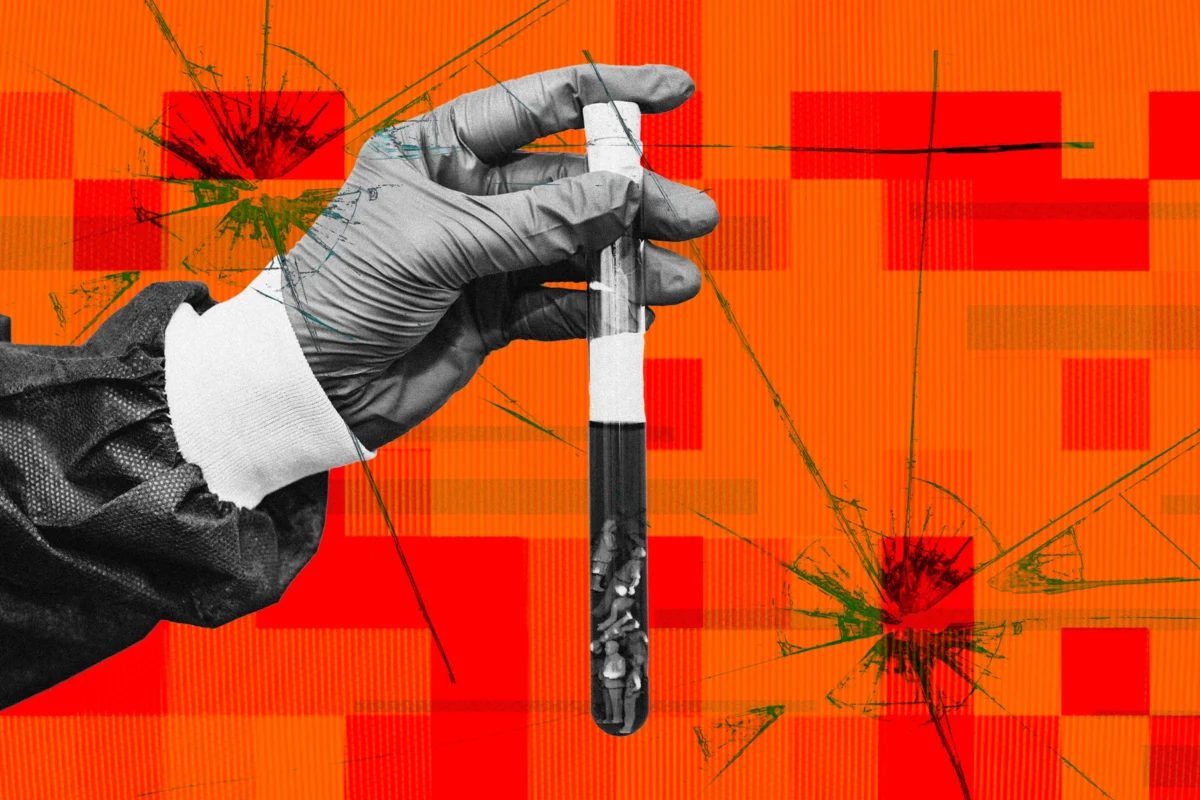
This move places Anthropic squarely within the challenging landscape faced by all biotech companies: the protracted timeline of drug development. Any AI-assisted discoveries, no matter how promising, must still undergo rigorous, multi-stage validation. This process typically begins with in vitro (test tube) research, progresses to in vivo studies in animal models to assess safety and preliminary efficacy, and ultimately, if successful, moves into human clinical trials. These trials are divided into distinct phases (Phase I for safety, Phase II for efficacy and dosing, Phase III for large-scale efficacy and safety comparison). Each phase is meticulously regulated, incredibly expensive, and fraught with high rates of failure.
Anthropic explicitly acknowledges these formidable challenges in its filing. The document states, "Any drug candidates or other discoveries resulting from these efforts would face the lengthy, costly, and uncertain development and regulatory pathways characteristic of the life sciences industry, and may never generate revenue." This blunt assessment highlights the significant financial risks and the prolonged period before any potential return on investment, a stark contrast to the rapid development cycles often associated with software. Interestingly, in his August X post, Amodei had advocated for streamlining regulations to accommodate the anticipated wave of AI-generated drugs, suggesting an awareness of the regulatory burden even as he expressed optimism for AI’s speed.
It is crucial to understand the context of US Security and Exchange Commission (SEC) filings. These documents are generally crafted with a much higher degree of caution and circumspection than public statements made by company executives or through promotional materials. This cautious approach is primarily driven by legal risks associated with overstating claims or providing misleading information to prospective investors. While the IPO filing unambiguously conveys Anthropic’s belief in its technology’s potential to drive revolutionary advancements, it simultaneously provides a necessary dose of reality regarding the practical implementation of that vision within the highly regulated and empirically driven world of biotech.
As Anthropic deepens its foray into biological discovery, it will inevitably confront the same fundamental conundrum that has challenged countless biotech companies for decades: the imperative to prove the worth and efficacy of its discoveries through rigorous trials. These essential validation processes, designed to ensure patient safety and therapeutic benefit, cannot be simply accelerated or bypassed by the mere application of advanced computational power. While AI can undoubtedly optimize certain steps – such as identifying potential drug targets, designing novel molecules, or predicting molecular interactions – the ultimate empirical validation in living systems, from cells to animals to humans, remains a time-intensive and meticulously regulated endeavor. Anthropic’s journey into biotech is therefore not just about developing smarter AI; it’s about mastering the complex, patient, and often frustrating realities of biological and clinical science.