 11

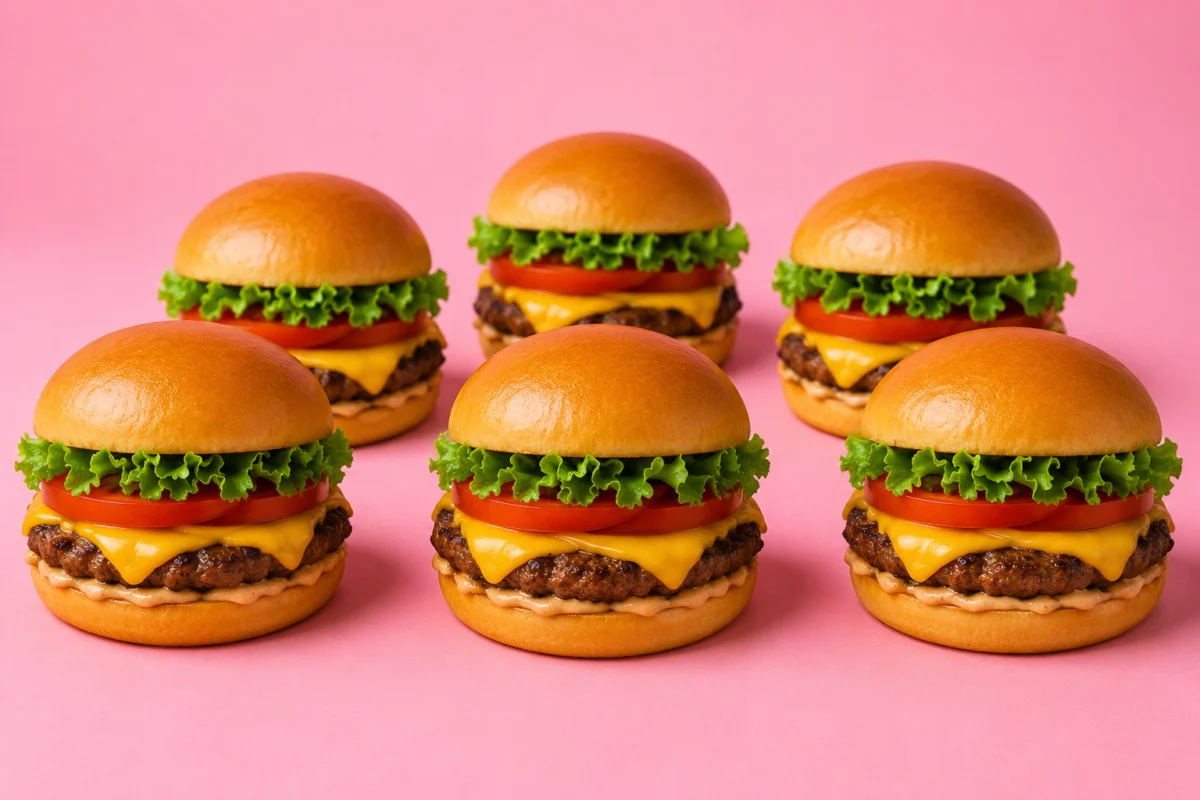
When confronted with a menu featuring dishes illustrated by generative artificial intelligence, a subtle unease often takes hold. Patrons might feel a sense of cognitive dissonance, a feeling of "something isn’t right" when viewing bagel sandwiches that appear eerily flawless, precisely symmetrical, and unnervingly smooth. This visceral reaction, initially leading one to question their own perception, is not paranoia but a response to the nascent trend of AI-generated menus infiltrating the restaurant industry. These digital depictions, created by models trained on a narrow, "pleasing" aesthetic, consistently miss the mark of authentic food representation, sparking a growing backlash from consumers.
The visual anomalies range from the overtly bizarre to the subtly unsettling. In some instances, AI-generated food images are conspicuously artificial, such as a burrito with cheese so unnaturally bubbly and molten that it resembles abstract avant-garde art more than an edible meal. More frequently, the illustrations appear deceptively ordinary at first glance, making the underlying strangeness apparent only upon closer inspection. A second look might reveal an unnatural sheen on a croissant, a hyper-realistic yet implausible texture on a piece of fruit, or an unsettling uniformity that betrays its digital origin.
Alex Lisle, CTO of Reality Defender, a company specializing in AI-detection and content-verification tools, succinctly describes the phenomenon: "It’s almost like an alien trying to make a pizza without understanding its core principles." This vivid analogy highlights the fundamental disconnect between AI’s synthetic perfection and the organic imperfections inherent in real food. Lisle explains that the inherent architecture and training methodologies of these AI models contribute directly to this peculiar aesthetic. Examples abound, from ice cream scoops that are impeccably spherical to shrimp seemingly genetically engineered to curl into perfect circles, consuming their own tails in what has been dubbed "Lovecraftian food horrors" by some online commentators.
The underlying technology behind these AI menus involves large language models (LLMs) and diffusion models, the sophisticated AI architectures responsible for breakthroughs in conversational chatbots like ChatGPT and advanced image generators like Midjourney. These models operate by processing and learning from colossal datasets, identifying intricate patterns and relationships within the data. When prompted with a request, such as "Make me a menu for a burger restaurant," the AI leverages these learned patterns to generate new content that aligns with its understanding of the request.
Lisle points out a crucial factor influencing the AI’s output: the nature of its training data. "A lot of this stuff looks like a Chili’s menu from 2015, and there’s a reason for that," he states. This observation underscores that the models’ "corpus of work"—the vast collection of images and text they were trained on—heavily influences their generated style. If the predominant visual data for restaurant menus consists of highly stylized, often airbrushed or digitally enhanced photographs from chain restaurants of a certain era, the AI will naturally reproduce and even exaggerate those characteristics. This leads to a homogenized visual language that, while technically "pleasing" in its adherence to conventional commercial aesthetics, lacks the authentic nuances of real food.
A significant concern for the development of AI models is the quality and provenance of their training data. Companies investing in AI development are constantly seeking new and diverse datasets. For instance, Amazon has reportedly gone to extreme lengths, even sourcing and scanning rare books to augment its training data, only to destroy the physical copies afterward. While the inclusion of diverse data is crucial, an emerging problem is the inadvertent re-ingestion of AI-generated content back into training datasets. When AI models are trained on too much of their own synthetic output, they risk a phenomenon known as "model collapse."

Lisle elaborates on this risk, likening model collapse to "mad cow disease," where "when you feed the outputs from one model back into itself, eventually the inbreeding becomes too much, and the whole thing collapses." While the extreme scenario of full model collapse might not yet be widespread in menu generation, a related, less severe degradation known as "convergence" is clearly evident. Convergence, as Lisle explains, degrades the quality and diversity of an AI’s outputs without rendering the model entirely useless.
In the context of restaurant menus, convergence manifests as an increasing uniformity. If an AI model is asked to generate a menu for a fast-food establishment, it will draw heavily from existing visual data of popular chains like Wendy’s, Burger King, or McDonald’s. These established brands already share a distinct, often highly stylized visual presentation. The AI, by learning from and reproducing these styles, further reinforces this aesthetic. Should these AI-generated menus then find their way back into the training data—a likely scenario given the vast and often opaque nature of data collection—the cycle of homogenization accelerates, leading to an ever-narrower range of visual styles.
This digital perfection often surpasses even the meticulous efforts of human food stylists. A Big Mac in a McDonald’s commercial, for instance, is painstakingly constructed by a prop designer, with each layer carefully arranged to achieve maximum visual appeal. AI takes this optimization to an unprecedented level. Lee Rainie, Director of the Imagining the Digital Future Center at Elon University, observes that "The optimization of the data sets is for pleasingness, or you know, not being offensive, and so there’s a way that turns into homogenization." He adds, "What AI is known to do both in images and language is to shave off the edges." This "shaving off the edges" removes the subtle imperfections, the natural textures, and the unique characteristics that make real food appealing, replacing them with a bland, generalized perfection.
The iterative nature of AI generation and editing further exacerbates this problem. A user on X (formerly Twitter), known as Labtec, demonstrated this by creating a restaurant menu in ChatGPT and then repeatedly editing it 100 times. The experiment revealed a progressive degradation, with the food images becoming increasingly artificial and unsettling with each revision. The user noted, "The end result actually makes me uncomfortable." TechCrunch replicated this experiment, confirming similar results. Restaurants that adopt AI-generated menus are likely falling prey to this very issue, making small, routine edits to prices or item descriptions, inadvertently causing the food images to become incrementally more rounded, smoother, and less authentic with each modification.
The public’s negative reaction to these AI menus is not merely anecdotal; it has a scientific basis. Researchers at the University of Duisburg-Essen in Germany conducted a study that found AI-generated food images exhibit an "uncanny valley" effect. This psychological phenomenon describes the unsettling sensation experienced when encountering entities that are almost, but not quite, human-like or, in this case, food-like. Images of food that looked nearly real elicited greater disgust and unease than those that were overtly and obviously fake. This inherent human aversion is further intensified by the broader cultural conversations and anxieties surrounding the rapid advancements and ethical implications of AI.
The widespread consumer discomfort with these AI menus should serve as a clear signal for restaurants to reconsider their adoption. However, the implications of this trend extend far beyond the dinner table. The ability of AI to generate hyper-realistic yet subtly flawed imagery challenges fundamental societal assumptions. As Lisle soberly points out, "Seeing and hearing has always been believing, to the point where even our court systems are entirely tuned to the idea that the gold standard in evidence is taped confessions and videotaped evidence." He concludes that "That’s no longer the case. The world has fundamentally shifted, for good or for ill." The uncanny perfection of an AI-generated bagel sandwich, therefore, is not just a culinary curiosity but a harbinger of a world where distinguishing between the authentic and the artificial becomes an increasingly complex and critical challenge.
Amanda Silberling is a senior writer at TechCrunch, covering the intersection of technology and culture. She has contributed to various publications, including Polygon, MTV, the Kenyon Review, NPR, and Business Insider. Silberling is also the co-host of "Wow If True," a podcast focused on internet culture, alongside science fiction author Isabel J. Kim. Before joining TechCrunch, her professional experience spanned grassroots organizing, museum education, and film festival coordination. She holds a B.A. in English from the University of Pennsylvania and served as a Princeton in Asia Fellow in Laos. Amanda can be reached at [email protected] or via encrypted message at @amanda.100 on Signal.