11
11
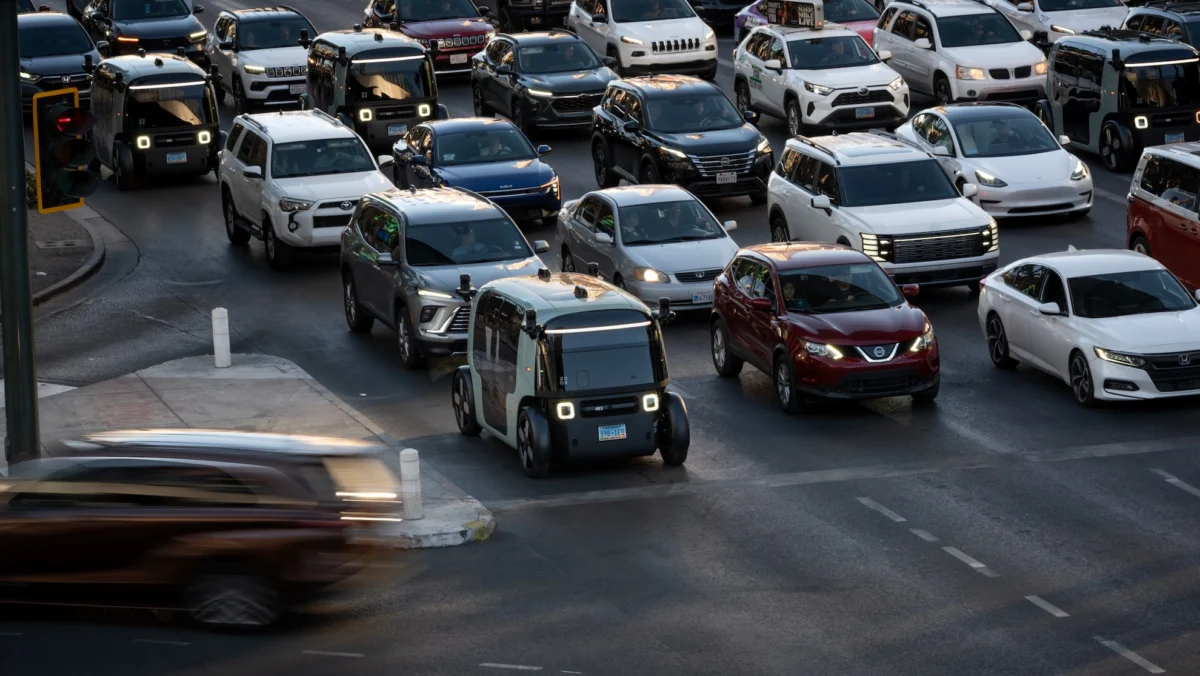
Nearly a year after launching its robotaxi service to the public in Las Vegas, Zoox is now poised to enter a new phase of its operations: charging for those rides. This significant announcement marks a pivotal moment for the Amazon-owned autonomous vehicle technology company, signifying the official launch of its commercial operations. The company has dedicated years to meticulous development, rigorous testing, and navigating complex regulatory landscapes to reach this milestone, setting the stage for a new era in urban mobility.
Starting August 10, Zoox will initiate commercial operations in Las Vegas, a move that transitions its innovative, self-driving service from a public demonstration to a fully commercialized venture. This step is the culmination of over a decade of intensive work, reflecting a profound commitment to revolutionizing transportation through advanced autonomous technology. The decision to begin charging underscores the company’s confidence in its operational readiness and its strategic path towards sustainable growth within the burgeoning autonomous vehicle sector.
The journey of Zoox began in 2014, when the Silicon Valley startup was founded with an ambitious vision. Its initial plan was not merely to adapt existing vehicles with self-driving technology but to fundamentally rethink urban transportation. This involved developing a custom-built electric vehicle from the ground up, specifically designed for autonomous operation, alongside a proprietary self-driving software stack to power it. Complementing this hardware and software synergy, Zoox also envisioned an on-demand ride-sharing application that would seamlessly integrate its unique robotaxis into the urban fabric, offering a novel and efficient mobility solution. This holistic approach aimed to control every aspect of the ride-hailing experience, from vehicle design to user interface, ensuring a cohesive and optimized service.
In 2020, Zoox reached a significant turning point when it was acquired by Amazon, a strategic move that provided substantial capital, resources, and institutional backing to accelerate its development. Later that same year, the company made headlines by unveiling its distinctive robotaxi. This vehicle was a departure from conventional automotive design, characterized by its cube-like form factor, optimized for passenger comfort and urban maneuverability. It was engineered without a steering wheel or pedals, emphasizing its fully autonomous nature. Equipped with a sophisticated self-driving system, the vehicle integrated an array of advanced sensors—including cameras, radar, and lidar—to perceive its surroundings with unparalleled accuracy. Additional features, such as a panoramic moonroof, were incorporated to enhance the passenger experience, creating a futuristic and inviting interior environment. Following its unveiling, Zoox embarked on an extensive six-year period of rigorous testing and continuous hardware and software refinement, ensuring the vehicle’s safety, reliability, and performance in diverse operational scenarios.
Over its 12-year history, Zoox has confronted and overcome numerous challenges inherent in pioneering autonomous vehicle technology. These hurdles spanned a wide spectrum, from securing substantial funding required for such a capital-intensive undertaking to overcoming complex technical development obstacles in artificial intelligence, sensor fusion, and vehicle dynamics. Navigating the intricate regulatory landscape was another significant hurdle, necessitating the acquisition of proper permits for testing and deployment across various jurisdictions. Furthermore, like many advanced software systems, Zoox has faced several recalls, including one notable instance where a robotaxi encountered confusion due to heavy smoke, prompting a software recall to enhance its perceptual capabilities under adverse conditions. Each of these challenges provided valuable learning opportunities, contributing to the maturity and robustness of Zoox’s technology and operational protocols.
A major regulatory obstacle was successfully cleared last week, paving the way for Zoox’s commercial launch. Federal safety regulators, specifically the National Highway Traffic Safety Administration (NHTSA), granted Zoox a temporary exemption from certain federal motor vehicle safety standards (FMVSS). This exemption was absolutely crucial for the company to legally charge customers for rides in its robotaxi, as its unique design inherently deviates from many traditional vehicle requirements.
The necessity for such an exemption stems from the fundamental design of Zoox vehicles. Unlike conventional cars, they lack many of the traditional controls and safety features mandated by federal law, such as a steering wheel, pedals, and mirrors, which are designed for human drivers. Without these components, Zoox’s robotaxis cannot meet standard FMVSS requirements. The NHTSA exemption effectively acknowledges the novel operational paradigm of fully autonomous vehicles, providing a regulatory pathway for their safe deployment while recognizing their distinct design principles. This demonstrates a progressive approach by regulators to accommodate innovative technologies that challenge existing frameworks.
It is important to distinguish this new commercial exemption from a previous one. Zoox had already received an exemption last year that allowed it to demonstrate its robotaxis to the public and conduct extensive testing, but strictly prohibited charging for those rides. The newly issued commercial exemption, however, empowers Zoox to operate its service as a revenue-generating business. This critical exemption is valid for two years and permits Zoox to deploy up to 2,500 vehicles within its designated operational areas. Furthermore, it spans eight specific federal motor vehicle standards, providing flexibility for Zoox’s unique design. These standards include, but are not limited to, requirements related to windshield defrosting, light vehicle braking systems, and various occupant protection measures, all of which are traditionally calibrated for human-driven vehicles. Granting these waivers acknowledges the alternative safety considerations and operational methods employed by Zoox’s autonomous system.
While the commercial launch in Las Vegas marks a significant triumph, Zoox’s presence in other markets, such as San Francisco and Austin, currently remains in a demonstration phase. In these cities, the startup continues to offer robotaxi rides, but for now, they must be provided free of charge. This distinction is primarily due to varying regulatory landscapes and permitting requirements across states and municipalities. Specifically, in California, Zoox still needs to secure two additional permits from state authorities to operate commercially and begin charging for its autonomous ride-hailing services. This highlights the complex, multi-layered regulatory environment that autonomous vehicle companies must navigate to achieve full commercialization across different regions.
Regarding the pricing structure for its commercial service in Las Vegas, Zoox has outlined a transparent and competitive model. Robotaxi fares will be calculated based on a combination of factors: a base fare to initiate the ride, plus charges determined by the distance traveled from the pick-up point to the drop-off location, and the duration of the journey. This dynamic pricing approach is common in the ride-hailing industry and aims to fairly reflect the resources consumed during each trip. Crucially, Zoox has committed to transparency, stating that the final fee will be calculated upfront based on the optimal route and will be clearly visible to the customer before they confirm their booking. Furthermore, the company assures passengers that this quoted fare will remain fixed, even if the Zoox robotaxi needs to take a different route due to unexpected traffic, road closures, or other unforeseen circumstances, providing peace of mind and predictability for users.
In addition to the standard fare components, Zoox’s pricing strategy may also incorporate destination fees for specific, high-demand trips. This includes journeys to or from popular hubs such as Harry Reid International Airport, as well as high-traffic events at major entertainment venues like the Sphere or T-Mobile Arena. These surcharges are a common practice in the transportation sector, reflecting increased demand and operational complexities associated with these locations and events. Zoox emphasizes that its overall pricing strategy is designed to be highly competitive with the "comfort" pricing levels offered by traditional ride-hail services. This positioning aims to attract a broad customer base by offering a premium, autonomous experience at a comparable cost to enhanced traditional ride options, thereby establishing Zoox as a viable and attractive alternative in the competitive Las Vegas transportation market.
The launch of paid robotaxi services in Las Vegas represents a monumental step not only for Zoox but for the entire autonomous vehicle industry. It validates years of research, development, and regulatory engagement, proving that fully driverless commercial operations are increasingly becoming a tangible reality. As Zoox expands its operations and refines its service, it contributes significantly to shaping the future of urban mobility, demonstrating the potential for safer, more efficient, and more accessible transportation solutions.