 11
11
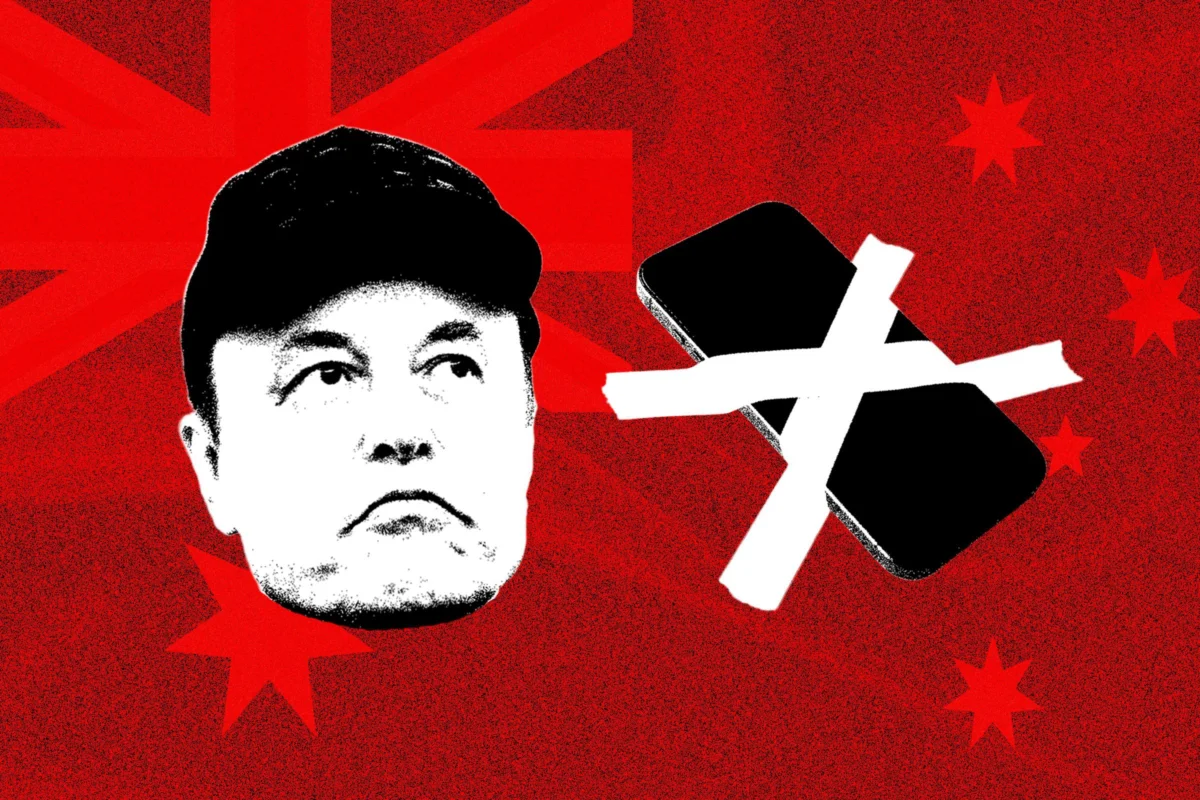
X, the social media platform owned by Elon Musk’s SpaceX, has introduced a significant new argument against the proliferation of sweeping underage social media bans: that such restrictions, designed to limit the usage of its platform and others, interfere with the principles of international law. This assertion was made in a detailed submission to the Australian parliament, published on Tuesday, where X explicitly urged the Australian government to abandon its current efforts to strengthen its existing underage social media ban. The company’s submission articulated a robust opposition to proposed amendments, characterizing them as unnecessary, ill-suited, unfair, and potentially violative of fundamental privacy rights.
The core of X’s contention revolves around the nature of the proposed information-gathering powers that the Australian government’s amendments would bestow upon its regulators. X described these powers as "highly invasive," suggesting they extend far beyond reasonable regulatory scope. The platform further criticized the commissioner overseeing these proposals, accusing them of having "seemingly no understanding" of the intricate operational mechanisms and technical realities governing how such platforms function. This alleged lack of comprehension, X argued, would lead to impractical and burdensome demands. Furthermore, the company raised serious concerns about the absence of adequate safeguards for confidential and commercially sensitive information that would be subject to these new disclosure requirements.
A particularly salient point in X’s submission was the warning that demanding data, documents, and compliance evidence from non-Australian entities operating in other countries could precipitate significant issues "for the comity of nations." This legal principle, referring to the mutual recognition and respect of laws and judicial decisions between different jurisdictions, suggests that unilateral demands crossing international borders could strain diplomatic relations and legal cooperation. X’s argument implies that Australia’s proposed regulatory reach could overstep its sovereign boundaries, creating precedents that might be seen as infringing upon the sovereignty of other states where these platforms primarily operate and where their data is stored. The company’s stance highlights the complex interplay between national regulatory ambitions and the global, borderless nature of digital platforms.
Australia has positioned itself at the forefront of a burgeoning global movement aimed at restricting children’s access to social media platforms. The country formally implemented a ban preventing under-16-year-olds from accessing these sites in December, marking a significant step in its regulatory approach. This move underscores a growing international concern among governments regarding the potential harms of social media exposure to minors. However, Australia’s robust regulatory stance has not been without its challenges and enforcement actions. In May, for instance, the country’s internet regulator, eSafety, ordered X to pay a substantial fine of $463,000. This penalty was imposed for X’s alleged failure to comply with specific child safety measures. The fine itself originated from a complaint issued by eSafety in 2023, which claimed that X had not adequately responded to a request for information regarding its strategies and efforts to combat the spread of online child sexual abuse content. Significantly, this request for information was initially submitted one month prior to Elon Musk’s acquisition of Twitter, which was subsequently rebranded as X, indicating a pre-existing regulatory scrutiny that continued under the new ownership.
Beyond the specific fine, X has consistently voiced strong criticism regarding Australia’s broader regulatory framework, particularly its "excessive" penalty regime. In its most recent submission to parliament, the company reiterated these concerns, specifically targeting a proposal to increase penalties against individuals. X asserted that such an increase was "entirely unjustified and disproportionate," arguing that the existing punitive measures were already sufficiently stringent and that further escalation would be an overreach. This position reflects X’s broader dissatisfaction with what it perceives as an overly aggressive and punitive regulatory environment in Australia, which it believes could stifle innovation and disproportionately burden platforms.
Elon Musk, the owner of X, has personally emerged as a particularly vocal and outspoken critic of Australia’s legislative efforts to establish 16 as the minimum age for social media access. His public statements have often been sharp and direct, reflecting a strong ideological opposition to such governmental interventions. When the Australian legislation was announced in late 2024 (as stated in the original source material), Musk took to his own platform, X, to express his disapproval, writing, "Seems like a backdoor way to control access to the Internet by all Australians." This comment suggests a concern that age verification and access restrictions could evolve into broader governmental censorship or control over online information, impacting not just minors but potentially the entire user base. Musk’s criticisms extend beyond Australia; in February of this year, when Spanish Prime Minister Pedro Sánchez announced similar measures to restrict social media access for minors, Musk publicly denounced him, using highly charged language to label him a "tyrant" and a "true fascist totalitarian." These strong reactions from Musk underscore his belief that such age bans represent a dangerous encroachment on individual freedoms and open internet access.
The debate over blanket age bans on social media platforms is complex, eliciting diverse perspectives from legal experts and digital rights advocates. Stefania Di Stefano, a researcher specializing in international law and technologies, acknowledges that many digital rights campaigners view blanket age bans as "problematic." However, she clarifies that, from her perspective, the information-gathering powers themselves are not necessarily the primary issue. Di Stefano articulates her main concern: "For me, the complete ban from social media on children and minors is problematic from an international human rights perspective." She elaborates that such bans are "disproportionate with respect to the right of children to exercise their right to freedom of expression, their right to access information, their right to association, and so on and so forth." This perspective highlights the fundamental human rights enshrined in international conventions, which grant children and minors specific rights to engage with information and express themselves, rights that could be significantly curtailed by outright bans. While recognizing the legitimate concerns about child safety online, Di Stefano’s argument emphasizes the importance of balancing protection with fundamental freedoms, suggesting that less restrictive measures might be more appropriate under international human rights law.
Conversely, Julia Hörnle, a distinguished professor of internet law at Queen Mary University of London, expresses considerable skepticism regarding the validity and substance of X’s submission to the Australian parliament. In an interview with WIRED, Hörnle dismissed X’s claims of overreach concerning information requests, stating, "A regulator in Australia ordering X to disclose a document in relation to their business activities in Australia, that’s perfectly fine." Her legal opinion suggests that national regulators have a legitimate right to demand relevant information pertaining to the operations of companies within their jurisdiction, particularly when those operations impact their citizens. Furthermore, Hörnle directly addresses X’s implied technical difficulties in complying with such regulations, asserting, "From all the data in the possession of the social media company, they can distinguish between Australian and non-Australian children, and therefore keep regulation to Australia." This statement challenges the notion that global platforms cannot implement geographically specific regulatory compliance, suggesting that the technical capability to segment user data by nationality or residence already exists and can be leveraged to adhere to national laws without necessarily impacting users in other countries or violating international legal norms regarding extraterritoriality.
The ongoing discourse between X and the Australian government encapsulates a broader global tension between rapidly evolving digital platforms and national regulatory bodies striving to protect their citizens, particularly vulnerable minors. As more countries consider or implement similar age restrictions and enhanced oversight, the arguments presented by X — concerning international law, privacy, and the practicalities of cross-border data governance — are likely to resonate and be scrutinized in other jurisdictions. The outcome of Australia’s legislative efforts and the subsequent responses from platforms like X will undoubtedly set important precedents for how digital rights, national sovereignty, and the responsibilities of global tech companies are defined and enforced in the digital age.