 11
11
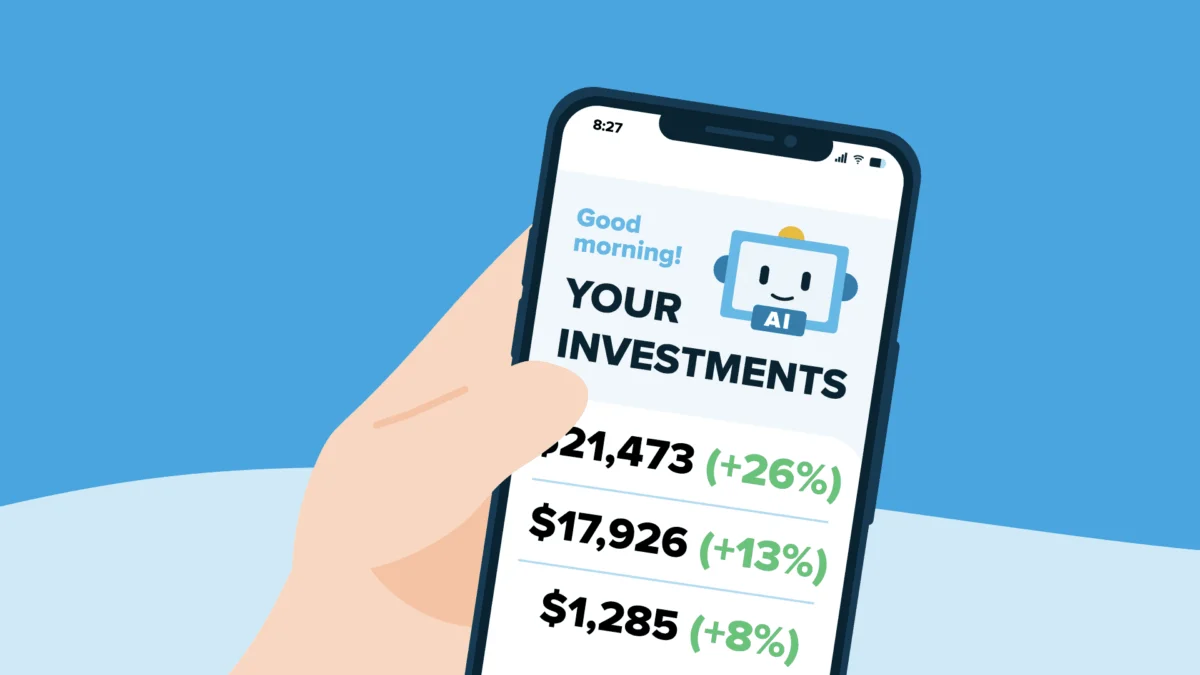
Imagine a future where you can articulate your risk tolerance, outline your retirement aspirations, and specify the timeline for your children’s college enrollment to an artificial intelligence agent. This AI would then autonomously manage your investment portfolio, working tirelessly for you, whether you’re awake or asleep. This concept of "agentic trading," where artificial intelligence moves beyond mere recommendations to actively execute trades, is rapidly transitioning from a theoretical possibility to a tangible reality. The financial industry, encompassing brokerages, burgeoning startups, and even individual retail investors, is actively developing AI agents designed to oversee portfolios and automate investment tasks traditionally handled by humans.
Devin Ryan, head of financial technology research at Citizens, anticipates a significant shift, stating, "Effectively everybody has their own family office that is working 24/7 for them while they’re awake or sleeping. This isn’t 10 years away. This is coming in the next few years." Ryan foresees these AI agents evolving to manage a comprehensive suite of financial responsibilities, extending beyond just buying and selling securities. His vision includes AI continuously optimizing taxes, cash balances, borrowing strategies, mortgage management, and investment portfolios, all meticulously aligned with an investor’s unique financial objectives. While fully autonomous investing remains an ongoing development, the race to establish leadership in this domain is already well underway.
The development of agentic trading systems is largely characterized by a phased approach, rather than an immediate leap to fully autonomous trading. Podium Markets AI, a startup focused on AI for investing, exemplifies this strategy. Their AI assistant, Ivy, is designed to analyze a customer’s investment portfolio across multiple brokerage accounts. Based on the investor’s stated goals and risk tolerance, Ivy generates personalized recommendations. However, the AI currently stops short of independent action. Investors retain the ultimate authority to review Ivy’s suggestions and execute trades themselves.
Dirk Mueller-Ingrand, co-founder and CEO of Podium Markets AI, emphasizes this collaborative dynamic: "The AI informs, but the human decides. The average investor still should be very much in charge of the final decision. … We’re going down the path of a persistent AI finance or trading buddy who’s always with you."
Major brokerage firms are also embracing this evolving landscape. Robinhood, in May, introduced functionalities that permit third-party AI agents to connect with customer accounts. Concurrently, the brokerage firm Public is actively developing its own in-house AI agents, aiming to streamline and automate investment workflows within its platform. Leif Abraham, Public’s co-founder and co-CEO, commented on the transformative impact of agentic AI, noting, "What this era of agentic is doing … it goes away from just being able to research something by yourself and then make up your own ideas and then trade the way you’ve traded where it’s now becoming automated and where AI agents can actually execute investment strategies on your behalf."

Ryan estimates that agentic finance could lead to a tenfold increase in transaction volumes. He suggests that a retail investor currently trading approximately twice a month could potentially engage in 20 trades per day within an agentic model. "By the end of next year, we think that on some of these platforms, the majority of transaction activity by number of trades will be done by agents, if you can believe that," Ryan stated.
The journey from general-purpose AI tools like ChatGPT to specialized investing agents has been shaped by retail investors’ experiments over the past three years. Since ChatGPT gained widespread adoption in late 2022, investors have utilized AI tools such as ChatGPT and Anthropic’s Claude for tasks like summarizing earnings reports, researching companies, and generating stock ideas. The outcomes have been varied, with some users employing AI as a sophisticated research assistant, while others have found its reliability for investment decisions to be inconsistent.
Obioha Okereke, a 29-year-old technology consultant from Georgia and the founder of the financial literacy platform College Money Habits, developed an agent using Claude. This agent was tasked with identifying undervalued stocks and options opportunities. "It was essentially just asking Claude to act as a hedge fund analyst to find undervalued stocks," he explained, adding that he meticulously reviewed every recommendation before proceeding with a trade. "I will always stand by AI being a tool as opposed to a replacement."
Thomas Schlossmacher, a 31-year-old retail investor and the founder of Specialty Tokens, a company that develops AI systems for businesses, tested a trading agent after encountering online claims about AI’s ability to identify profitable market patterns. His experience was negative, stating, "I was just losing money consistently." He further elaborated, "I think if you’re using it for an automated system or relying on an agent to do it for you, you probably want a professional. To blindly give an agent and say, ‘Hey, make me money,’ I think is kind of dumb."
These varied experiences highlight a significant challenge within the industry: while teaching an AI agent to execute trades is relatively straightforward, conveying the nuanced intentions of an investor proves considerably more complex. An investor might provide a general instruction such as "grow my portfolio aggressively." However, the interpretation of this instruction by an AI could involve increased volatility, portfolio concentration, the use of options, or a greater acceptance of potential losses. Consequently, an AI agent, while faithfully executing instructions, might produce an outcome that deviates from the investor’s original intent.
To address this, many firms are implementing "guardrails" before granting AI agents greater autonomy. Public, for instance, mandates that users review and approve an agent’s proposed workflow before any investment tasks are executed. Abraham reinforces this control, stating, "You still have the last word. The AI agent will not have its own mind. … It will only execute." As AI agents assume increasing levels of responsibility, ensuring their behavior aligns with expectations becomes paramount. Ryan underscores the importance of prioritizing customer interests: "You have to make sure that the customer’s best interests are at the forefront. If the agent is not behaving as modeled or as you expect, that becomes a risk for the firm."