11
11
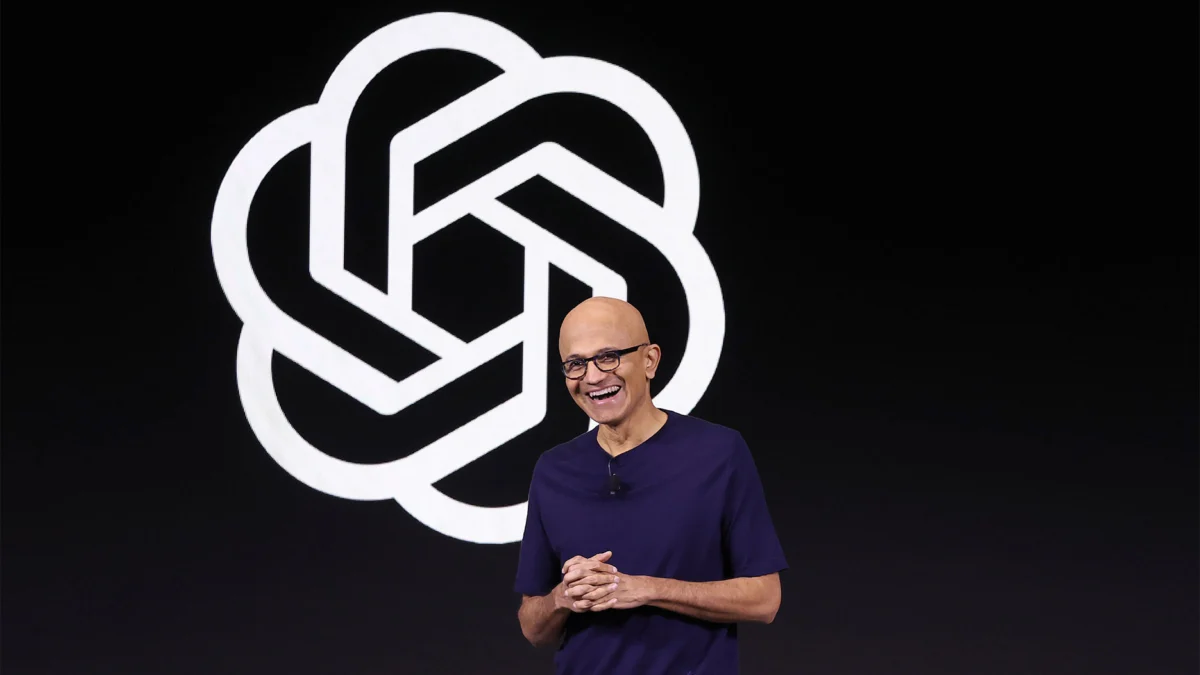
On Sunday, Microsoft CEO Satya Nadella escalated his earlier cautionary message to businesses leveraging artificial intelligence, delivering an even more assertive prediction: enterprises that completely depend on proprietary AI labs for their generative AI infrastructure and needs will ultimately fail to survive. This profound statement, made during an exclusive interview on CNN’s “Fareed Zakaria GPS,” underscored a critical pivot point for corporate AI strategy and governance.
Nadella’s remarks come amidst a burgeoning AI landscape, where companies are rapidly integrating large language models (LLMs) into their operations. However, the Microsoft chief’s warning centers on the inherent risks of relinquishing control over core intellectual assets to third-party AI model providers. When pressed by Zakaria to clarify what constitutes excessive sharing with an AI model provider, Nadella emphasized that businesses must exercise extreme caution regarding all information they transfer, encompassing everything from sensitive proprietary data to the specific prompts used to interact with these AI systems.
The crux of Nadella’s recommendation lies in the concept of data sovereignty and intellectual property retention within the AI paradigm. He advocated for a systemic setup where, "every time you use the model, all of the metadata around it is retained by you, so that you could use all of that to train perhaps your own weights or your own open model." To contextualize, "weights" in machine learning refer to a model’s trained parameters – essentially the learned knowledge and intelligence embedded within its architecture. Nadella’s point is clear: by retaining their own usage data, including interaction metadata, companies can amass valuable insights that empower them to eventually develop or significantly fine-tune their own AI models, thereby cultivating their unique "brain."
Nadella articulated the existential threat posed by a lack of such control with stark clarity. "Any firm that doesn’t have this control, I will claim will not remain a firm because you’ve essentially outsourced your thinking," he asserted. This statement suggests that core strategic and operational intelligence, if entirely processed and potentially absorbed by external AI systems without proper safeguards, could fundamentally undermine a company’s unique value proposition and competitive edge.
In essence, Nadella is sounding an alarm for companies that either lack their own internal AI models or fail to implement an intermediary layer of AI infrastructure, often referred to as AI gateways. These gateways are designed to create a crucial separation between a company’s proprietary prompts and the external AI model itself, acting as a protective buffer. Without such architectural safeguards, businesses, according to Nadella, face significant operational and strategic vulnerabilities.
A particular area of concern highlighted by Nadella is the reliance on AI labs’ integrated coding tools, commonly known as harnesses. He cited examples such as Anthropic’s Claude Code and OpenAI’s ChatGPT Codex, which offer built-in functionalities for developers to interact with and extend the capabilities of their respective models. While convenient, Nadella argues that embedding critical development directly within these proprietary harnesses creates a dependency that could prove detrimental.
His strategic advice emphasizes modularity and vendor independence: "By keeping the harness separate from the model and the context and memory separate from the model, you absolutely can use multiple models for what they’re great at. At the same time, any one model can go away, and you can still continue to be in control of your own destiny." This approach allows enterprises to leverage the strengths of various AI models interchangeably, mitigating the risk of vendor lock-in and ensuring business continuity should a particular model provider alter its services or cease operations. This architectural separation grants companies agility, enabling them to switch between providers, optimize for cost or performance, and maintain sovereignty over their proprietary data and workflows.
The context of Nadella’s warning is particularly noteworthy given Microsoft’s strategic investments. Microsoft is a major investor in two of the leading AI laboratories: Anthropic and OpenAI. These very labs develop and promote the kind of coding agents and proprietary models that Nadella is cautioning enterprises against relying on exclusively. Industry data indicates that these coding agents are highly popular among businesses for integrating AI into their workflows, proving to be substantial revenue generators for model developers. This creates a compelling dynamic where the CEO of a major investor is advising clients to diversify away from exclusive reliance on the very products his portfolio companies offer.
Despite the apparent self-serving aspect of this warning – Microsoft’s cloud business, Azure, is strategically positioned to offer the alternative, independent AI infrastructure Nadella advocates – the underlying premise holds considerable weight. Enterprises are increasingly recognizing the imperative for a multi-model strategy. This often includes seeking out a diverse range of AI options, particularly more cost-effective alternatives, and exploring "open-weight models." Open-weight models are those whose underlying code and parameters are publicly accessible, allowing companies to fine-tune them with their own data and run them on their proprietary hardware. This trend empowers businesses with greater control, customization capabilities, and the ability to sidestep the high operational costs associated with continually accessing third-party proprietary models. Consequently, the demand for robust solutions to manage multiple AI models and for model-agnostic coding agents is surging, aligning perfectly with the infrastructure services offered by cloud providers like Microsoft.
Nadella’s observation extends beyond mere budgetary concerns or technical flexibility; it delves into the fundamental strategic risks of "outsourcing thinking." He posits that once a company delegates its core intellectual processes to a third-party AI model, there is little to prevent the AI lab from eventually developing and offering a competing service based on the aggregated insights and patterns derived from its enterprise clients’ usage. This risk is amplified as companies integrate sophisticated AI agents deeply into their operations, granting them extensive access to the internal workings and proprietary data of the organization. The more these agents learn about a company’s business logic, customer base, and operational secrets, the greater the potential for the underlying AI provider to replicate or even disrupt that business.
This concern echoes a long-standing fear within the startup ecosystem: the "platform playbook." For years, startups have grappled with the risk that larger platform companies, on whose services they build, might eventually copy their innovative features and offer them directly, thereby eliminating the startup as a competitor. A pertinent example surfaced in May when OpenAI CEO Sam Altman extended an offer to invest in every Y Combinator startup in its latest cohort, providing them with AI credits. This move prompted a cautionary response from prominent seed investor Jason Calacanis, who publicly warned, "If you take these tokens, there’s a non-zero chance that OpenAI will study exactly what your startup is doing, copy your idea and put your app into their free offering. This is the classic platform playbook – be careful, founders!" Nadella is now extending this critical warning from the startup community to the broader enterprise sector, highlighting that the same strategic risks apply at a larger scale.
It is crucial to note a significant caveat in Nadella’s discourse: his concerns about oversharing with AI models are exclusively directed at businesses, not individual consumers. When Zakaria specifically inquired about how everyday people could safeguard their data, Nadella largely dismissed the concern. He suggested that for consumers, sharing data is an inherent component of the value exchange for using a service, particularly if that service is offered for free. "To some degree there’s got to be some value exchange in the consumer space where you’re getting something for free, maybe for your data. That’s sort of how the advertising business model has worked," Nadella explained, drawing a parallel to the established dynamics of data-driven advertising. This distinction underscores Nadella’s focus on the strategic implications for corporate entities, where proprietary data and "thinking" represent core competitive assets, contrasting with the more generalized data exchange model prevalent in the consumer internet landscape.
Ultimately, Nadella’s emphatic warning serves as a clarion call for enterprises to adopt a more strategic, self-reliant, and architecturally independent approach to AI integration. While acknowledging the immediate benefits of proprietary AI models, he urges companies to look beyond short-term convenience and proactively build the infrastructure and data governance necessary to maintain control over their intellectual capital and secure their long-term viability in an increasingly AI-driven economy.