 11
11
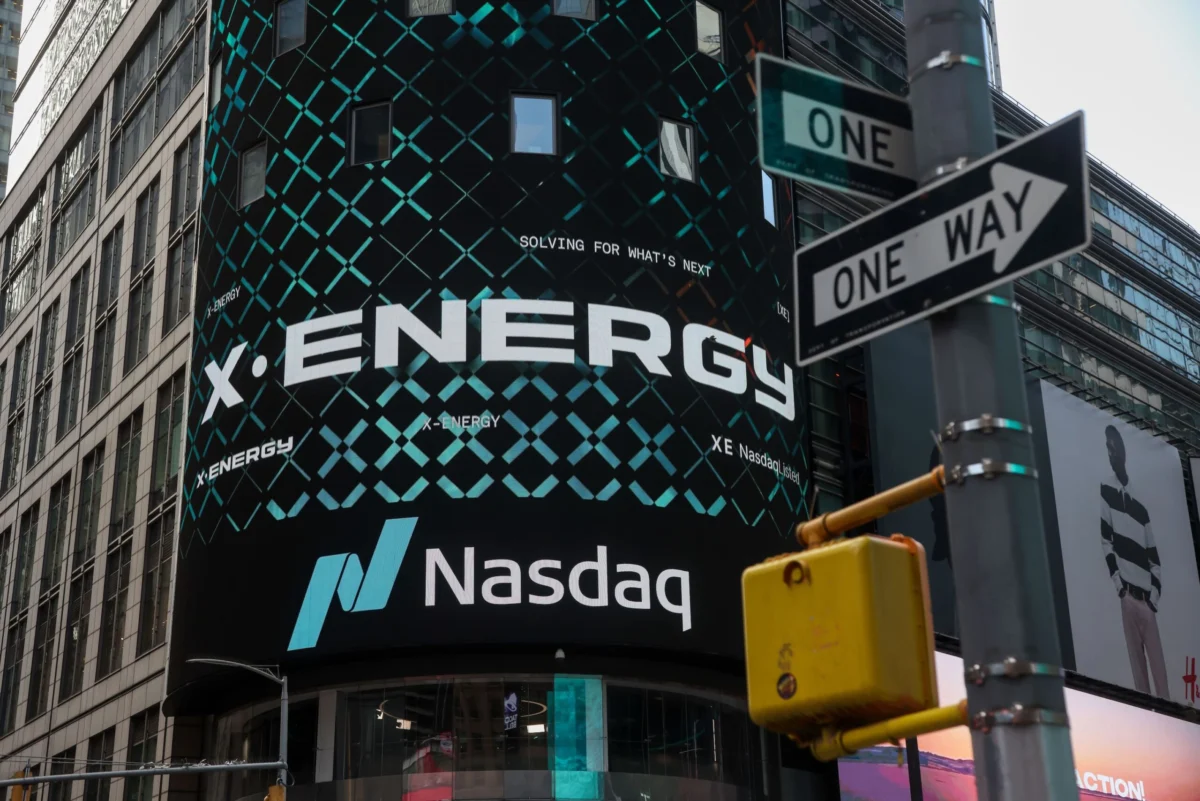
X-energy’s stock experienced a significant uplift today, marking a highly successful debut on the Nasdaq exchange. The nuclear startup’s shares opened trading at $30.11, demonstrating strong investor confidence from the outset. Although the stock closed slightly lower at $29.20, this figure still represented a robust 27% increase over its initial public offering (IPO) price of $23 per share. This performance underscored a remarkable market reception for a company operating in a sector that has historically faced considerable skepticism from investors. The initial share price itself had been a testament to growing interest, having been revised upward from the $16 to $19 target range that the company had floated during its investor roadshow, indicating a surge in demand even before trading began. By the close of its first day, X-energy was valued at an impressive $11.5 billion, signaling a profound shift in how the financial markets perceive the future of nuclear energy.
This enthusiastic investor response highlights a dramatic change in market sentiment. Apparently, there is a burgeoning demand for nuclear power among investors, a stark contrast to the prevailing attitudes just a few years ago. The upward adjustment of the IPO price and the subsequent trading surge underscore a newfound optimism surrounding the viability and growth potential of nuclear startups.
Indeed, just five years ago, such intense interest in a nuclear startup would have been met with widespread surprise and even disbelief by many industry observers and financial analysts. The nuclear industry at that time was largely perceived as a sector beleaguered by a litany of challenges. It was haunted by a long history of delayed projects, often stretching years beyond initial schedules, and massive cost overruns that frequently escalated budgets by billions of dollars. These issues had severely tarnished its reputation and deterred potential investors.
Concrete examples of these historical struggles included the construction of two prominent nuclear power plants in Georgia. One was completed in the late 2010s, and the other followed in the early 2020s. These projects became poster children for the industry’s woes, collectively costing an astronomical sum of around $30 billion to build. Such experiences led to a pervasive sense that nuclear energy was simply too expensive, too complex, and too prone to delays to be a reliable investment or a scalable solution for future energy needs. The challenges extended beyond construction; nuclear startups in the early 2020s were largely in their infancy, grappling with untested technologies and navigating a labyrinthine regulatory environment. At least one frontrunner, Oklo, had famously encountered significant regulatory problems, which sparked fears across the industry that it hadn’t been able to decisively put its past behind it. These incidents fueled concerns that new entrants would face the same insurmountable hurdles that had plagued their predecessors, reinforcing a cycle of skepticism and underinvestment.
However, the current landscape suggests a significant turnaround in perception. Investors now appear remarkably optimistic that X-energy and its peers in the advanced nuclear sector have diligently figured out a way around these historical challenges. This newfound confidence is not without basis; it is largely driven by a confluence of technological advancements, strategic business models, and an urgent global demand for reliable, low-carbon energy sources.
Much of the momentum propelling this renewed interest can be directly traced to the explosive growth of the AI-driven data center boom. The proliferation of artificial intelligence, machine learning, and vast cloud computing operations has created an unprecedented demand for electricity. Modern Graphics Processing Units (GPUs), essential for these computational tasks, require tremendous amounts of electricity to operate continuously and efficiently. While solar, wind, batteries, and natural gas have been instrumental in filling immediate energy needs, tech companies are increasingly seeking to diversify their power portfolios. This diversification is critical for ensuring grid stability, achieving corporate sustainability goals, and mitigating the risks associated with reliance on a limited set of energy sources. Nuclear power has emerged as one of the most compelling options they’ve been actively exploring, primarily because of its unique attributes. Its compact form factor is considered an ideal fit for their sprawling data centers, which require significant power density within a relatively confined footprint, and its ability to provide consistent, baseload power around the clock aligns perfectly with the uninterrupted operational demands of data infrastructure.
Nuclear power has long been recognized for its immense potential to power the U.S. grid, far exceeding what it has historically been able to deliver. Today, approximately 18% of electricity in the country comes from nuclear power, a testament to its significant, albeit constrained, contribution. It stands out as one of the most reliable sources of electricity in the U.S., offering consistent, non-intermittent power generation regardless of weather conditions or time of day. This baseload capability is invaluable for grid stability. However, despite its reliability, reactor costs have consistently risen in recent decades, making it one of the most expensive forms of electricity to build and operate. This cost escalation has been attributed to a combination of factors, including stringent safety regulations, complex custom-built designs, prolonged construction timelines, and escalating labor costs, all of which have hampered its broader deployment.
X-energy’s innovative approach aims to fundamentally alter this economic paradigm. The company’s core offering is an 80-megawatt reactor design, which is an order of magnitude smaller than many existing conventional nuclear power plants. This smaller scale is central to its strategy. The company is making a significant bet that modularity can effectively help bring down costs. Modularity involves manufacturing reactor components in factories, under controlled conditions, and then assembling them on-site. This standardized, production-line approach is expected to reduce construction times, minimize on-site labor, enhance quality control, and ultimately lower overall capital expenditures compared to the bespoke, large-scale projects of the past. For data center operators, this modularity offers additional benefits. They are keenly hoping that a single campus can be powered by a fleet of these smaller, modular reactors. Such an arrangement would provide the sort of redundancy and stability that they prize, ensuring continuous power supply even if one unit needs maintenance, and allowing for scalable expansion as their power needs grow.
The market has already begun to validate X-energy’s vision with substantial commitments from major industry players. Amazon, a global technology and cloud computing giant, has announced its intention to purchase up to 5 gigawatts worth of capacity from X-energy over the next decade or so, representing a massive long-term agreement that underscores the tech sector’s confidence in advanced nuclear solutions. Beyond data centers, X-energy is also targeting industrial applications; chemical maker Dow is slated to receive the startup’s very first power plant, demonstrating the versatility and broad applicability of X-energy’s technology across different heavy industries.
Crucially, X-energy is not merely operating on theoretical designs. Construction is actively underway at X-energy’s specialized fuel facility, a critical component for its Xe-100 reactor design, which utilizes TRISO (Tristructural-isotropic) fuel. This progress on the fuel manufacturing front demonstrates tangible advancements toward commercialization. While the company has yet to commence construction of a power plant itself, the substantial investor enthusiasm and strategic partnerships indicate a strong belief in its future. Investors appear bullish that X-energy, through its innovative modular reactor technology and strategic market focus, will indeed be able to break nuclear power free from its decades-long malaise, ushering in a new era of reliable, affordable, and sustainable nuclear energy for the 21st century.