 11
11
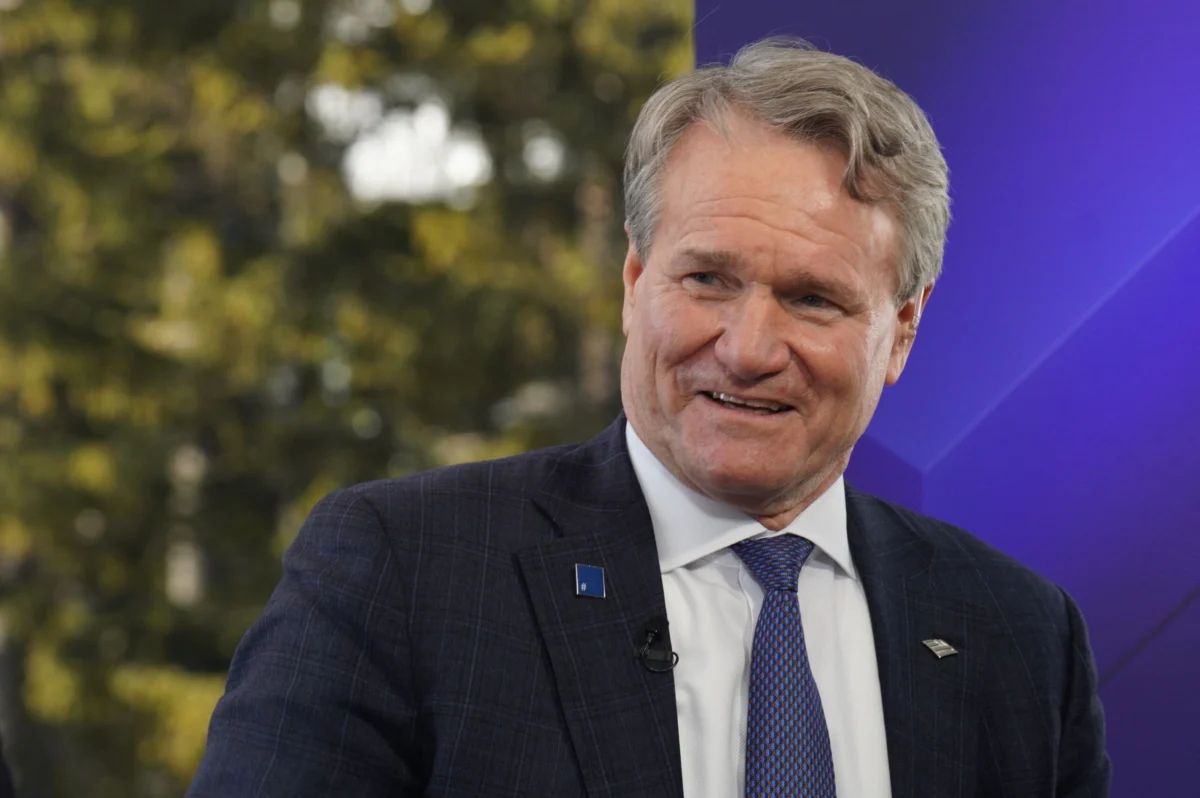
Bank of America, the second-largest financial institution in the United States, has reported a robust first quarter, exceeding analyst expectations on both its top and bottom lines. The impressive performance was significantly bolstered by a surge in equities sales and trading, alongside continued strength in its consumer banking and global wealth management divisions. The bank announced that net income for the quarter climbed by a substantial 17% to reach $8.6 billion, translating to $1.11 per share, marking the highest earnings per share (EPS) for Bank of America in nearly two decades.
Overall revenue for the period saw a healthy increase of 7.2%, totaling $30.43 billion. This growth was attributed to a combination of factors, including rising net interest income, enhanced trading revenue, and increased fees generated from investment banking and asset management services.
A key driver of the bank’s outperformance was its equities trading business, which experienced a remarkable 30% jump in revenue, reaching $2.83 billion. This figure surpassed StreetAccount estimates by approximately $350 million and contributed to the trading operations achieving their best quarter in 15 years. The strong performance in equities trading is particularly noteworthy given the volatile geopolitical landscape that has been impacting global stock markets.
The investment banking division also demonstrated significant strength, exceeding estimates with a 21% increase in revenue to $1.8 billion, compared to the StreetAccount consensus of $1.73 billion. This indicates a healthy appetite for capital markets activities among the bank’s corporate clients.
Net interest income, a crucial profitability metric for a lending institution, rose by 9% to $15.9 billion, also beating StreetAccount’s expectation of $15.67 billion. This growth was fueled by an expansion in both loan and deposit balances, the repricing of fixed-rate assets, and robust market activity. Building on this positive momentum, Bank of America revised its full-year net interest income growth guidance upwards. Previously projecting a 5% to 7% increase, the bank now anticipates growth to be between 6% and 8%, reflecting the strong start to the year.
In a positive sign for the health of the bank’s loan portfolio, the provision for credit losses was reported at $1.3 billion for the quarter. This figure is lower than the $1.5 billion provision set aside in the same period last year and was approximately $190 million below the estimated amount. This reduction suggests a favorable credit environment and a decrease in the likelihood of loan defaults.

Bank of America CEO Brian Moynihan expressed optimism about the company’s current performance, highlighting the resilience of both consumers and corporations. "Right now, the company is performing well. The consumers are spending, the credit quality is very good and improving, and you see the corporate clients actually use their lines a little bit more," Moynihan stated in an interview. He acknowledged the prevailing economic uncertainties but emphasized that U.S. companies and consumers are faring well, with global companies also showing positive performance.
Despite the overall strong results, the bank’s fixed income revenue fell short of expectations, similar to its rival Goldman Sachs. This segment generated approximately $3.5 billion in revenue, missing the StreetAccount estimate by about $330 million.
Further underscoring the bank’s sound financial footing, the net-charge-off ratio, which measures the proportion of total loans deemed uncollectible, improved by 6 basis points during the quarter to reach 0.48%. This indicates a declining trend in loan defaults.
The bank’s consumer banking and global wealth management divisions both reported impressive growth, with net income in each segment increasing by more than 20%. This highlights the success of the bank’s strategies in these key areas.
A significant indicator of profitability, the return on tangible common equity (ROTE), stood at 16%, representing an improvement of more than 200 basis points. This demonstrates an enhanced ability to generate profits from the bank’s tangible equity base.
The report was compiled with contributions from CNBC’s Hugh Son and Laya Neelakandan. An earlier version of the article contained inaccuracies regarding the bank’s net interest income growth guidance and the specific growth metric for its consumer banking and global wealth divisions, which have since been corrected.