 11
11
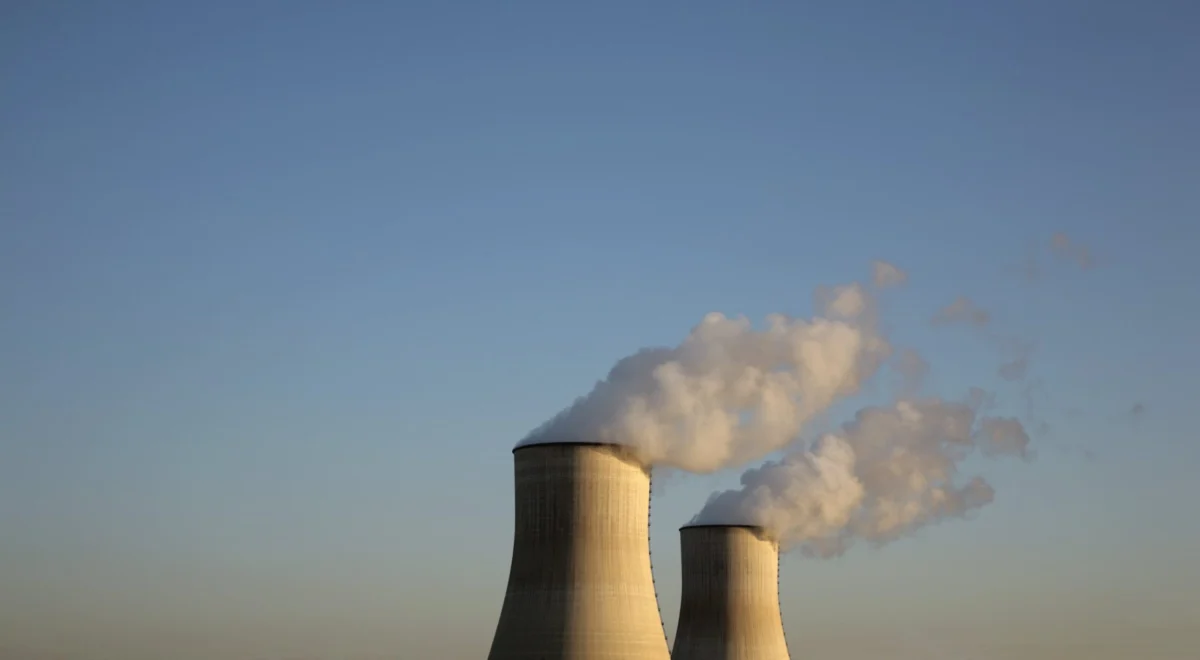
Nuclear energy startup X-energy launched its initial public offering (IPO) roadshow on Wednesday, aiming to raise significant capital as it targets a share price range of $16 to $19 per share. Documents filed with the U.S. Securities and Exchange Commission (SEC) indicate that if the company lists at the higher end of this range, it could secure approximately $814 million. This move comes as the nuclear sector experiences a resurgence of interest, driven by escalating electricity demand from rapidly expanding artificial intelligence (AI) data centers and broader societal electrification efforts.
An initial public offering (IPO) is a pivotal moment for a private company, enabling it to raise capital by offering shares to the public for the first time. For X-energy, setting a target price range between $16 and $19 per share is a crucial step, signaling its valuation expectations to potential investors. Securing $814 million at the upper end of this range underscores the scale of its ambitions and the market’s perceived value of its innovative nuclear technology. This IPO is anticipated to provide substantial relief to X-energy’s existing investors, who have collectively infused approximately $1.8 billion into the company, according to data from PitchBook.
This public offering represents X-energy’s second attempt to go public. The startup previously pursued a strategy of merging with a special purpose acquisition company (SPAC), a shell corporation listed on a stock exchange with the purpose of acquiring a private company, thereby taking it public without the traditional IPO process. However, this $2 billion deal with Ares Acquisition Corporation was mutually terminated in October 2023. This cancellation reflected the waning "SPAC craze," a period where many such deals faced increased scrutiny, valuation challenges, and investor disinterest, leading to numerous terminations across industries. This prior experience highlights the volatility of capital markets and the shifting preferences of investors, making the current traditional IPO path a critical juncture for X-energy.
X-energy’s journey is significantly bolstered by the robust backing of major corporate entities, most notably Amazon. The tech giant demonstrated confidence in X-energy’s vision by leading a $500 million Series C-1 funding round. Beyond financial investment, Amazon has also committed to a significant long-term power purchase agreement, pledging to acquire as much as 5 gigawatts of nuclear power from X-energy by 2039. This extensive commitment, particularly from a company with immense energy demands for its burgeoning data centers, powerfully validates X-energy’s technology and its potential for reliable, carbon-free electricity.
The broader market environment is also highly conducive to X-energy’s public offering. The company, along with its peers in the advanced nuclear sector, is capitalizing on a pronounced resurgence of interest in fission power. This renewed enthusiasm is largely fueled by an unprecedented surge in demand for electricity, driven by the proliferation of energy-intensive AI data centers and the widespread societal push towards electrification across transportation, industry, and residential sectors. As governments and corporations seek cleaner, more stable energy to meet growing demands and decarbonization targets, advanced nuclear technologies are increasingly vital.
At the core of X-energy’s offering is its advanced reactor design, known as a high-temperature, gas-cooled reactor (HTGR). This innovative technology distinguishes itself from conventional light-water reactors through its unique cooling and fuel structure. Inside X-energy’s reactor, uranium fuel is meticulously encased in specialized spheres composed of ceramic and carbon materials. This fuel design is referred to as TRISO (TRi-structural ISOtropic particle fuel). TRISO particles are microscopic, with each uranium kernel surrounded by multiple layers of carbon and ceramic, acting as tiny pressure vessels that contain fission products.
During operation, helium gas circulates through the reactor core, absorbing the intense heat generated by nuclear fission. Unlike water, helium is chemically inert and does not become radioactive, adding an inherent safety layer. This superheated helium then transfers its thermal energy to a secondary loop, typically involving a steam turbine, which converts the heat into mechanical energy to drive a generator and produce electricity. The TRISO fuel design is lauded for its enhanced safety characteristics compared to older fuel arrangements. Its robust multi-layered containment structure is designed to withstand extremely high temperatures and prevent the release of radioactive materials even under severe accident conditions. This inherent safety is a significant selling point for advanced reactor developers. Despite its touted benefits, TRISO fuel is not yet widely used in commercial reactors today, representing a frontier in nuclear fuel technology that X-energy aims to commercialize.
As it moves toward its public debut, X-energy is navigating complex legal challenges, disclosed in its SEC filing. The company is currently embroiled in a patent dispute concerning its fuel fabrication technologies with Ultra Safe Nuclear Corporation (USNC). USNC, another player in the advanced nuclear space, declared bankruptcy in 2024. Following its bankruptcy proceedings, USNC’s assets were acquired and subsequently used to form a new entity, Standard Nuclear. X-energy alleges that USNC infringed upon its proprietary fuel fabrication patents. The company has stated that this matter has not been resolved to its satisfaction during the course of USNC’s bankruptcy proceedings, indicating a potential for ongoing legal battles. Such patent disputes introduce uncertainties for investors and underscore the competitive, often litigious landscape within the high-stakes nuclear technology sector.
For decades, new nuclear reactor development outside China has largely stalled. Traditional large-scale nuclear projects have been plagued by a litany of challenges, including protracted construction delays, substantial cost overruns, and complex regulatory hurdles. These issues deterred investment and hampered global nuclear expansion. However, a new generation of startups, including X-energy, is striving to revolutionize the industry by embracing the concept of small modular reactors (SMRs). The core premise of SMRs is to overcome historical challenges by shrinking reactor size and employing modular construction. By developing reactors that are smaller, simpler, and can be factory-fabricated and then assembled on-site, these companies hope to reduce construction times, lower capital costs, and enhance safety features. This modular approach aims to streamline regulatory approval processes and enable more efficient deployment, making nuclear power a more economically viable and agile solution for diverse energy needs. The promise of SMRs lies in their potential to deliver clean, reliable power with greater flexibility and at a lower financial risk compared to their larger predecessors.
Despite the optimism surrounding SMRs, none of these advanced nuclear startups have yet successfully built and commissioned a commercial power plant. The path from innovative design to operational reality is fraught with challenges. Several companies are currently racing to meet an ambitious deadline of July 4, a target symbolically set by the Trump administration for achieving significant progress in SMR deployment. While many may not meet this specific, somewhat arbitrary deadline for full operation, they are still likely to achieve "criticality" in their test reactors or prototypes. Criticality is a crucial milestone, signifying the point at which a nuclear fission chain reaction becomes self-sustaining, demonstrating the fundamental viability of the reactor design.
However, the journey from criticality to commercially profitable power plants is expected to be lengthy. Mass manufacturing is widely recognized as a key strategy to drive down costs in the SMR sector. By producing reactors in a standardized, factory-like setting, companies aim to leverage economies of scale and reduce per-unit costs. Yet, industry experts suggest that it typically takes around a decade for this mass manufacturing process to mature and start yielding substantial financial dividends. Furthermore, the planned volume of reactors, though ambitious for the nuclear industry, might not be high enough to fully capture the true economic benefits of large-scale mass manufacturing.
X-energy projects that once its reactor production techniques mature – reaching what experts term the "Nth-of-a-kind" stage, signifying a standardized, optimized production line after initial prototypes and first-of-a-kind units – it anticipates being able to reduce costs by 30% relative to the initial, "first-of-a-kind" reactor. The initial reactor’s cost is critically important; investors will scrutinize its expenditures, as its financial performance could significantly impact the company’s long-term prospects and ability to attract future capital and customers. The success of the "first-of-a-kind" will largely determine whether X-energy can effectively demonstrate the economic viability of its SMR technology.
About the Reporter and Event Information
This report was contributed by Tim De Chant, a senior climate reporter at TechCrunch. An experienced journalist, De Chant has covered diverse topics for publications including Wired magazine, the Chicago Tribune, Ars Technica, The Wire China, and NOVA Next, where he was founding editor. He also lectures in MIT’s Graduate Program in Science Writing and was awarded a Knight Science Journalism Fellowship at MIT in 2018 to focus on climate technologies and new business models for journalism. De Chant holds a PhD in environmental science, policy, and management from the University of California, Berkeley, and a BA degree in environmental studies, English, and biology from St. Olaf College. He can be contacted at [email protected].
Related industry discussions and insights will be featured at the upcoming TechCrunch event, scheduled to take place in San Francisco, CA, from October 13-15, 2026.