 11
11
Fusion power startup Inertia Enterprises announced on Tuesday a significant strategic development, revealing it has signed three pivotal agreements with the Lawrence Livermore National Laboratory (LLNL). These collaborations are designed to accelerate the commercialization of the groundbreaking laser-based fusion reactor technology, which was originally pioneered and developed at the renowned Californian laboratory. This move positions Inertia to potentially gain a substantial advantage over rival startups in the fiercely competitive fusion energy landscape.
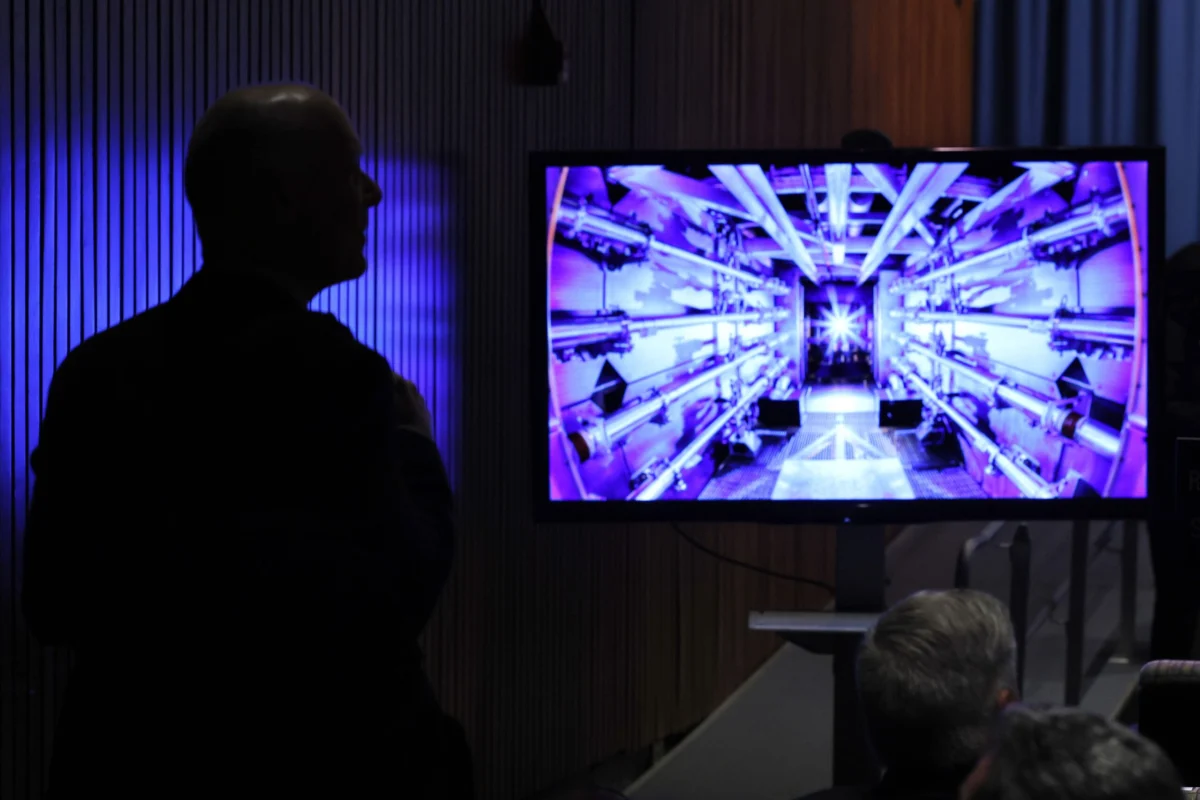
The cornerstone of this partnership lies in LLNL’s National Ignition Facility (NIF), which holds the unique distinction of being the only experiment globally to have unequivocally demonstrated that controlled fusion reactions can produce a net energy gain – specifically, more energy than was required to ignite the fuel pellet itself. This scientific breakeven achievement, a monumental milestone in the quest for clean, abundant energy, underscores the unparalleled expertise and technological foundation that Inertia now seeks to leverage. Inertia, which dramatically entered the scene in February with a formidable $450 million Series A funding round, immediately established itself as one of the best-capitalized startups in the burgeoning fusion industry, further signaling its serious intent and capacity to drive this technology forward.
Inertia and LLNL are collaboratively focusing on a specific variant of fusion energy known as inertial confinement fusion (ICF). This method fundamentally differs from other prominent approaches, such as magnetic confinement fusion, which utilizes powerful magnetic fields to contain and heat plasma until atomic nuclei fuse. In contrast, ICF generates the extreme conditions necessary for fusion by rapidly compressing a small fuel pellet using an external force, in this case, incredibly powerful lasers.
The intricate process at the NIF exemplifies the cutting edge of ICF. It involves precisely orchestrating 192 high-energy laser beams, which are simultaneously fired into a large vacuum chamber. These beams converge with pinpoint accuracy onto a tiny gold cylinder, no larger than a pencil eraser, known as a hohlraum. Inside this hohlraum resides a diamond-coated fuel pellet, typically a minuscule sphere filled with isotopes of hydrogen – deuterium and tritium. When the intense laser energy strikes the inner surface of the hohlraum, it rapidly vaporizes, transforming into a superheated plasma. This plasma then emits a powerful burst of X-rays, which symmetrically blast the BB-sized fuel pellet nestled within. The outermost diamond coating of the pellet is ablated and transformed into an expanding plasma, generating an inward-moving shockwave. This implosion process compresses the deuterium-tritium fuel to extraordinary densities and temperatures – millions of degrees Celsius and pressures billions of times greater than Earth’s atmosphere – forcing the atomic nuclei to fuse and release energy.
The scientific achievement at NIF, where the reaction released more energy than the laser energy delivered to the target, was a monumental step. However, translating this laboratory breakthrough into a viable commercial power source presents formidable engineering challenges. For the technology to produce electricity for the grid, this incredibly complex sequence of events, involving extreme temperatures, pressures, and precise energy delivery, must be executed not just once, but several times per second, consistently and reliably. This requires an unprecedented level of repetition rate, efficiency, and material robustness.
The conceptual foundation for laser-driven fusion reactors was first theorized in the 1960s, primarily envisioned as a safer and more contained method for researching thermonuclear weapons. However, scientists quickly recognized the immense potential of this technology for peaceful power production. Construction on the NIF itself commenced in 1997, a testament to the long-term vision and commitment required for such ambitious scientific endeavors. It took a quarter of a century – 25 years – from the start of construction to finally reach the critical scientific breakeven point in December 2022, where a fusion reaction demonstrably released more power than was delivered to initiate it.
Today, a cohort of innovative startups, including Inertia, alongside Xcimer, Focused Energy, and First Light, are actively striving to transform this scientific concept into commercial-scale power plants. A key focus for these ventures is overcoming the limitations of NIF’s existing laser technology. While NIF’s lasers were revolutionary for their time, they are based on designs that are now decades old and were not optimized for continuous, high-repetition-rate operation or overall energy efficiency from the wall plug. The hope and central strategy for these commercial entities revolve around developing and implementing new, far more efficient and powerful laser systems. These next-generation lasers are expected to significantly lower the energy required to ignite each fusion reaction, thereby making it substantially easier for each reaction to release a sufficient surplus of energy to achieve profitability and make a commercial-scale power plant economically viable.
The newly forged agreements between Inertia and LLNL encompass a comprehensive framework for collaboration, specifically detailing two strategic partnership projects (SPPs) and one cooperative research and development agreement (CRADA). Under these agreements, the two organizations will pool their expertise and resources to collaboratively develop more advanced laser technologies, crucial for achieving higher repetition rates and greater efficiency. Concurrently, they will focus on improving the design and manufacturing processes of the intricate fuel targets. The overarching goal for these advancements in both lasers and targets is to achieve better overall performance, leading to higher fusion energy gain and more cost-effective production for future power plants. Furthermore, as a testament to the depth of this partnership and Inertia’s commitment to building a proprietary technology base, the company is licensing nearly 200 patents from LLNL, granting it access to a vast portfolio of intellectual property derived from decades of pioneering research.
The deepening collaboration between Inertia and LLNL was perhaps an inevitable progression, given the close ties and shared history. Notably, Annie Kritcher, a co-founder and the chief scientist of Inertia, played a pivotal role in designing the very successful experiment at NIF that achieved scientific breakeven. Her intimate knowledge of the technology and her direct contribution to its most significant achievement make her uniquely qualified to lead its commercialization. Moreover, the landscape for such transitions was significantly reshaped by the 2022 CHIPS and Science Act. This landmark legislation specifically included provisions designed to facilitate the transfer of technology from national laboratories to the private sector and allowed individuals like Kritcher to found a company while, in some cases, retaining connections or even positions at national labs, thus bridging the gap between fundamental research and commercial application. This legislative support underscores a broader national strategy to accelerate the development and deployment of critical technologies, including fusion energy, from public research institutions into the marketplace.