 11
11
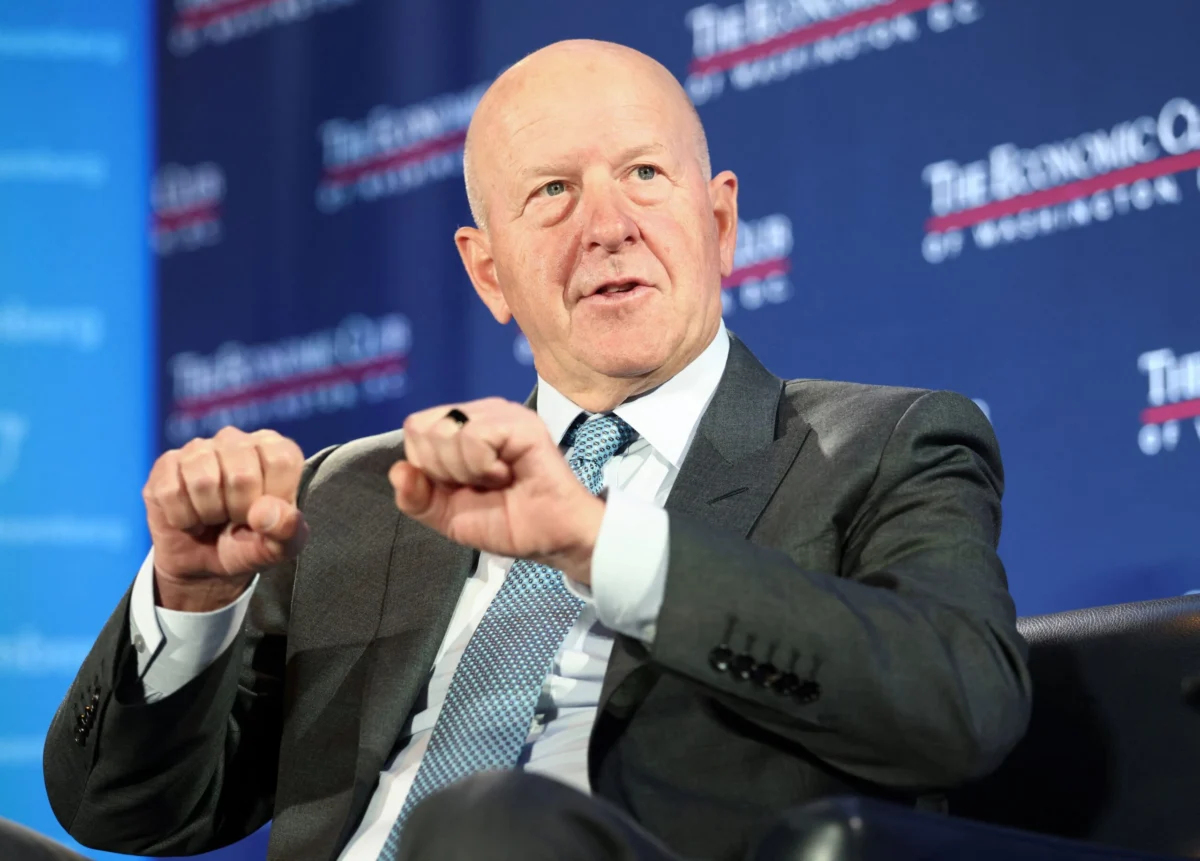
Goldman Sachs is slated to announce its first-quarter earnings before the market opens on Monday, with Wall Street anticipating a period of robust performance driven by several key economic and market trends. The venerable investment bank, a bellwether for the financial industry, is expected to benefit from a surge in trading activity and a continued rebound in investment banking, although analysts will be closely scrutinizing the impact of recent geopolitical developments, particularly the Iran war, on client behavior and market volatility.
The initial months of the year have witnessed a significant uptick in trading desks across Wall Street. Institutional investors have been actively rebalancing their portfolios and establishing new positions in response to the accelerating disruption across various sectors, largely fueled by advancements and investment in Artificial Intelligence (AI). This dynamic environment, characterized by shifts in market sentiment and sector-specific performance, typically translates into increased trading volumes and, consequently, higher revenues for firms like Goldman Sachs that have a strong presence in this segment. The relentless pace of innovation and the strategic adjustments required by corporations to navigate the AI revolution have created a fertile ground for market participants to engage in active trading.
Simultaneously, the investment banking sector is showing sustained signs of recovery. Dealogic data indicates that revenue for the industry is projected to climb by a healthy 10% during the first quarter. This rebound is a welcome development after a period of relative slowdown, suggesting renewed confidence among corporations and investors in pursuing mergers, acquisitions, and capital markets activities. Goldman Sachs, deriving a substantial portion of its revenue from its integrated trading and investment banking operations, is particularly well-positioned to capitalize on this resurgence. The firm’s ability to offer comprehensive financial advisory services, coupled with its deep market insights, allows it to effectively serve clients seeking to execute strategic transactions.
For Goldman Sachs, the primary focus for analysts examining its Q1 results will likely revolve around the ramifications of the Iran war, which commenced on February 28th. Geopolitical conflicts, especially those with the potential to disrupt global supply chains and impact commodity prices, can introduce a complex layer of uncertainty into financial markets. Such disruptive events can sometimes prompt corporate clients to adopt a more cautious approach, potentially leading to a temporary pause or delay in merger and acquisition (M&A) activities. The inherent unpredictability of these situations can make companies more hesitant to commit to large-scale transactions, preferring to assess the evolving landscape before making significant strategic decisions.
However, the same volatility that can dampen M&A activity can simultaneously create opportunities for increased trading revenues. Fluctuations in interest rates, bond prices, and currency exchange rates, often exacerbated by geopolitical tensions, can lead to greater market churn. This heightened activity provides fertile ground for trading desks to generate profits through market-making, proprietary trading, and hedging strategies. The complexity and uncertainty introduced by events like the Iran conflict can drive increased demand for sophisticated risk management solutions and a greater need for market liquidity, areas where Goldman Sachs excels. Therefore, while the war may cast a shadow over some aspects of the investment banking pipeline, it could also serve as a significant tailwind for the firm’s trading businesses.
The impact of these competing forces on Goldman Sachs’ bottom line will be a key narrative for investors. The firm’s ability to navigate the dual pressures of a potentially slowing M&A market due to geopolitical risk and a booming trading environment will be closely watched. Analysts will be keen to understand how the firm’s risk management strategies are performing in this volatile climate and how effectively its trading divisions are capitalizing on market dislocations. Furthermore, the firm’s outlook for the remainder of the year, particularly in relation to the sustainability of the investment banking rebound and the potential for continued market volatility, will be a significant point of discussion.
Year-to-date, shares of Goldman Sachs have demonstrated a positive trajectory, climbing approximately 3%. This upward movement reflects a degree of investor confidence in the firm’s resilience and its ability to adapt to prevailing market conditions. However, the upcoming earnings report will provide a more definitive assessment of the firm’s performance in the first quarter and offer insights into its prospects for the coming months. The market’s reaction to the earnings announcement will likely be influenced not only by the reported figures but also by the commentary provided by the company’s management, particularly CEO David Solomon, regarding future strategic priorities and the outlook for the global economy.
The broader economic backdrop also plays a crucial role. While inflation concerns and interest rate policy continue to be closely monitored, the ongoing technological revolution, particularly in AI, is reshaping industries and creating new investment opportunities. Goldman Sachs, with its extensive research capabilities and its deep engagement with corporate clients, is at the forefront of understanding and advising on these transformative trends. The firm’s ability to identify and capitalize on emerging themes, such as the widespread adoption of AI, can provide a sustainable competitive advantage and contribute to long-term growth.
In conclusion, Goldman Sachs’ first-quarter earnings report is anticipated to reveal a mixed but largely positive picture. The firm is expected to benefit from a strong performance in its trading operations, driven by institutional investor activity and market volatility, as well as a continued recovery in investment banking. However, the geopolitical implications of the Iran war introduce an element of uncertainty, potentially impacting M&A deal flows. Investors and analysts will be dissecting the results to gauge the firm’s ability to navigate these complex market dynamics and to assess its strategic positioning for future growth in an ever-evolving global financial landscape. The coming earnings call will provide a critical update on the firm’s financial health and its outlook in a period of significant economic and geopolitical flux.